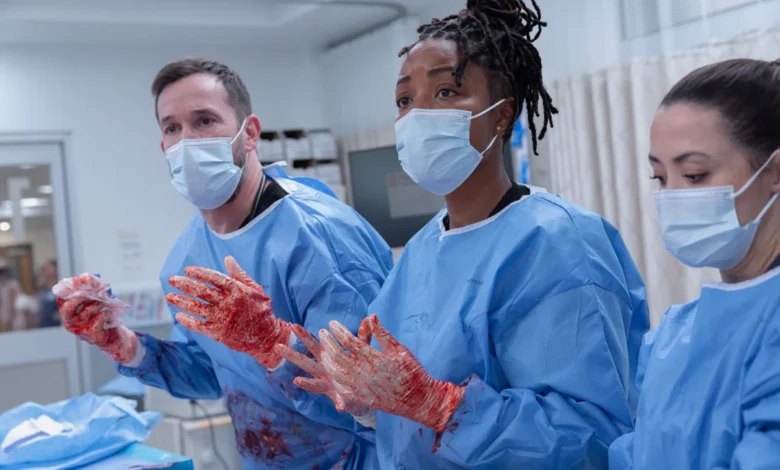
The second season of the HBO Max drama The Pitt concluded its 15-hour run on July 4th, offering a searing and timely examination of contemporary American society through the microcosm of a bustling Pittsburgh trauma center. The series, building on the legacy of medical dramas that use hospitals as a canvas for broader social commentary, delved into pressing issues such as immigration, artificial intelligence, and the pervasive specter of medical debt, all while striving to offer a glimmer of hope amidst the chaos.
A Legacy of Social Commentary in Medical Dramas
The concept of using a hospital as a metaphor for society is not new. As early as the late 1960s, screenwriter Paddy Chayefsky envisioned a CBS television show titled The Hospital, which he described as "a microcosm for society… the hospital represents American society, and all the stories… will nevertheless be satirical comments on society as a whole." While CBS initially passed on the idea, Chayefsky later adapted it into a critically acclaimed feature film. This foundational idea has since been embraced by numerous successful medical dramas, including St. Elsewhere, E.R., and Grey’s Anatomy, each leveraging the high-stakes environment of emergency medicine to reflect and comment on the world beyond its walls. The Pitt, with its pedigree boasting three major E.R. alumni – creator R. Scott Gemmill, executive producer John Wells, and producer-star Noah Wyle – firmly plants itself within this tradition. The series expertly blends the familiar tropes of interpersonal drama and the career trajectories of seasoned professionals and eager residents with the complexities of modern American life, presenting a compelling fusion of old-school network programming and prestige streamer-era television.
Season Two: A July 4th Reckoning
The decision to set the entirety of The Pitt‘s second season on and around Independence Day was a deliberate artistic choice, signaling an intent to tackle subjects that resonate deeply with the current American experience. The season finale, airing on July 4th, brought to a close a narrative arc that saw the hospital staff grappling with an array of crises, both internal and external, that mirrored the nation’s own struggles. The season’s conclusion, marked by both dramatic resolutions and poignant quietude, began with the seemingly simple act of a baby found abandoned in the first episode, a callback that underscored the enduring human dramas at the heart of the series.
The ensemble cast, featuring returning actors like Noah Wyle, Katherine LaNasa, Patrick Ball, Taylor Dearden, Gerran Howell, Isa Briones, Shabana Azeez, Supriya Ganesh, and Fiona Dourif, alongside new additions such as Sepideh Moafi, Irene Choi, Laëtitia Hollard, and Lucas Iverson, navigated a year filled with both the mundane and the extraordinary. Their performances anchored a season that refused to shy away from the difficult realities faced by healthcare professionals and the communities they serve.

A Season of Crises: From Water Park Disasters to Digital Threats
Unlike the first season, which was catalyzed by a mass shooting, the second season of The Pitt introduced a catastrophic collapse at a water park, an event that allowed for a broad spectrum of injuries and emotional fallout. This disaster, rife with potential metaphorical interpretations, set the stage for a season where the personal and the political became inextricably linked. Within the hospital’s walls, the familiar dramas of employee relationships, power struggles, and long-simmering grudges unfolded against a backdrop of constant understaffing, overwhelming workloads, and systems teetering on the brink of collapse.
However, The Pitt distinguished itself by pushing beyond the conventional medical procedural formula. The season actively integrated contemporary societal challenges into its narrative fabric. A significant storyline revolved around a ransomware attack on neighboring hospitals, forcing the Pittsburgh Trauma Medical Center to shut down its own computer systems. This plot point served as a stark reminder of the vulnerability of critical infrastructure in the digital age and the growing threat of cyber warfare on healthcare. The real-world implications of such attacks are profound, as evidenced by incidents like the Ascension cyberattack in 2024, which disrupted patient care and exposed sensitive data across multiple facilities.
Furthermore, the series tackled the erosion of social safety nets with unflinching honesty. Funding for a crucial research program focused on racial inequity was abruptly cut, highlighting the systemic challenges in addressing disparities in healthcare. The introduction of an AI program, initially lauded as a panacea for the hospital’s myriad problems, ultimately exacerbated existing issues, serving as a cautionary tale about the uncritical adoption of new technologies. The rise of online influencers and the pervasive influence of wellness culture and misinformation were also woven into patient narratives, illustrating how societal trends directly impact public health and individual well-being.
The crushing reality of medical debt and the precariousness of employment in the gig economy were central to several storylines, underscoring the difficult choices patients face between seeking necessary care and maintaining their livelihoods. One particularly poignant subplot, which did not end favorably, starkly illustrated the devastating consequences of these economic pressures. The ineffectiveness of social services was also a recurring theme, culminating in a harrowing depiction of two children left to fend for themselves after their Haitian parents were deported following an immigration check-in.
The Immigration Crisis and the Specter of ICE
Perhaps the most controversial and impactful storyline of the season involved the direct intervention of Immigration and Customs Enforcement (ICE) agents within the trauma center. This narrative choice sparked debate, with some critics finding the show’s portrayal of ICE to be both too lenient and too harsh. The pressure to "tone down" and achieve "balance" from the show’s corporate leadership, reportedly necessitating edits, underscored the complex and sensitive nature of depicting such issues in a mainstream television program. This dynamic, particularly in the context of potential corporate takeovers, reflects the pervasive influence of commercial interests on artistic expression.

The presence of ICE agents created an atmosphere of fear and paranoia within the hospital. Patients fled, staff members panicked, and anger simmered over the treatment of undocumented individuals. The storyline culminated in violence and the detention of a Good Samaritan staff member, leaving their fate unknown. This narrative arc directly mirrored real-world concerns about the impact of immigration enforcement on communities and the fear it instills in vulnerable populations seeking essential services. The EMTALA (Emergency Medical Treatment and Labor Act) mandates that hospitals provide emergency care regardless of immigration status, a principle directly challenged by the events depicted in the series.
A Nation on the Brink, and a Glimpse of Unity
Throughout its second season, The Pitt consistently reminded viewers that they were witnessing the America of the present day. While some didactic exchanges explicitly stated the show’s social messaging – a line of dialogue even articulated the legal right to emergency care for all patients, regardless of immigration status – the series more often opted for a subtler approach. It presented the daily realities of systemic breakdown, allowing the weight of the events to register before moving on. The choice to set these narratives against the backdrop of Independence Day served as a potent, albeit unsubtle, commentary on the fractured state of the nation. The visual metaphor of a patient arriving with the American flag impaled in his sternum was a stark illustration of a country struggling with its identity and ideals.
As the season progressed, the pervasive sense of things falling apart, of a center that could not hold, became as palpable as Dr. Robby Robinavich’s burnout. Dr. Robinavich’s transformation from a noble, albeit traumatized, father figure into a self-destructive "Difficult Man" – brilliant at his job but deeply flawed in his personal life – garnered attention and some valid criticism, yet it remained a compelling portrayal of the toll that such a demanding profession can take.
An Inspiring Finale: The American Ideal Reimagined
Despite the relentless portrayal of societal decay and institutional failure, the season finale of The Pitt offered a profoundly moving and quietly inspiring conclusion. In the aftermath of a harrowing July 4th, a group of the remaining day shift staff gathered on the hospital roof to watch a fireworks display. The scene depicted a diverse array of individuals, representing the rich tapestry of American society – diverse in race, religion, sexual orientation, and class – standing shoulder-to-shoulder. They shared beers and observed the quintessential American spectacle, some with arms around each other.
This brief, unadorned moment, presented without commentary or exposition, served as a powerful counterpoint to the preceding hours of chaos and disintegration. For much of the season, The Pitt had embodied Chayefsky’s vision of the hospital as a social microcosm, depicting a nation on the precipice, fraught with fear and division. Yet, in this final scene, the series offered a fleeting, yet potent, glimpse of the American ideal: a state of unadulterated unity and shared humanity, achieved precisely because of, not in spite of, their differences. After nearly 15 hours reflecting the often-bleak realities of contemporary America, this moment provided a much-needed vision of the country that its citizens still aspire to inhabit. It was a reminder that even in the face of overwhelming challenges, the capacity for connection and shared experience endures.