The United Kingdom has significantly reduced its financial commitments to the protection of the Congo Basin, abandoning projects worth tens of millions of pounds that were originally designed to preserve the world’s second-largest rainforest and support the indigenous communities that inhabit it. This retreat marks a substantial departure from the ambitious environmental leadership the UK sought to project during its presidency of the COP26 climate summit in Glasgow. The abandoned and downscaled initiatives represent approximately half of the £200 million the UK government initially pledged to safeguard this critical ecological corridor, raising concerns among international conservationists and domestic policymakers regarding the reliability of British environmental diplomacy.
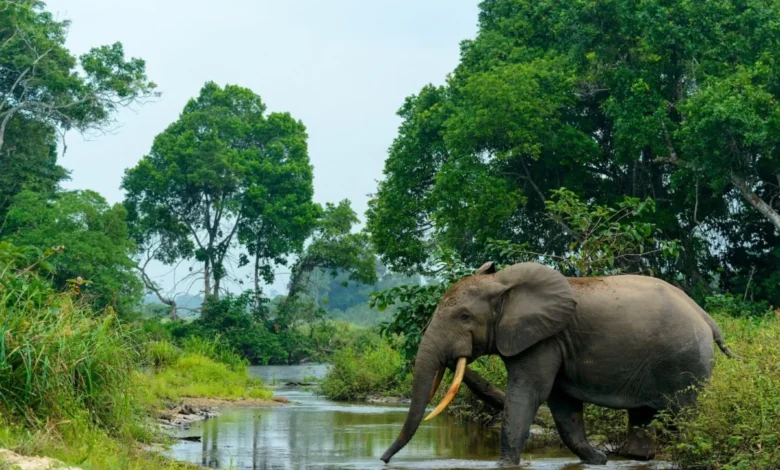
The Congo Basin, often referred to as the "second lung of the Earth," spans six countries—Cameroon, the Central African Republic, the Democratic Republic of the Congo (DRC), the Republic of the Congo, Equatorial Guinea, and Gabon. Unlike parts of the Amazon, which have recently become net emitters of carbon due to deforestation and degradation, the Congo Basin remains the planet’s largest forested carbon sink. It sequesters more carbon than it emits, making it a vital bulwark against global temperature rises. However, the region’s host nations are among the world’s most economically disadvantaged, facing immense pressure to exploit their natural resources for immediate economic relief.
The Glasgow Legacy and the Funding Gap
At the COP26 summit in 2021, then-Prime Minister Boris Johnson spearheaded the Glasgow Leaders’ Declaration on Forests and Land Use. This landmark agreement, backed by more than 140 nations, aimed to halt and reverse forest loss and land degradation by 2030. As part of this leadership role, the UK committed to a specific £200 million funding package for the Congo Basin. This was intended to be a cornerstone of a collective $1.5 billion (£1.1 billion) pledge by 12 international donors to support rainforest nations by 2025.
Recent disclosures by Development Minister Jenny Chapman have illuminated a stark disparity between these high-level promises and the actual delivery of funds. As of 2024, the UK has provided only £39.8 million toward its Congo Basin goal. While the government maintains that it still intends to meet its regional targets by 2029, the slow pace of disbursement and the outright cancellation of key programs suggest a significant cooling of the UK’s environmental ambitions.
The shortfall comes at a time when global biodiversity is in crisis. The UK’s own national security assessments have warned that the degradation or collapse of major rainforest systems like the Amazon or the Congo Basin would pose direct threats to British national security and economic prosperity. Such an ecological failure would likely trigger mass migration, disrupt global supply chains, and exacerbate the volatility of food and commodity prices.
Systematic Cuts to Key Conservation Programs
The reduction in funding is most visible in the dismantling of the Congo Basin Forest Action Programme (CBFA). Launched with significant fanfare at COP27, the CBFA was designed to be the primary vehicle for the UK’s £200 million pledge, accounting for roughly half of that total. The program’s mission was to empower Central African nations, particularly the DRC, by supporting community-managed forests and implementing measures to curb illegal logging and industrial encroachment.
However, after a series of reporting delays and shifting government priorities, the CBFA’s budget has been decimated. Originally envisioned as a £90 million initiative, it has been slashed to just £18.8 million. Government data indicates that £15 million of this revised budget has already been spent, leaving negligible resources for future operations. The government has cited the need to reallocate funds toward defense spending and other domestic priorities as a primary driver for these cuts.
Similarly, the Congo-specific portion of the Biodiverse Landscapes Fund has been terminated. This fund, which was a flagship project of the previous administration, was intended to run for seven years with a budget of at least £12.3 million for the region. It was closed just two years into its schedule. Other initiatives, such as those aimed at "incubating forest-friendly enterprises" in the DRC, are facing significantly reduced budgets, while officials warned that remaining projects might have to contract their geographical footprint, operating in fewer countries than originally planned.
Political and Geopolitical Obstacles
The UK’s retreat from its forest pledges is not occurring in a vacuum. It follows a broader trend of aid budget reductions initiated by successive Conservative and Labour governments. The decision to track the Official Development Assistance (ODA) budget to 0.5% of Gross National Income, down from the legally mandated 0.7%, has forced difficult choices across all departments.
Beyond domestic fiscal constraints, the UK faces significant operational challenges in the Congo Basin. Government documents reveal that "complex political economies" and regional instability have complicated the delivery of aid. For instance, a military coup in Gabon in 2023 created diplomatic and logistical hurdles for conservation projects. In the DRC, where the majority of the rainforest is located, systemic corruption and lack of infrastructure make large-scale environmental monitoring difficult.
Despite these challenges, critics argue that the UK is "breaking promises" to vulnerable nations. Zac Goldsmith, a former Conservative minister who was a key architect of the COP26 forest targets, expressed sharp criticism of the current trajectory. He noted that the UK has moved from being a global leader in nature protection to a partner that fails to honor its commitments to countries for whom the environment is an existential issue.
International Reactions and the "Gamble" of New Strategies
The international community has reacted with concern to the UK’s shifting stance. Damian Fleming, a senior director of forests at WWF International, emphasized that tropical forest countries make long-term development and policy choices based on the expectation that international partners will fulfill their financial pledges. When these funds are withdrawn or delayed, it undermines the trust necessary for international climate diplomacy and may push these nations toward more extractive economic paths, such as expanded oil drilling or industrial agriculture within protected areas.
Domestically, the transition to a new aid strategy under the Labour government has sparked debate. While the government claims it has met its overarching £11.6 billion climate finance target through 2024, it has moved away from "ring-fencing" specific amounts for nature and forests in its future pledges. Sarah Champion, chair of the International Development Committee, expressed concern that the removal of these specific sub-pledges makes forest funding more vulnerable to future cuts. She noted that Minister Jenny Chapman had characterized this shift as a "gamble," a term that has unsettled those advocating for consistent, predictable environmental aid.
Broader Impact and Future Outlook
The implications of the UK’s funding withdrawal extend beyond the immediate loss of trees. The Congo Basin is home to thousands of species, including endangered forest elephants and mountain gorillas, whose habitats are directly protected by these funded initiatives. Furthermore, the programs often provide the only source of income and land rights for local communities, who act as the frontline defenders of the forest.
The UK government insists that it remains committed to the region. At COP30 in Belém, the UK helped launch a new "call to action" for Congo Basin funding and expressed support for Brazil’s "Tropical Forest Forever Facility" (TFFF). However, the lack of new, dedicated funding for these initiatives has led to skepticism. Without "ring-fenced" protections, forest conservation must compete with more politically visible sectors like healthcare, education, and defense within a shrinking aid budget.
As the world approaches the 2030 deadline for the Kunming-Montreal Global Biodiversity Framework—a non-binding pact to reverse nature loss—the UK’s financial retreat sends a troubling signal to the Global South. If developed nations, which historically contributed the most to climate change, fail to provide the promised finance for nature-rich but cash-poor countries, the global effort to stabilize the climate may falter.
In summary, the UK’s decision to scale back its Congo Basin commitments represents a significant pivot in its foreign policy and environmental strategy. While the government maintains that it is meeting its broader climate targets through accounting adjustments and re-prioritizations, the tangible impact on the ground in Central Africa is one of contraction and uncertainty. The "second lung of the Earth" continues to breathe, but the international support required to keep it healthy appears increasingly fragile.