Unlocking the Molecular Secrets of Inflammatory Bowel Disease: How Hidden Cell Death Predicts Future Flare-Ups

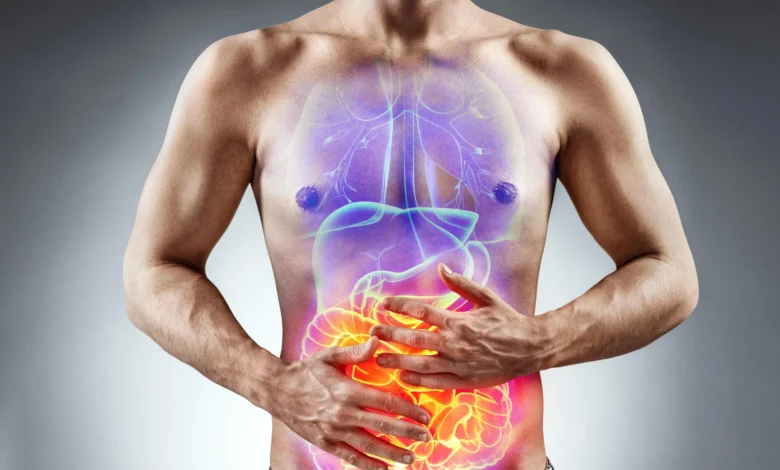
Inflammatory bowel disease, a chronic and often debilitating condition affecting approximately 180,000 Australians and millions worldwide, has long been characterized by a frustrating cycle of remission and sudden, unpredictable relapse. For patients suffering from conditions such as Crohn’s disease and ulcerative colitis, the clinical experience is defined by periods of relative health interrupted by severe bouts of abdominal pain, diarrhea, rectal bleeding, and profound fatigue. Historically, the medical community has viewed these flare-ups as acute responses to environmental triggers or immune system malfunctions. However, groundbreaking research led by WEHI, in collaboration with the Royal Melbourne Hospital, has now identified a "smoldering" molecular defect that suggests the disease is far more active than previously understood, even during periods of apparent clinical stability.
A Paradigm Shift in Understanding IBD
The study, published in the journal Science, represents a significant departure from the traditional diagnostic approach. For years, clinicians have focused their efforts on managing active inflammation—treating patients when they arrive at the hospital in a state of crisis. The research team, by contrast, focused on the "other end of the spectrum," investigating gut tissue that appeared healthy or displayed only minor, non-symptomatic irregularities.
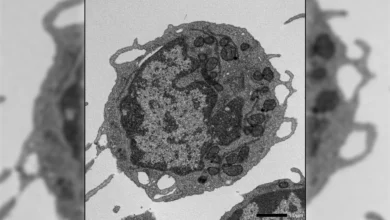
What they uncovered was a persistent, underlying vulnerability in intestinal cells. Contrary to the prevailing theory that cell death in IBD is merely a byproduct of inflammation, the study suggests that a specific, abnormal pattern of cell death is actually a primary driver of the disease. These cells, even in patients who feel entirely well, are effectively "primed to die." This molecular fragility acts as a hidden precursor, a biological domino that, once tipped, contributes to the catastrophic inflammatory response characteristic of a full-blown flare-up.
The Chronology of Discovery: From Patient Biopsies to Organoids
The research project was a multi-year undertaking that bridged the gap between clinical observation and laboratory experimentation. Recognizing the limitations of relying on mouse models—which often fail to accurately mimic the complex, nuanced reality of human intestinal pathology—the researchers pivoted to a human-centric methodology.
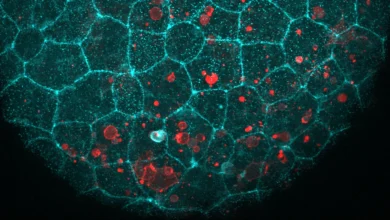
Between 2021 and 2023, the team worked closely with clinicians to collect approximately 900 biopsy samples from a cohort of 80 participants, including individuals with and without inflammatory bowel disease. This extensive collection allowed the researchers to utilize "patient-derived organoids." These are effectively "mini-guts" grown in a laboratory setting that mirror the specific genetic and biological characteristics of the individual patient.
By observing these organoids over a two-year longitudinal period, the researchers were able to draw a direct correlation between the severity of the molecular cell-death signaling in the lab-grown tissue and the frequency of actual clinical relapses in the patients. This breakthrough provides a biological map of the disease progression, identifying the molecular signatures that precede the onset of clinical symptoms.
Supporting Data and the "Smoldering" Defect
The identification of this defect—a state where intestinal cells exhibit abnormal death signaling—challenges the traditional definition of "remission." In clinical practice, remission is often defined by the absence of symptoms or the healing of visible lesions on a colonoscopy. This new research suggests that "remission" may be a misleading term; while the patient may be symptom-free, the cellular machinery of the gut may still be operating in a high-risk, vulnerable state.
The data indicates that the defect is present even in the earliest stages of the disease, including in patients with mild clinical manifestations. This suggests that the "smoldering" molecular problem is one of the very first signs of disease progression. By analyzing these biopsies, the researchers identified specific inflammatory signals that trigger this cell death response. This level of granular detail allows for a potential future where doctors might not just treat the symptoms, but target the specific molecular pathways that cause the gut barrier to fail.
Official Perspectives and Expert Analysis
Dr. Andre Samson, a co-author of the study, emphasized the psychological and physical toll of the current cycle of IBD management. "Once you’ve got the diagnosis, IBD doesn’t go away," Dr. Samson noted. "Even if you become symptom-free on the current treatments, we know there’s a likelihood you’re going to have a flare or relapse." The study’s findings provide a biological explanation for this phenomenon, offering validation for patients who have long felt that their disease was "lurking" just beneath the surface.
Professor James Murphy, a deputy director at WEHI and a lead investigator on the project, highlighted the importance of shifting the focus toward early-stage disease. "Most people have been focusing on the major clinical problem, when someone comes to hospital with severe gut inflammation," he stated. "We’ve gone to the other end of the spectrum… what we’re finding is this molecular defect happening very early in disease progression—one of the first dominoes to fall."
Professor Edwin Hawkins, who headed the analytical efforts at the Colonial Foundation Diagnostics Center, underscored the methodology as the study’s primary strength. By utilizing human tissue rather than animal models, the team has ensured that their findings are directly relevant to the human condition, thereby increasing the likelihood that these insights will eventually translate into clinical practice.
Broader Implications: The Future of Personalized Medicine
While the researchers caution that these findings will not result in an immediate clinical test or a new miracle drug, they lay a foundational blueprint for the next generation of IBD therapy. The ultimate goal of the medical community is to achieve "deep remission"—a state where not only are symptoms gone, but the biological drivers of the disease are also silenced.
The implications for personalized medicine are profound. IBD is a highly heterogeneous condition; it manifests differently in almost every patient. Currently, treatment selection is often a process of trial and error, where patients cycle through various biologics and immunosuppressants until one proves effective. The ability to monitor a patient’s "molecular health" could allow clinicians to predict who is at a higher risk of relapse and intervene before a flare-up occurs.
Dr. Jiyi Pang, a key member of the research team, noted that the next phase of the research involves identifying which of these molecular signals are "therapeutically actionable." If researchers can target the specific pathways causing the abnormal cell death, they may be able to stabilize the gut lining, keeping patients in remission for significantly longer periods.
A Collaborative Effort Toward Long-Term Management
The study was not the work of a single institution but a broad, interdisciplinary collaboration. It involved experts from the University of Melbourne, the Royal Melbourne Hospital, the Royal Children’s Hospital, the Monash Institute of Pharmaceutical Sciences, the Hudson Institute of Medical Research, and Monash University. This diversity of expertise was essential, combining the clinical insights of gastroenterologists with the molecular precision of laboratory scientists.
The financial support for this research underscores its significance, with funding provided by a robust coalition of organizations including the Kenneth Rainin Foundation, the National Health and Medical Research Council (NHMRC) of Australia, the Australian Research Council, the Stafford Fox Medical Research Foundation, the Colonial Foundation, Crohn’s and Colitis Australia, and the Victorian State Government.
Conclusion: Moving Beyond Symptom Management
The path from a laboratory discovery in a petri dish to a standardized clinical tool is long and rigorous. Dr. Aysha Al-Ani, a co-author who bridges the gap between the lab and the clinic, emphasized that while the findings are promising, they are currently in the discovery phase. The work provides a "foundation for future research" into more sophisticated forecasting tools.
For the 180,000 Australians and millions worldwide living with IBD, the promise of this research is not just about better medication, but about the restoration of quality of life. By understanding the "smoldering" defect that keeps the disease active even in quiet times, medical science is moving closer to a future where flare-ups are not inevitable, but avoidable. The study represents a monumental step toward a more precise, data-driven, and patient-centered approach to managing one of the most challenging chronic conditions in modern medicine. As research continues to refine these molecular markers, the goal of "deep remission" appears, for the first time, to be a reachable clinical target rather than an aspirational ideal.