The modern digital landscape is saturated with endless streams of user-generated content, targeted advertisements, and viral trends promising miraculous, budget-friendly transformations. Among the most recent and widespread phenomena capturing the attention of late-night social media scrollers is a peculiar DIY skincare trend: combining household toothpaste with petroleum jelly, specifically the brand-name product Vaseline. Promoted across platforms like TikTok, Instagram, and various programmatic banner ads, this homemade concoction claims to offer an overnight remedy for everything from stubborn acne to dry skin and facial blemishes. While the allure of utilizing accessible, inexpensive household items to solve complex dermatological issues is undeniable, skincare professionals and dermatologists urge extreme caution, pointing out that this viral mixture is not only ineffective but potentially harmful to skin health.
The Rise of DIY Beauty Culture and Clickbait Advertisements
To understand the proliferation of the toothpaste-and-Vaseline trend, one must examine the broader cultural context of contemporary wellness and beauty consumption. Over the past decade, the democratization of beauty advice through social media has birthed an expansive digital ecosystem centered on do-it-yourself (DIY) treatments. Driven by economic pressures, a desire for zero-waste or minimal-ingredient routines, and generalized skepticism toward the commercial beauty industry, consumers increasingly look to alternative remedies.
Simultaneously, digital advertising networks have capitalized on this curiosity. Clickbait advertisements frequently feature ambiguous, highly enticing hooks—such as asking viewers if they know what happens when common household products are mixed together. These ads are specifically engineered to exploit human curiosity, driving traffic to content farms and blog networks that prioritize sensationalized engagement over scientific accuracy. The pairing of toothpaste and Vaseline represents a textbook example of this digital phenomenon: two ubiquitous items found in nearly every household bathroom, seemingly brimming with hidden synergistic potential when combined.
Examining the Individual Components: Vaseline and Toothpaste
Individually, both Vaseline and toothpaste have long histories of utility, though neither was originally formulated for complex facial skincare regimens. Vaseline, a proprietary brand of petroleum jelly, is a semisolid mixture of hydrocarbons derived from petroleum refinement. First popularized in the 19th century as a remedy for skin wounds and burns, petroleum jelly functions primarily as an occlusive agent. Rather than adding moisture to the skin, Vaseline creates a physical barrier on the epidermis that prevents transepidermal water loss, effectively sealing in existing hydration. This property has made it a staple for treating chapped lips, minor cuts, and, more recently, the viral beauty practice known as "slugging"—the act of coating the face in a thick layer of petroleum jelly overnight.
However, the production of petroleum jelly is inextricably linked to the fossil fuel industry. As a byproduct of oil refining, petroleum extraction and processing contribute directly to greenhouse gas emissions and global climate change. Consequently, environmental advocates increasingly encourage consumers to seek plant-based or sustainable alternatives to traditional petroleum-based products.
Toothpaste, on the other hand, is designed specifically for oral hygiene. Formulated to clean teeth, freshen breath, and prevent dental decay, traditional toothpastes often contain active ingredients such as fluoride, abrasives (like calcium carbonate or silica), detergents (like sodium lauryl sulfate), and antimicrobial agents or essential oils for flavor, such as menthol or peppermint. Over the years, urban legends and internet folklore have popularized the notion that dabbing toothpaste onto a blemish will dry it out overnight. While toothpaste does contain drying agents, dermatologists have repeatedly warned that these formulations are far too harsh for delicate facial skin, often leading to irritation, chemical burns, or contact dermatitis.
The Mechanics of the Viral Mixture
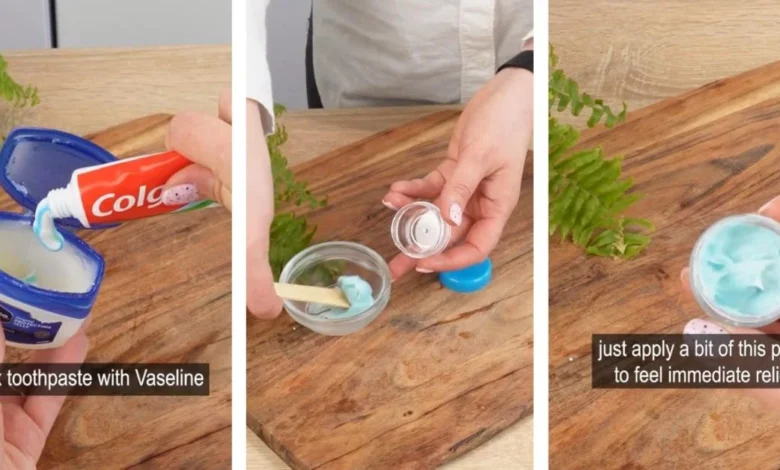
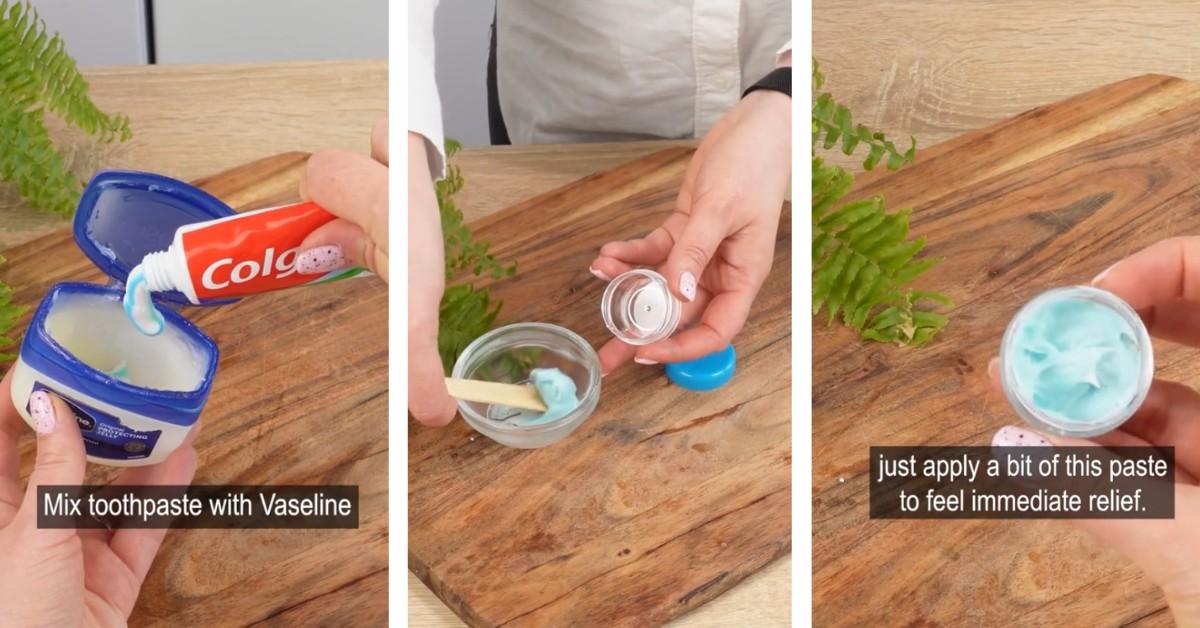
According to online tutorials and social media explainers, preparing the DIY balm is deceptively simple. Proponents instruct users to combine equal parts of standard white toothpaste and Vaseline in a small container, mixing them thoroughly by hand. The resulting substance typically yields a creamier, thicker consistency than either ingredient possesses independently, imbued with a sharp, minty aroma.
The core claim surrounding this mixture is that it offers the "best of both worlds": the blemish-drying, antibacterial properties of toothpaste combined with the deep, sealing hydration of Vaseline. Social media creators frequently present the paste as an all-in-one corrective treatment capable of clearing acne, smoothing skin texture, and locking in moisture simultaneously.
Dermatological Reality Versus Internet Myth
Despite the widespread popularity of tutorial videos demonstrating the application of this mixture, skin care professionals emphasize that the scientific reality directly contradicts social media claims. Far from enhancing one another’s benefits, combining toothpaste and Vaseline actually neutralizes the functional properties of both components.
Dermatologists explain that the primary mechanisms that make toothpaste a perceived (though flawed) acne treatment—namely its drying agents and abrasives—are largely rendered inert when the toothpaste is diluted and encapsulated within the heavy, hydrophobic matrix of petroleum jelly. Conversely, the occlusive benefits of Vaseline are not improved by the introduction of chemical detergents, fluorides, and synthetic fragrances found in toothpaste. In fact, applying such a chemically complex mixture to the facial skin introduces significant risks of adverse reactions.
The inclusion of menthol, artificial flavorings, foaming agents, and abrasive particles in toothpaste can cause severe irritation, redness, peeling, and allergic contact dermatitis when left on facial skin for extended periods. Furthermore, trapping these potential irritants beneath an occlusive layer of petroleum jelly heightens the likelihood of clogged pores, potentially exacerbating the very acne breakouts users are attempting to treat.
Expert Warnings and Industry Perspectives
Leading dermatological associations and skincare experts have frequently addressed the risks associated with viral DIY beauty hacks. Industry professionals emphasize that while household items like petroleum jelly certainly have valid, targeted uses within a domestic medicine cabinet, they cannot replicate the carefully formulated efficacy of over-the-counter or prescription dermatological treatments.
Skin experts interviewed by beauty publications consistently advise that treating specific dermatological concerns—such as acne, hyperpigmentation, burns, or chronic dryness—requires products specifically engineered, tested, and approved for facial use. Ingredients in dedicated skincare products undergo rigorous clinical testing to ensure safety, appropriate pH levels, and non-comedogenic properties (meaning they will not clog pores), standards that household oral hygiene products and raw petroleum jelly simply do not meet.
Broader Implications for Digital Wellness Trends
The persistence of trends like the toothpaste-and-Vaseline mixture highlights a broader vulnerability within digital information ecosystems. As algorithms increasingly prioritize engagement metrics—such as watch time, shares, and comment volume—sensationalized and scientifically dubious content frequently outperforms evidence-based education.
This dynamic fosters an environment where misinformation regarding health and wellness can spread rapidly across demographics, sometimes resulting in physical harm or wasted financial resources as consumers purchase ingredients to replicate viral experiments. Public health advocates and digital literacy experts stress the importance of critical evaluation when consuming health-related content online, encouraging users to cross-reference social media claims with established medical consensus.
Conclusion
Ultimately, while the prospect of a cheap, easy, and instantaneous skincare cure-all will continue to captivate audiences online, the reality of the toothpaste and Vaseline trend serves as a cautionary tale about the pitfalls of DIY beauty culture. Neither ingredient, whether used independently or whipped together into a mint-scented paste, offers a safe or scientifically supported solution for complex facial skin issues. For those seeking genuine improvements in skin health, dermatologists advise bypassing internet clickbait and turning instead to clinically validated, targeted skincare formulations designed specifically to address individual dermatological needs.
Related posts: