Williams Formula 1 team balances progress and frustration following a pivotal upgrade weekend in Baku

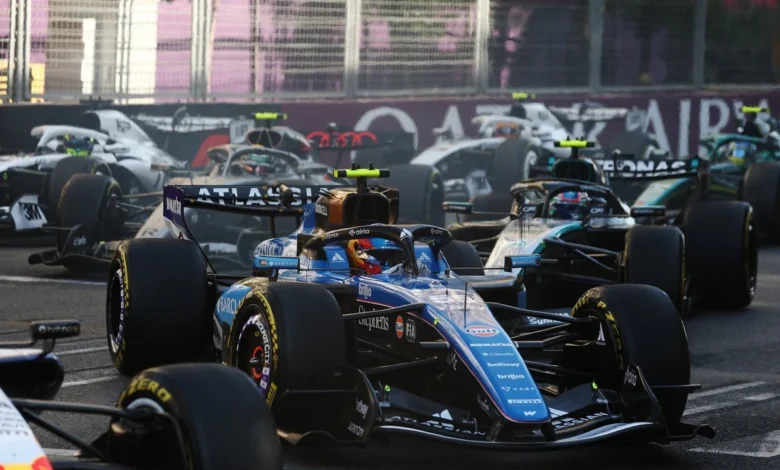
The Azerbaijan Grand Prix represented a critical juncture for the Williams Racing team, serving as the debut for a long-awaited “B-spec” evolution of the FW48. While the weekend yielded a solitary championship point and a tangible improvement in aerodynamic efficiency, the reality of the team’s position in the 2026 constructors’ standings—languishing in ninth—remains a sobering backdrop. The weekend was a complex narrative of technical ambition, driver misfortune, and a strategic pivot toward the future of the Grove-based outfit.
A Technical Reset for the FW48
For months, the Williams technical department, led by James Vowles, had been working under the constraints of a development cycle that had largely stalled. The Azerbaijan update was not merely a collection of minor tweaks but a fundamental shift in the car’s architecture. The team introduced an entirely new chassis—designed specifically to bring the car down to the minimum weight limit—alongside a revised floor and comprehensive aerodynamic bodywork updates.
These improvements were aimed at curing the persistent handling imbalances that have plagued the FW48 throughout the 2026 season. Initial data from Friday’s Free Practice 2 sessions indicated that the car had finally found a window of operation that allowed it to compete with the midfield pack, specifically challenging the likes of Haas, Racing Bulls, and the nascent Audi factory entry. For the first time this year, the team’s simulation models matched the on-track reality, providing a much-needed validation of the work conducted back at the Grove factory.

The Baku Chronology: From Promise to Penalty
The weekend’s trajectory began with optimism, as both drivers demonstrated increased pace relative to their early-season baselines. In qualifying, Carlos Sainz put in a masterclass performance to secure ninth on the grid, marking the team’s first Q3 appearance of the season. However, the joy was short-lived; a grid penalty relegated the Spaniard to 14th, forcing him to start behind his teammate, Alex Albon.
As the race commenced, the limitations of the new package—and the harsh reality of street-circuit racing—became apparent. The team struggled with pace in the opening stint, unable to make the significant progress through the field that had been anticipated after promising long-run data. The race took a dramatic turn during a restart, when a collision involving Franco Colapinto, Pierre Gasly, and Lando Norris created a chaotic scramble for positions. Amidst the debris and the shifting order, Williams managed to salvage a point, but the success was tempered by the abrupt end to Alex Albon’s race.
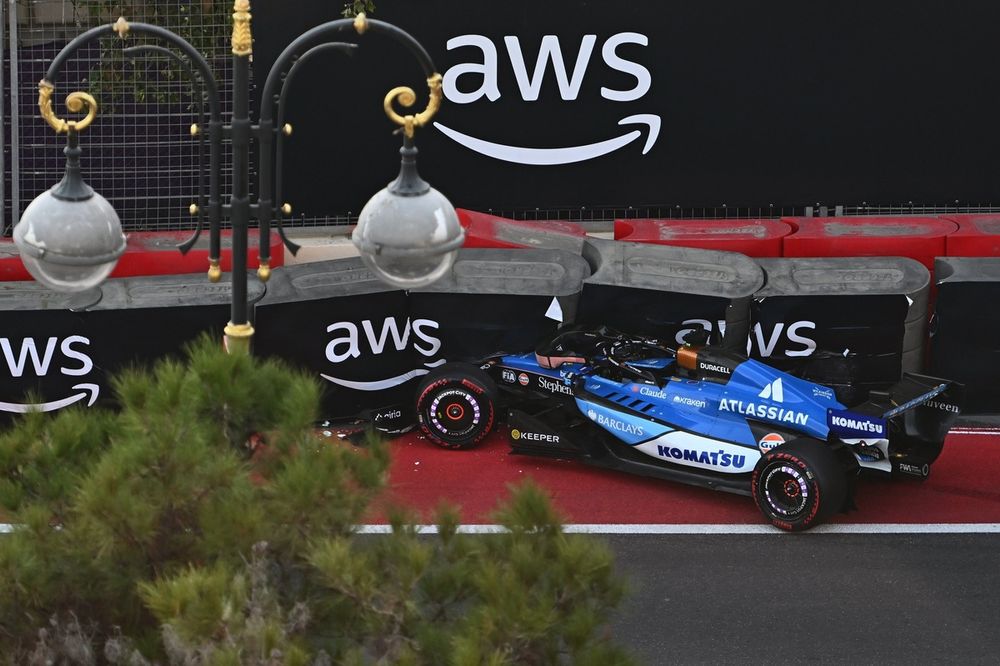
On lap 31, Albon’s afternoon concluded against the barriers. The incident served as a stark reminder of the car’s lingering mechanical traits. Albon later explained that a combination of a late-braking maneuver and a sudden gust of wind had pushed the car beyond its limit. He noted that the FW48 possesses a specific tendency to "three-wheel"—lifting the front inner wheel under heavy cornering loads—which renders the car susceptible to sudden front-locking. Once that threshold is crossed, the driver has minimal recourse.
The Cost of Performance: Analyzing the Deficit
The points finish, while welcome, must be viewed through the lens of the competitive landscape. Williams has struggled to maintain performance consistency across different track profiles. Baku, with its unique blend of long straights and tight, technical sections, has historically favored the efficiency profile of the Williams design.

However, the upcoming stretch of the calendar—including high-downforce circuits like Sepang and the technical street layout in Singapore—presents a more daunting challenge. James Vowles has been candid about the team’s prospects for these upcoming events. The expectation is that while the team will continue to optimize the current package, the aerodynamic demands of these tracks may see Williams slip back in the pecking order relative to teams with more sophisticated high-downforce platforms.
"It’s a step, exactly the step we expected," Albon remarked following the race. "But we are still playing catch-up. We have to be realistic about where we are. The next few races will be a true test of whether this update is a universal improvement or simply a track-specific gain."
Strategic Implications and the 2027 Horizon
The 2026 season is increasingly viewed by the Williams hierarchy as a foundational year, a period of “stress testing” the organization’s ability to develop and integrate major components. The fact that the team successfully manufactured a new chassis and brought it to the track under the current cost-cap regulations is, in itself, a significant operational improvement compared to the team’s performance 12 months ago.
James Vowles has emphasized that the primary objective for the remainder of the year is to finalize the design philosophy that will carry over into 2027. With major power unit and aerodynamic regulation changes on the horizon for the next campaign, the team’s ability to "absorb" these changes will be vital.
"My real learning from this year is that we need a lot more investment to bridge the gap to those in front," Vowles told Sky Sports. "The cost cap is a restrictive factor, but we are learning how to operate more efficiently within those bounds. This upgrade is directionally correct. It establishes the baseline we need for next year. We recognize that 2026 is a year of rebuilding, and we are already shifting our focus to the necessary steps for 2027."
The Path Forward
The broader impact of the Baku weekend is that Williams has finally broken the stagnation that characterized the first half of the season. By successfully deploying the new chassis, the team has proven that its internal processes—from wind tunnel correlation to manufacturing—are functioning at a higher level. However, the path to the midfield remains steep.
The team’s reliance on driver talent to extract performance is evident, as both Sainz and Albon have been forced to drive around the car’s inherent instability. As the season progresses into the final triple-header, the team’s focus will likely shift from aggressive points hunting to gathering as much telemetry data as possible. This data will be instrumental in the 2027 design phase, where the team hopes to capitalize on the smaller, more manageable regulatory shifts.
Ultimately, the Azerbaijan Grand Prix provided a microcosm of the current Williams state: a team clearly on the move, yet hindered by the legacy of a difficult winter and the financial constraints of the modern era. While a single point in Baku does not fundamentally change the team’s standing, the successful introduction of the B-spec car suggests that the "massive effort" alluded to by Vowles is beginning to yield the intended results. For a team with the historical pedigree of Williams, the focus now is not on the standings of today, but on the competitive viability of tomorrow. As the garage packs up and looks toward the next set of challenges, the consensus within the team is clear: they have taken the first step toward a more consistent future, but the journey to return to the front of the grid remains a long and arduous process.