NASA Unveils Imposing 20-Foot Sunshade for NEO Surveyor Mission to Safeguard Earth From Hidden Cosmic Threats

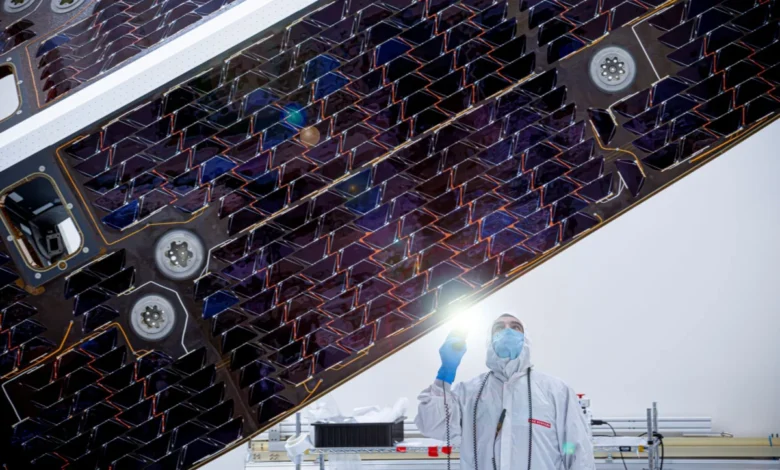
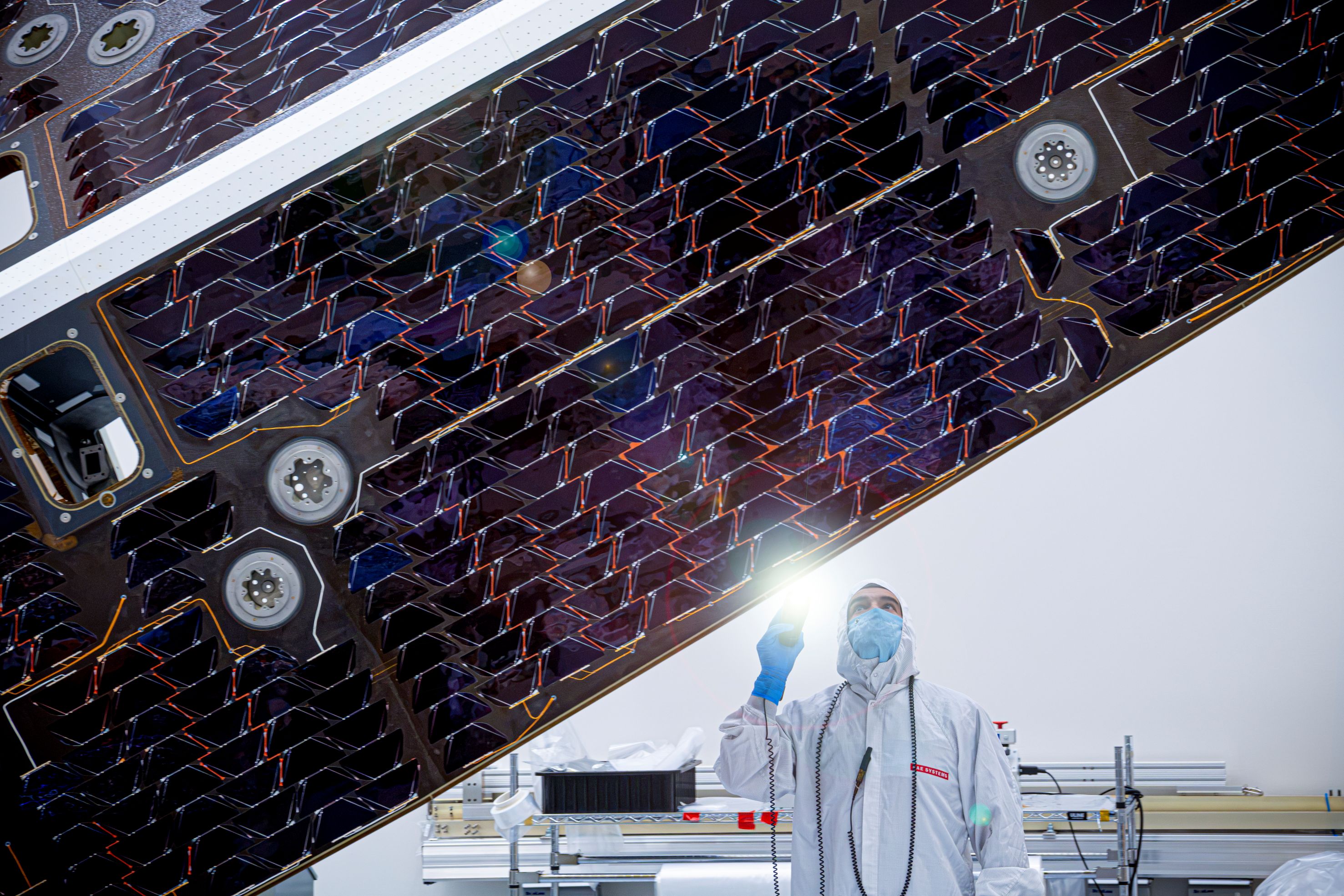
The complex architecture of space exploration often relies as much on thermal management as it does on propulsion and optics. In a significant milestone for planetary defense, technicians have successfully inspected and readied the massive, 20-foot-tall sunshade for NASA’s upcoming Near-Earth Object (NEO) Surveyor mission. Released by the agency in late October 2026, the newly showcased hardware highlights the meticulous engineering required to protect sensitive infrared space telescopes from the blistering heat of the Sun while simultaneously harnessing solar energy to power the observatory.
As orbital debris, comets, and asteroids continue to pose persistent, long-term risks to terrestrial safety, the NEO Surveyor mission represents a critical leap forward in humanity’s ability to catalogue potentially hazardous celestial bodies. Designed specifically to hunt down elusive space rocks that traditional ground-based observatories routinely miss, this specialized infrared space telescope will soon take its place in the cosmic vanguard, peering into the sunward glare that has historically blinded terrestrial sky-surveys.
The Anatomy of the NEO Surveyor Sunshade
Measuring an imposing 20 feet (6 meters) in height and spanning roughly 8 feet (2.4 meters) wide at its sturdy base, the newly inspected sunshade is an engineering marvel designed and manufactured by BAE Systems Space & Mission Systems. In the vacuum of space, thermal control is a matter of mission success or total failure. Infrared telescopes must operate at extremely low temperatures to detect the faint, ambient heat signatures of dark space rocks. Without a massive physical barrier blocking direct solar radiation, the delicate instruments aboard NEO Surveyor would be overwhelmed by thermal noise, rendering them incapable of spotting incoming threats.
Beyond its primary function as a thermal shield, the structure serves a dual purpose: it acts as the mounting platform for solar arrays that provide the spacecraft with the electrical power necessary to sustain its multi-year operations. The juxtaposition of a device built to absorb solar rays for energy while simultaneously shielding delicate sensors from extreme heat underscores the sophisticated compromise engineered into modern aerospace hardware.
The structural integrity of this sunshade was verified during rigorous pre-flight inspections conducted in late October 2026. Technicians carefully examined every square inch of the multi-layered reflective membranes and composite support trusses to ensure they can withstand the brutal mechanical vibrations of a rocket launch and the punishing thermal gradients of deep space.
Background Context: The Planetary Defense Imperative
The necessity for a dedicated infrared space telescope stems from a critical blind spot in current planetary defense strategies. For decades, astronomers have relied on optical ground-based telescopes to scan the night sky for Near-Earth Objects (NEOs). While these terrestrial systems have successfully catalogued tens of thousands of asteroids and comets, they suffer from a fundamental geographical and environmental limitation: they can only observe the night sky.
When asteroids approach Earth from the direction of the Sun, the glare of our star completely washes out their faint reflected light, rendering ground-based optical telescopes virtually blind. Furthermore, atmospheric distortion, weather conditions, and light pollution severely limit the operational window and sensitivity of terrestrial instruments.
To bridge this critical gap, the United States Congress directed NASA to establish a comprehensive NEO detection program. NEO Surveyor is the direct realization of that mandate. By positioning an infrared telescope in space—where it is free from atmospheric interference and can be oriented to safely observe regions of the sky previously obscured by solar glare—NASA aims to dramatically accelerate the discovery timeline for hazardous asteroids. Infrared astronomy is particularly well-suited for this task because asteroids absorb sunlight and reradiate it as heat; by detecting this thermal emission, space-based infrared sensors can accurately measure an asteroid’s size and composition regardless of how dark or reflective its surface might be.
Chronology and Development Timeline
The journey toward the realization of the NEO Surveyor mission has been defined by decades of evolving planetary defense policy and rigorous technological refinement.
In the wake of the 1998 Congressional directive instructing NASA to discover and catalogue at least 90 percent of near-Earth asteroids larger than 1亿元 meters in diameter—a goal largely achieved by ground-based surveys like the Wide-field Infrared Survey Explorer (WISE) and its asteroid-hunting spinoff, NEOWISE—scientists realized that finding smaller, yet still catastrophic, 140-meter-class asteroids required a dedicated, space-based architecture.
By the late 2010s, mission concepts for a dedicated Near-Earth Object Surveillance Mission began to solidify. In 2019, the project passed its preliminary design review milestones, transitioning from a theoretical concept into an officially funded flight project. Renamed NEO Surveyor, the mission was formally approved to proceed into its final design and fabrication phases under the management of NASA’s Jet Propulsion Laboratory (JPL) and the Planetary Defense Coordination Office (PDCO).
Throughout 2024 and 2025, various subsystems, including the advanced infrared detectors and spacecraft bus structures, underwent rigorous environmental and thermal-vacuum testing. The completion and inspection of the 20-foot sunshade in October 2026 marks one of the final major structural assembly milestones ahead of the mission’s planned integration and launch preparations later in the decade.
Official Perspectives and Expert Analysis
While NASA has consistently emphasized the defensive nature of the mission, independent aerospace analysts and planetary scientists view NEO Surveyor as a cornerstone of modern space situational awareness.
"We are moving from a reactive posture to a proactive posture when it comes to safeguarding our planet," noted Dr. Elena Vance, a senior researcher at the Extraterrestrial Materials Institute. "For years, the sunward corridor has been a dark alley in our cosmic neighborhood. Ground telescopes simply cannot peer through the solar glare in time to give humanity adequate warning. NEO Surveyor changes the geometry of the problem by taking the observatory off the surface of the Earth and placing it where it can monitor the blind spots."
BAE Systems Space & Mission Systems, responsible for constructing the complex thermal and structural elements like the sunshade, has emphasized the stringent manufacturing tolerances required for deep-space hardware. Engineering teams utilized advanced composite materials to ensure the sunshade remains lightweight enough to meet strict launch vehicle mass limits while maintaining the rigidity required to withstand intense acoustic and gravitational loads during liftoff.
Broader Impact and Implications for Global Security
The implications of the NEO Surveyor mission extend far beyond academic astronomy; they touch directly upon global risk mitigation and national security. Although a catastrophic asteroid impact is a low-probability, high-consequence event, the potential devastation wrought by an undetected 140-meter asteroid—capable of releasing energy equivalent to multiple thermonuclear warheads—justifies the substantial investment in space-based detection infrastructure.
By identifying potentially hazardous objects years or even decades before a potential intersection with Earth’s orbit, missions like NEO Surveyor provide space agencies with the most valuable commodity available in planetary defense: time. With adequate lead time, space missions such as NASA’s Double Asteroid Redirection Test (DART) have already demonstrated that kinetic impactors can successfully alter an asteroid’s trajectory. However, deflection technology is useless if the target remains undiscovered until it is too late to launch a counter-measure.
As the sunshade integration and subsequent spacecraft assembly continue through the late 2020s, the global scientific community watches with keen interest. The successful deployment and operation of NEO Surveyor will not only fulfill a vital mandate from lawmakers but will also provide a permanent, vigilant sentinel guarding Earth against unseen visitors from the deep solar system.
Related posts: