Cosmic Echoes of the Past: Scientists Unveil New Insights Into the Pa 30 Supernova Remnant and Its Rare Zombie Star

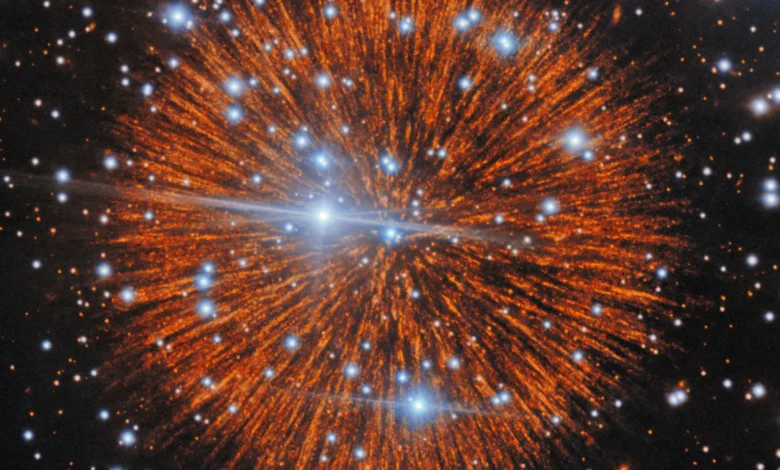
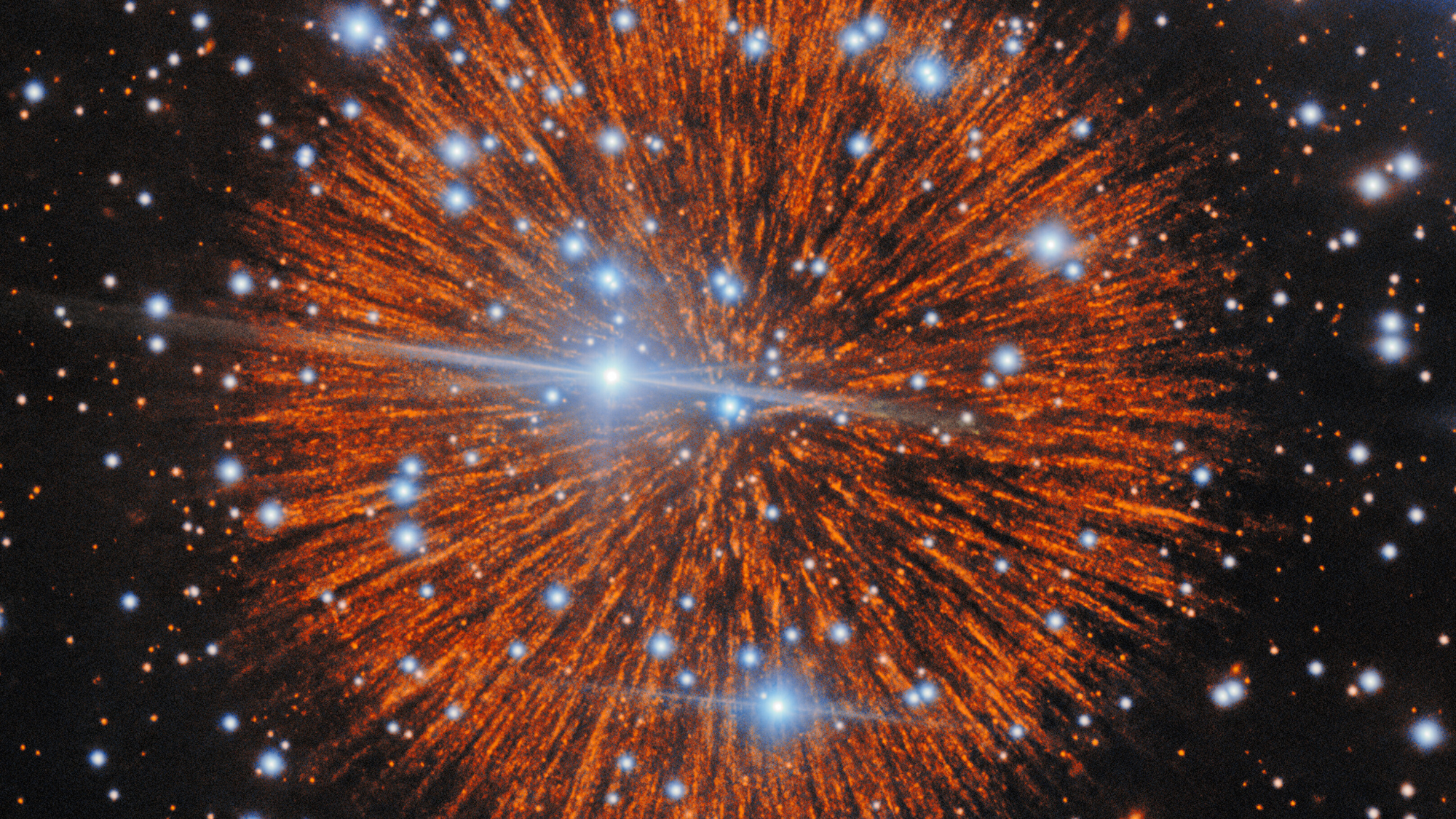
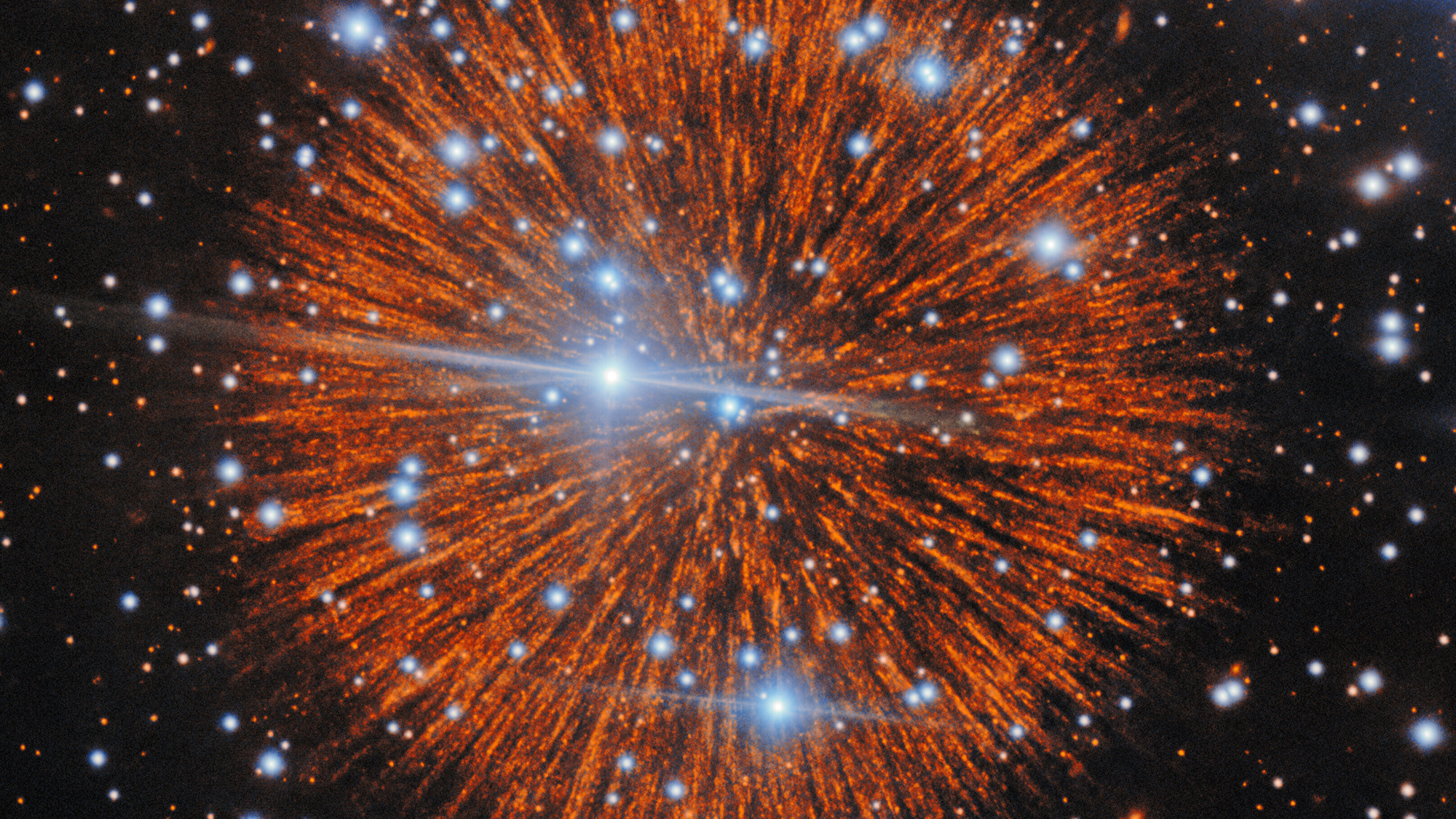
The celestial structure known as Pa 30 has long stood as a singular curiosity in the Milky Way, serving as a silent witness to a cataclysmic event that unfolded across the cosmos approximately 850 years ago. Recent high-resolution observations conducted by the Gemini North telescope have provided astronomers with an unprecedented look at this dandelion-shaped nebula, revealing a complex, symmetrical architecture of gas and stellar debris. By analyzing the "string of pearls" formation within the remnant, researchers are gaining a deeper understanding of Type Iax supernovas—rare, "sub-luminous" explosions that leave behind a shattered yet surviving stellar core, colloquially known as a zombie star.
A Historic Explosion Re-examined
The origins of Pa 30 are deeply rooted in human history. In the year 1181, observers across East Asia and the Middle East documented a "guest star" that suddenly appeared in the night sky, remaining visible for months. This event was meticulously recorded in historical texts, including the Japanese Azuma Kagami, Chinese imperial records, and various Arabic astronomical manuscripts. These documents provide a crucial temporal anchor for modern astrophysicists, marking Pa 30 as one of only five confirmed supernova remnants in our galaxy that were observed by the naked eye before the invention of the telescope.
For centuries, the identity of this guest star remained a subject of academic debate. It was not until 2013 that citizen scientists, working in conjunction with professional astronomers, successfully linked the historical records of 1181 to the modern-day nebula Pa 30. This identification transformed the object from a mere curiosity into a vital laboratory for stellar evolution, offering a rare opportunity to bridge the gap between ancient observational records and contemporary high-energy astrophysics.
The Mechanism of a Zombie Star
The standard model for a Type Ia supernova involves a white dwarf star—the dense, cooling core of a star similar to our sun—accreting mass from a binary companion. When the white dwarf exceeds the Chandrasekhar limit (roughly 1.4 times the mass of the sun), a runaway thermonuclear reaction occurs, resulting in a total destruction of the primary star.
However, Pa 30 represents the distinct and rarer Type Iax class. In these events, the explosion is less violent and less efficient. The primary star is not completely obliterated; instead, it is violently stripped of its outer layers and significantly altered, resulting in a "zombie star" that remains at the center of the blast site. The presence of this survivor at the heart of Pa 30 allows scientists to study the immediate aftermath of a failed or partial supernova, a process that is typically obscured by the sheer brilliance and distance of such events in other galaxies.
Unprecedented Observations at Gemini North
The recent investigation, led by Ilaria Caiazzo of the Institute of Science and Technology Austria (ISTA), utilized the Gemini North telescope to capture detailed spectral and visual data. The imagery reveals a series of knots along the radiating strands of gas—structures that the team has likened to a "string of pearls." These knots are colossal in scale, with each individual formation estimated to encompass the orbit of Neptune ten times over.
The uniformity of these structures suggests a highly specific physical process during the explosion. "The planetary region of our solar system could fit in each knot about ten times with room to spare," Dr. Caiazzo noted in a summary of the findings. "The knots are quite strikingly uniform. We are excited to try to model them." The symmetry of the debris is particularly notable. In many supernova events, the blast is asymmetrical, imparting a significant "kick" to the surviving core. In the case of Pa 30, the zombie star sits at the near-exact center of the nebula, implying a remarkably balanced explosion. Measurements of the star’s motion confirm this, showing that the object is not moving away from the center of the remnant at any significant velocity.
Supporting Data and Scientific Context
To appreciate the significance of Pa 30, one must look at the spatial constraints of the Milky Way. Located approximately 7,500 light-years from Earth, the nebula is relatively close in galactic terms, especially when contrasted with the galactic center, which lies some 26,000 light-years away. This proximity is the primary driver of the current research success; the ability to resolve these structures at such a scale is physically impossible for more distant, extragalactic supernova remnants.
The following timeline highlights the evolution of our understanding of this object:
- 1181 CE: The supernova is recorded by historical astronomers in Asia and the Middle East as a "guest star."
- 2013: Citizen scientists identify Pa 30 as a candidate for the 1181 event.
- 2021-2024: Advanced spectroscopic studies confirm the presence of a white dwarf survivor and map the expansion velocity of the debris.
- Present: High-resolution imaging reveals the "pearl-like" knots, providing new data for hydrodynamic modeling of Type Iax explosions.
Broader Implications for Galactic Archaeology
The implications of the Pa 30 research extend far beyond the study of a single object. By refining our understanding of how Type Iax remnants appear and evolve, astronomers are effectively building a search template. If Pa 30 is not a singular anomaly but rather a prototype for a class of "dim" supernovas, it is highly probable that other such remnants are currently hiding in plain sight within the Milky Way.
"Reliable historical records of stellar explosions extend back only about a thousand years," Caiazzo explained. "For all we know, there might well be similar remnants still lurking in the dark in our own galaxy."
The ability to identify these objects is crucial for understanding the diversity of stellar death. While Type Ia supernovas are often used as "standard candles" to measure the expansion of the universe, the Type Iax variety challenges the homogeneity of these events. If scientists can locate a larger sample of these remnants, they can better constrain the progenitor systems—the binary stars that lead to these unique, messy explosions—and improve the precision of cosmic distance measurements.
Future Directions
The team’s research, recently published in The Astrophysical Journal, marks the beginning of a larger effort to map the chemical and physical composition of the Pa 30 debris. Future observations are expected to utilize a combination of X-ray and optical data to determine the exact chemical makeup of the "pearls." This will reveal the nucleosynthesis products of the explosion, providing a snapshot of the heavy elements forged in the heart of the dying star.
Moreover, the study of Pa 30 acts as a reminder of the value of historical data in modern science. By pairing the observations of 12th-century astronomers with the capabilities of 21st-century observatories, researchers have been able to reconstruct a story that spans nearly a millennium. As the scientific community continues to analyze the Gemini North data, the "string of pearls" in Pa 30 will likely remain at the center of discussions regarding the life and, occasionally, the afterlife of stars.
The project represents a convergence of history, physics, and advanced technology. As researchers refine their models of the explosion’s symmetry and the subsequent expansion of the remnant, they are not only solving the mystery of an 850-year-old light in the sky but are also providing a roadmap for future discoveries in the vast, often opaque, reaches of our own galaxy. The "living dead" star at the center of Pa 30 serves as a testament to the fact that in the universe, even an ending can be the beginning of a long and enlightening scientific journey.