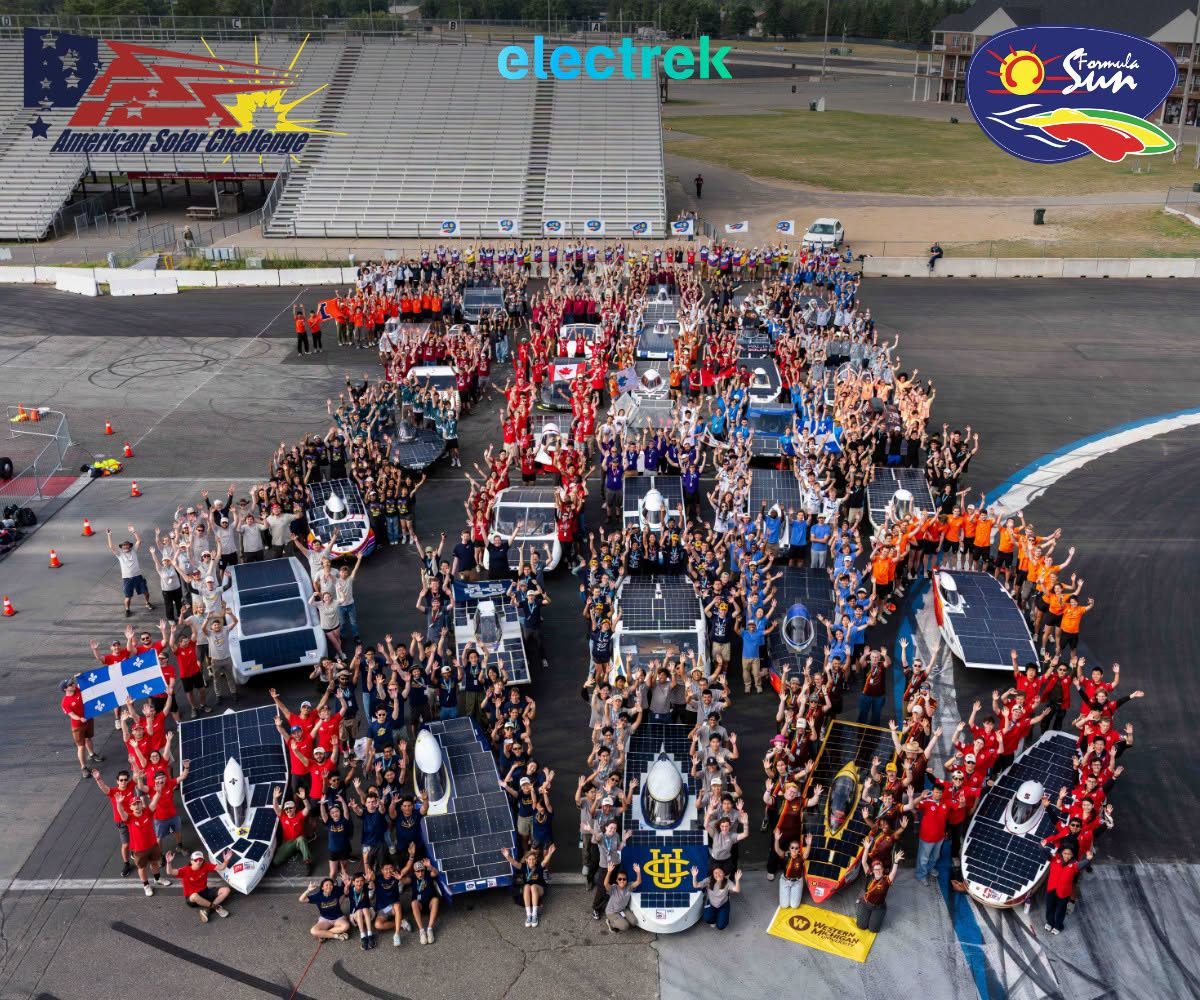
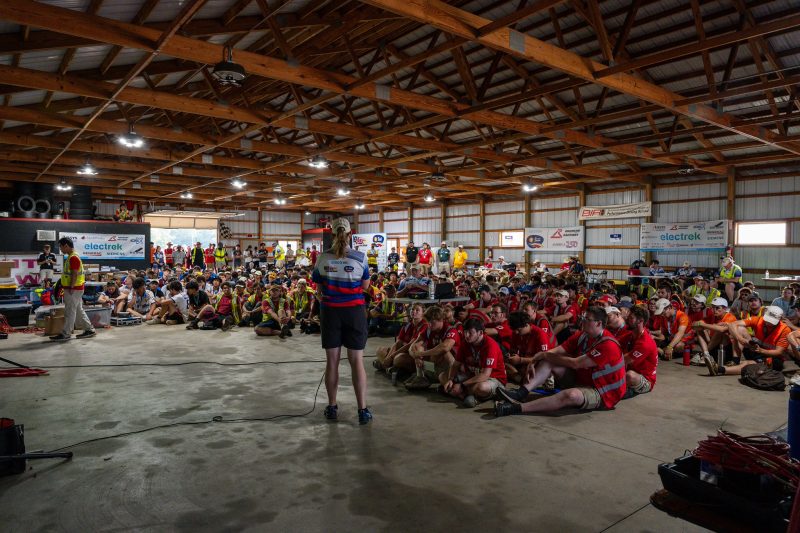
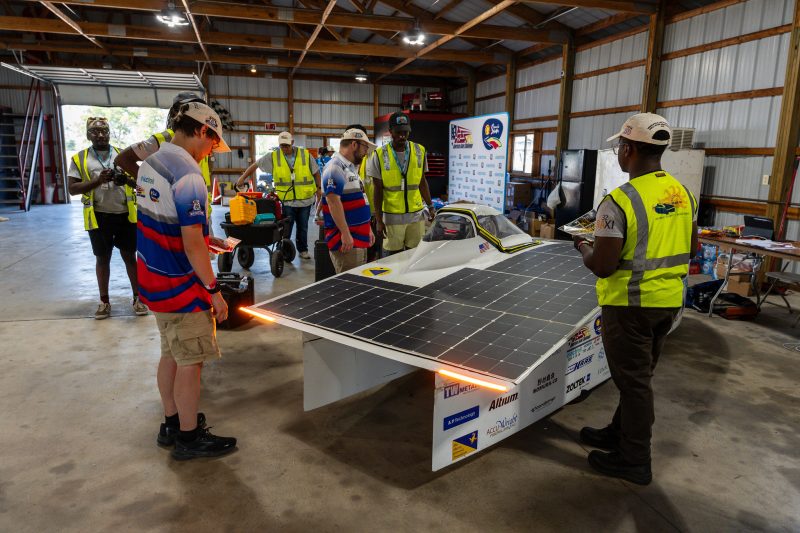
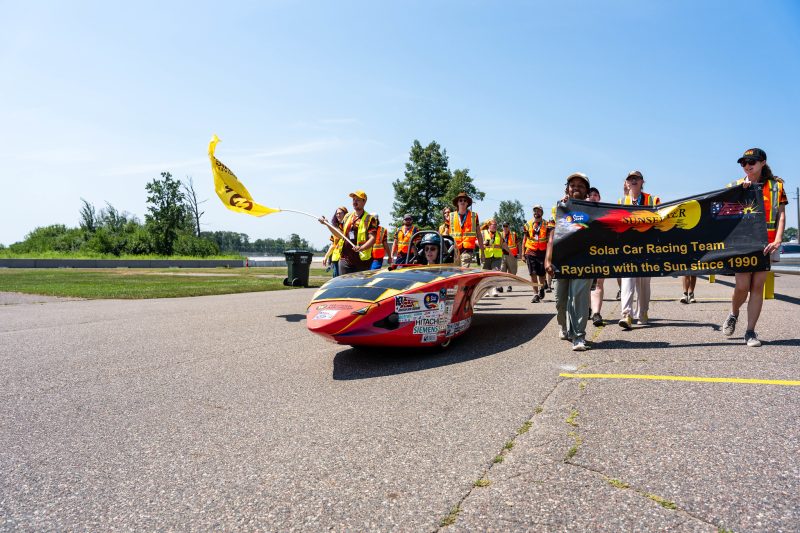
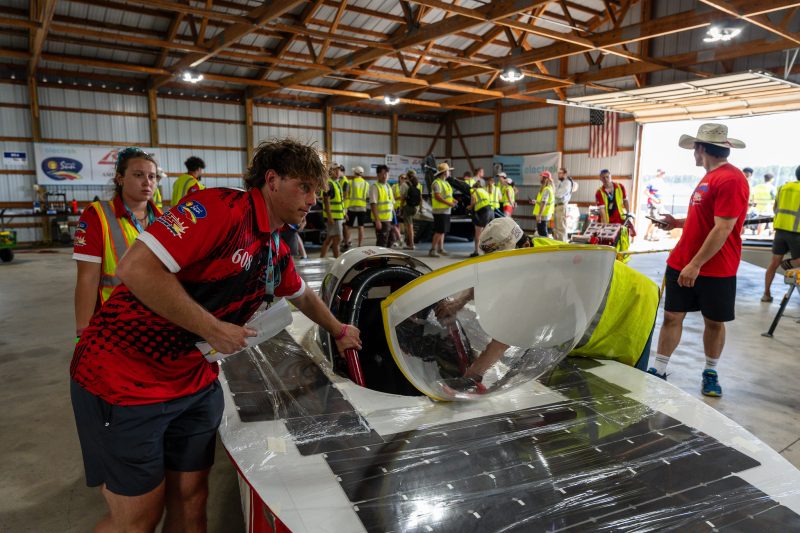
The opening day of the three-day track event was characterized by high-stakes technical maneuvering and a record-breaking level of participation. Organizers confirmed that 39 teams registered for the 2026 circuit, the highest number in the event’s history. However, the rigor of the competition was immediately evident; by the start of the first racing session, only 15 teams had successfully navigated the "scrutineering" phase—a series of exhaustive safety and compliance checks that evaluate everything from battery chemistry and mechanical braking to driver egress times and structural integrity.
A New Frontier for Solar Endurance Racing
The transition to Brainerd International Raceway represents a significant logistical and technical challenge for the participating universities. The 3.1-mile road course is renowned for its demanding turns and long straights, which, while favorable for top-speed testing, require precise energy management. On day one, the primary adversary for the teams was not just the clock or their competitors, but the erratic Minnesota weather.
Persistent wind gusts exceeding 16 mph created a complex aerodynamic environment. For solar vehicles, which are designed with ultra-lightweight frames and large surface areas to maximize photovoltaic absorption, crosswinds are a significant hazard. These gusts can induce lateral instability, forcing drivers to make constant steering corrections that increase tire scrub and energy consumption. Conversely, teams reported that tailwinds on the backstraights provided a temporary boost in efficiency, while the subsequent head-on winds added significant drag, testing the efficiency of the cars’ aerodynamic profiles.
Detailed Performance Analysis: Single-Occupant Vehicle (SOV) Class
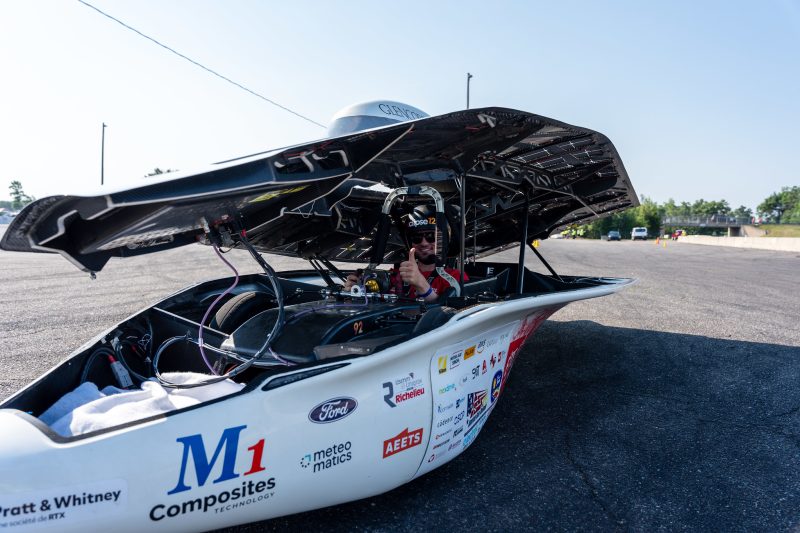
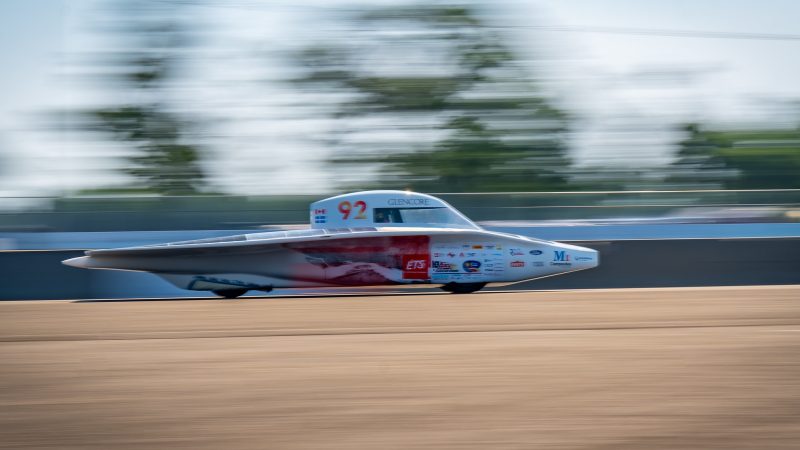
In the Single-Occupant Vehicle (SOV) category, which focuses on maximizing speed and efficiency with a single driver, École de technologie supérieure (ÉTS) from Quebec, Canada, established an early and commanding lead. By the close of the first day’s session, the ÉTS team had completed 112 laps. Given the 3.1-mile length of the track, this equates to a total distance of approximately 347 miles covered solely on solar power and stored battery energy.
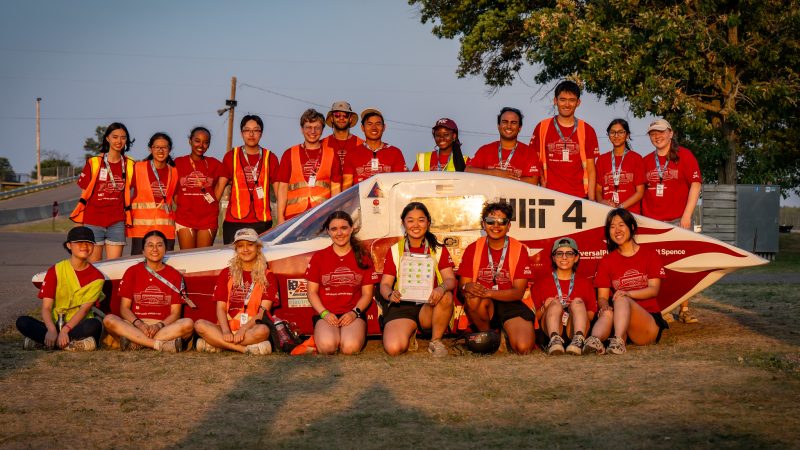
Beyond their volume of laps, ÉTS also set the benchmark for raw performance, recording the fastest lap of the day at 3:31:00. This translates to an average speed of nearly 53 mph. Observers noted that the ÉTS vehicle maintained remarkable stability through the raceway’s technical corners, suggesting a superior suspension setup and a low center of gravity that mitigated the impact of the day’s high winds.
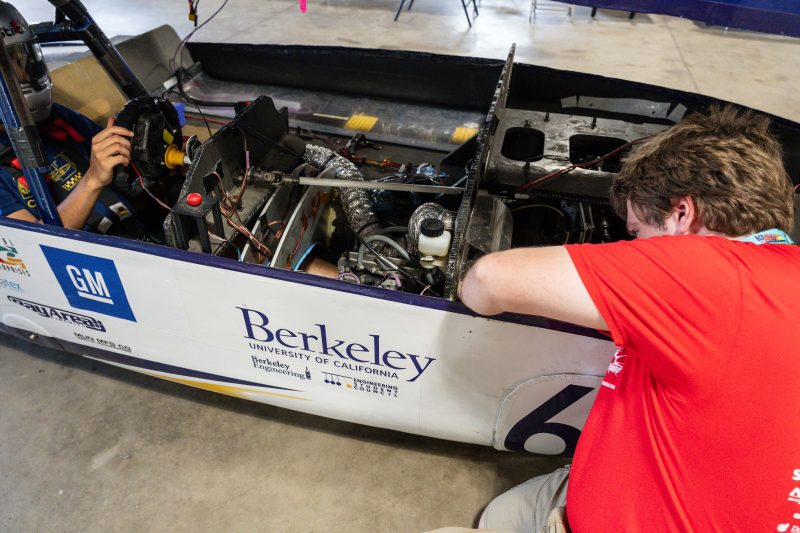
The SOV class remains the most competitive segment of the FSGP, as it allows engineering students to push the absolute limits of lightweight materials and solar cell integration. The performance of ÉTS sets a high bar for the remaining two days of racing, as other teams look to optimize their power-to-weight ratios to close the gap.
Strategic Developments: Multi-Occupant Vehicle (MOV) Class
The Multi-Occupant Vehicle (MOV) class, which emphasizes practicality and resembles consumer-grade automobiles with two or more seats, saw a strategic battle for dominance. Unlike the SOV class, the MOV category is judged on a combination of lap count, person-miles (the number of occupants multiplied by the distance traveled), and energy consumption from the grid.
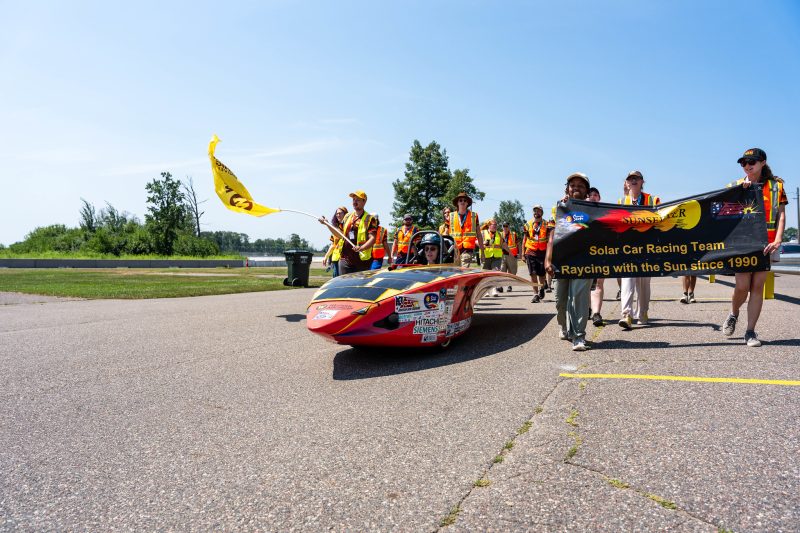
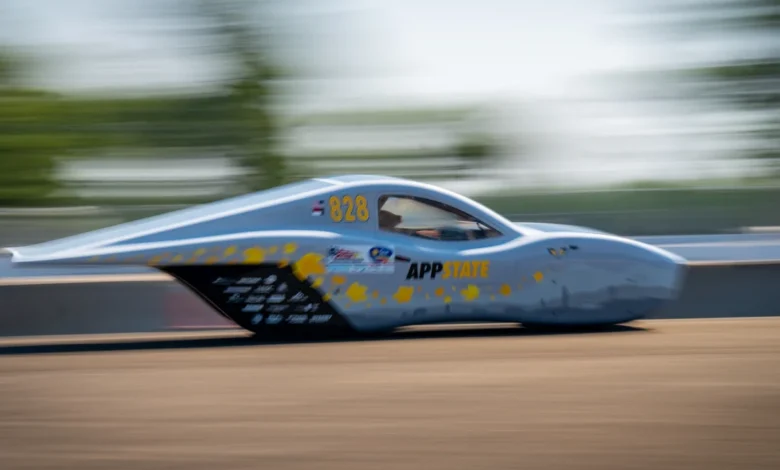
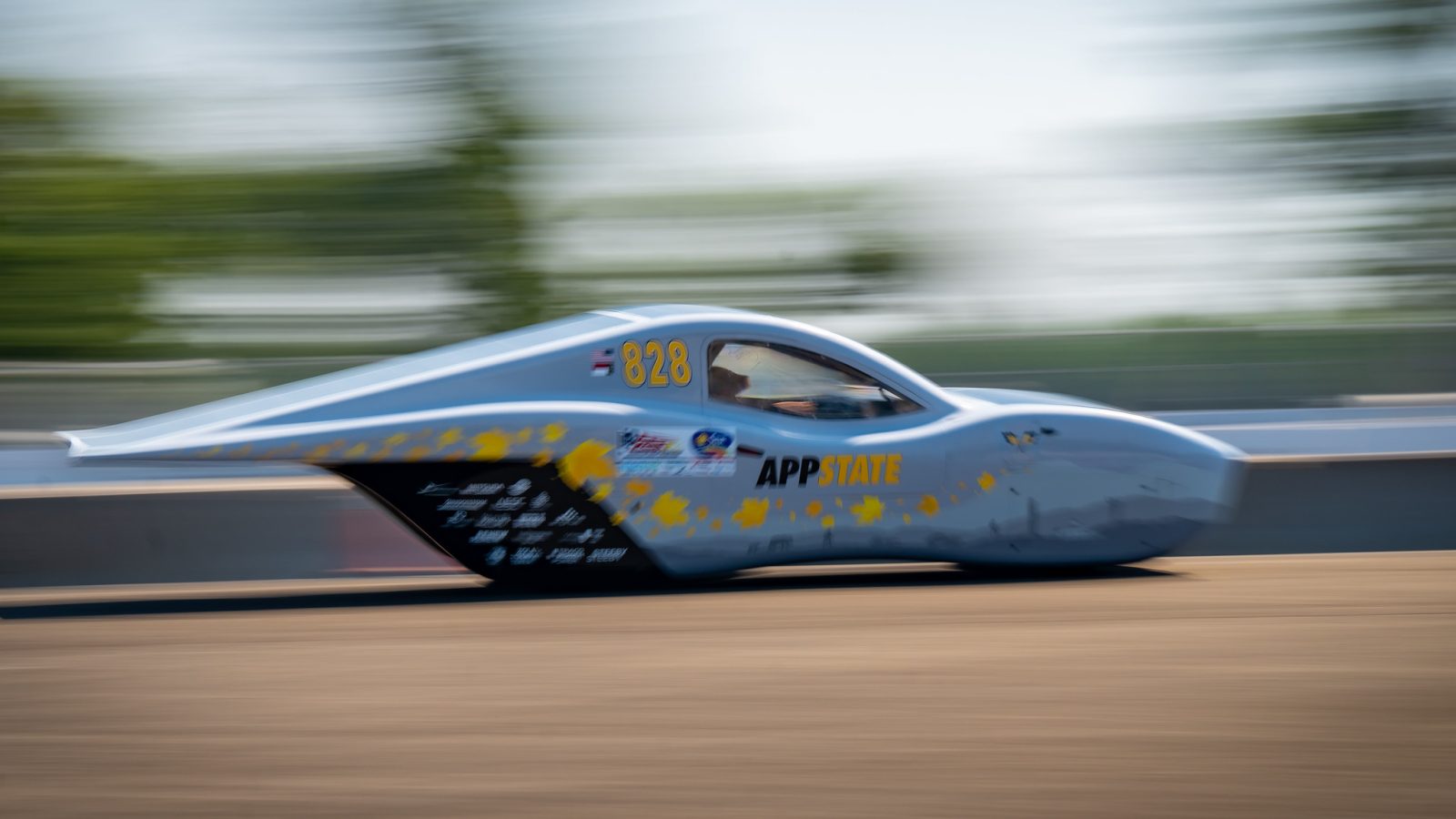
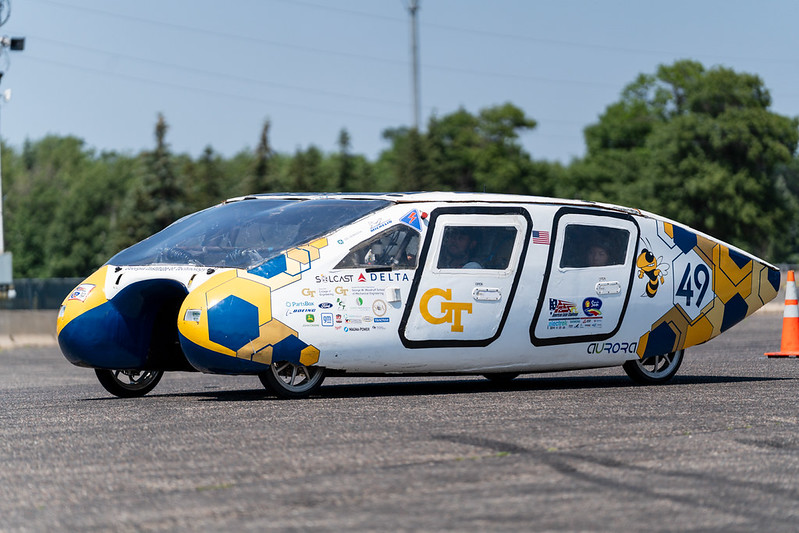
Georgia Institute of Technology (Georgia Tech) emerged as the day-one leader in the MOV class, completing 77 laps. This performance provided them with a significant 22-lap cushion over their nearest rival, Appalachian State University, which finished the day with 55 laps. Despite trailing in total lap count, Appalachian State demonstrated superior peak performance, clocking the fastest lap in the MOV class at 4:24, compared to Georgia Tech’s best of 5:04. This discrepancy suggests a difference in strategy; while Appalachian State may be prioritizing speed and high-efficiency bursts, Georgia Tech appears focused on a steady, endurance-based approach to maximize total distance.
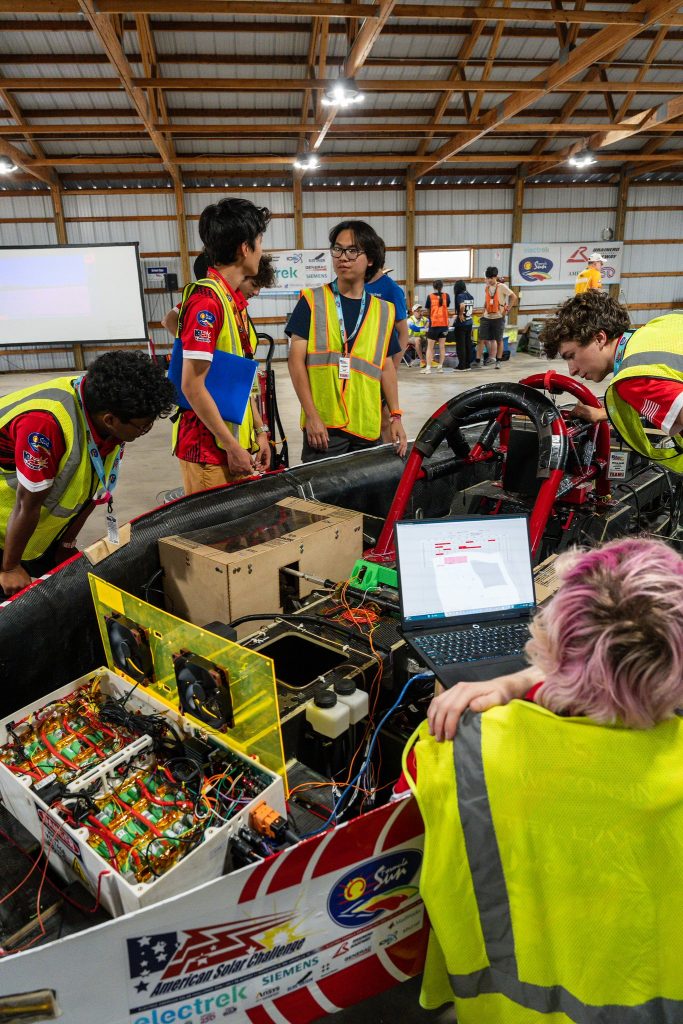
The Massachusetts Institute of Technology (MIT) had a more challenging start, finishing the day with only three laps on the scoreboard. Technical difficulties forced the team to retreat to the paddock early in the session. Given MIT’s history of engineering excellence, many in the pit lane expect a late-night overhaul to return the vehicle to the grid for day two. Similarly, teams from Iowa State, the University of Minnesota, and Polytechnique Montréal have yet to post a scoring lap, highlighting the immense difficulty of maintaining a solar vehicle under race conditions.
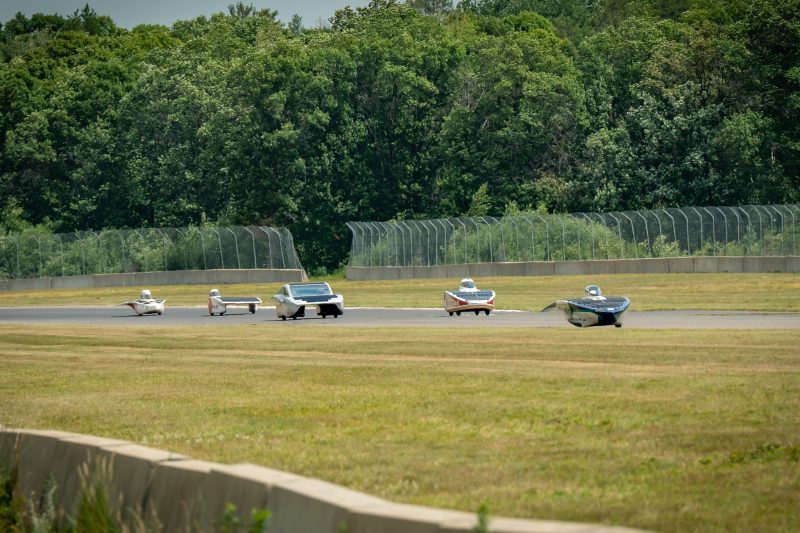
Chronology of Day One Events
The day began at 7:00 AM with the final rounds of dynamic scrutineering, where vehicles were tested for their ability to handle emergency maneuvers and high-speed braking. At 9:00 AM, the green flag was waved, and the 15 qualified vehicles took to the Brainerd track.
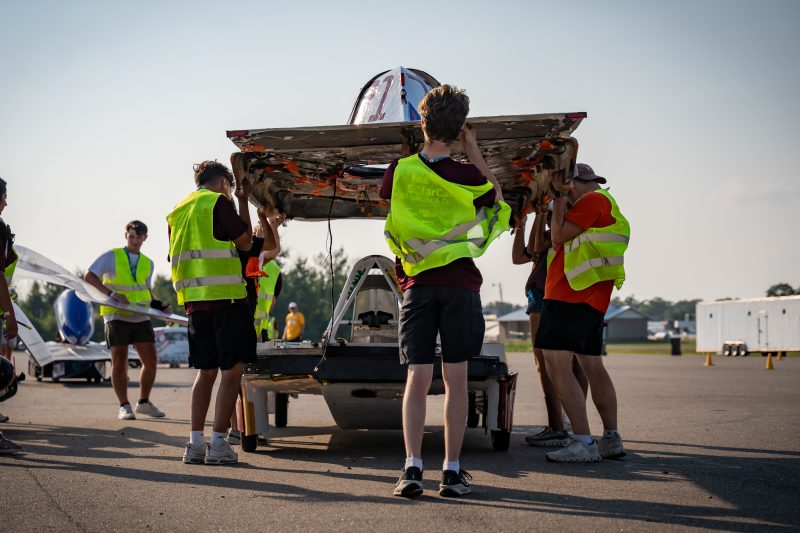
The mid-morning session was dominated by energy conservation strategies, as teams adjusted to the 16 mph crosswinds. Engineers on the sidelines were seen using real-time telemetry to advise drivers on throttle positions and "coast-down" points to preserve battery life. By noon, the track temperature had risen, increasing the efficiency of the solar arrays but also placing additional thermal stress on the lithium-ion battery packs.
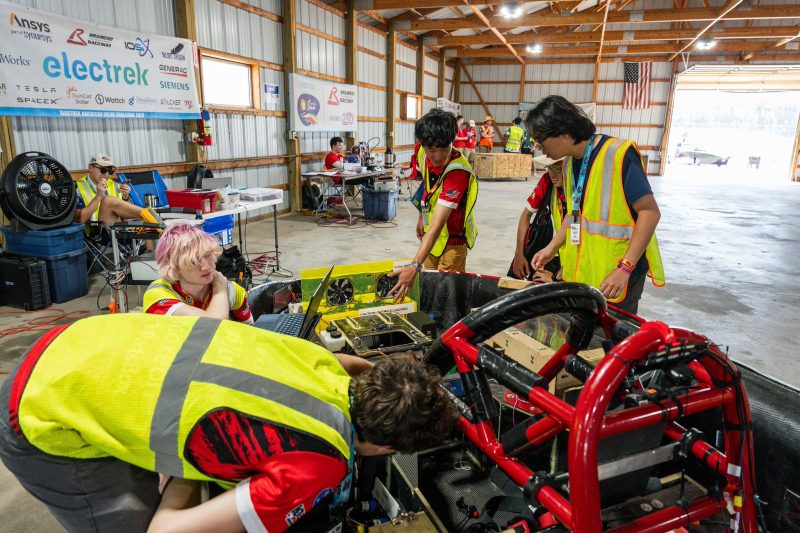
The afternoon session saw a flurry of activity in the pit lane as teams performed driver swaps and checked tire wear. The session concluded at 5:00 PM, at which point the vehicles were moved to a designated charging area to capture the final hours of sunlight before being impounded for the night.
The Global Expansion of Solar Racing
The 2026 Formula Sun Grand Prix is notable for its unprecedented international diversity. While the event has long been a staple for North American universities, this year marks the arrival of top-tier teams from the Netherlands and Belgium. These European teams bring a wealth of experience from the World Solar Challenge in Australia, often considered the most grueling solar race in the world.
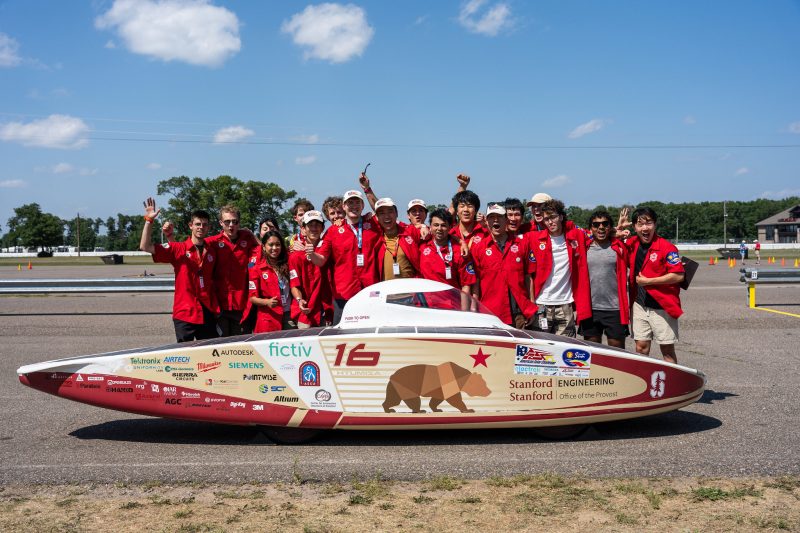
The inclusion of international teams has raised the level of technical discourse in the paddock. European designs often feature different philosophies regarding array tilt and regenerative braking systems. "Seeing the Dutch and Belgian teams on the grid changes the dynamic entirely," noted one event official. "It turns a regional competition into a global exchange of engineering solutions."
Technical Analysis and Future Implications
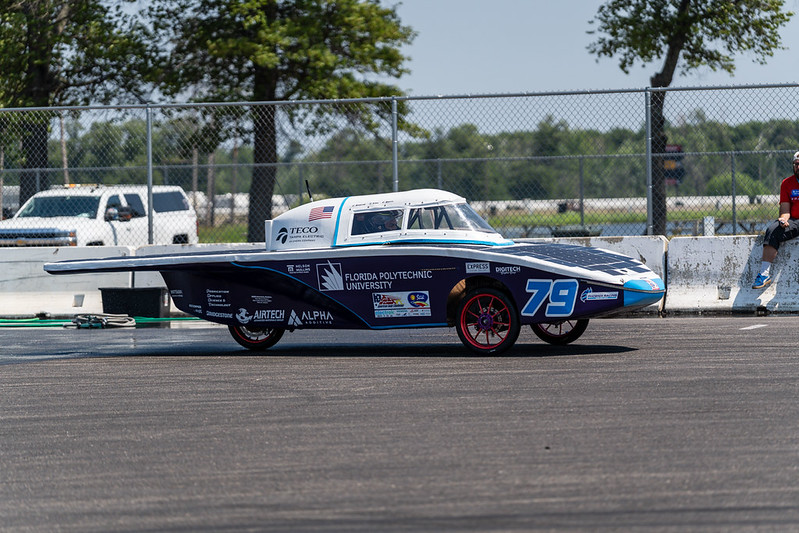
The data gathered during day one at Brainerd provides a glimpse into the future of electric vehicle (EV) technology. The challenges faced by these students—managing heat, optimizing aerodynamics, and maximizing energy density—are the same challenges currently being addressed by major automotive manufacturers like Tesla, Lucid, and Rivian.
The high-wind conditions of day one served as a practical test for "yaw stability" in ultra-efficient vehicles. As consumer EVs move toward more aerodynamic, "tear-drop" shapes to extend range, the stability data from FSGP becomes increasingly relevant. Furthermore, the success of the MOV class demonstrates that solar integration is becoming more viable for multi-passenger transport, potentially paving the way for "solar-assisted" commercial vehicles that can recharge while parked or in motion.
Looking Ahead to Day Two and Three
As the sun sets on day one, the leaderboard remains fluid. With two full days of racing remaining, teams like Appalachian State and MIT have ample time to recover and challenge the current leaders. The focus for day two will likely shift to battery longevity. After a full day of discharge, the ability of teams to effectively "harvest" the morning sun will determine who has the energy reserves to maintain high lap counts in the afternoon.
The competition will culminate on Thursday, after which the top-performing teams will qualify for the American Solar Challenge (ASC), a multi-day cross-country endurance rally. For now, the focus remains on the 3.1-mile circuit at Brainerd, where the roar of traditional engines has been replaced by the high-pitched hum of electric motors and the silent, relentless pursuit of solar efficiency.
The record attendance and international participation of the 2026 FSGP underscore a growing global commitment to renewable energy education. As these student engineers refine their machines in the coming days, they are not just competing for a trophy; they are refining the blueprints for the future of transportation. Stay tuned for further updates as the competition continues.