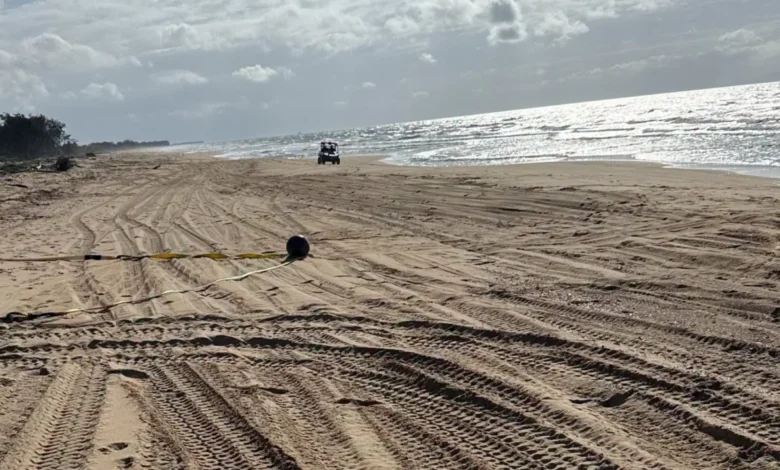
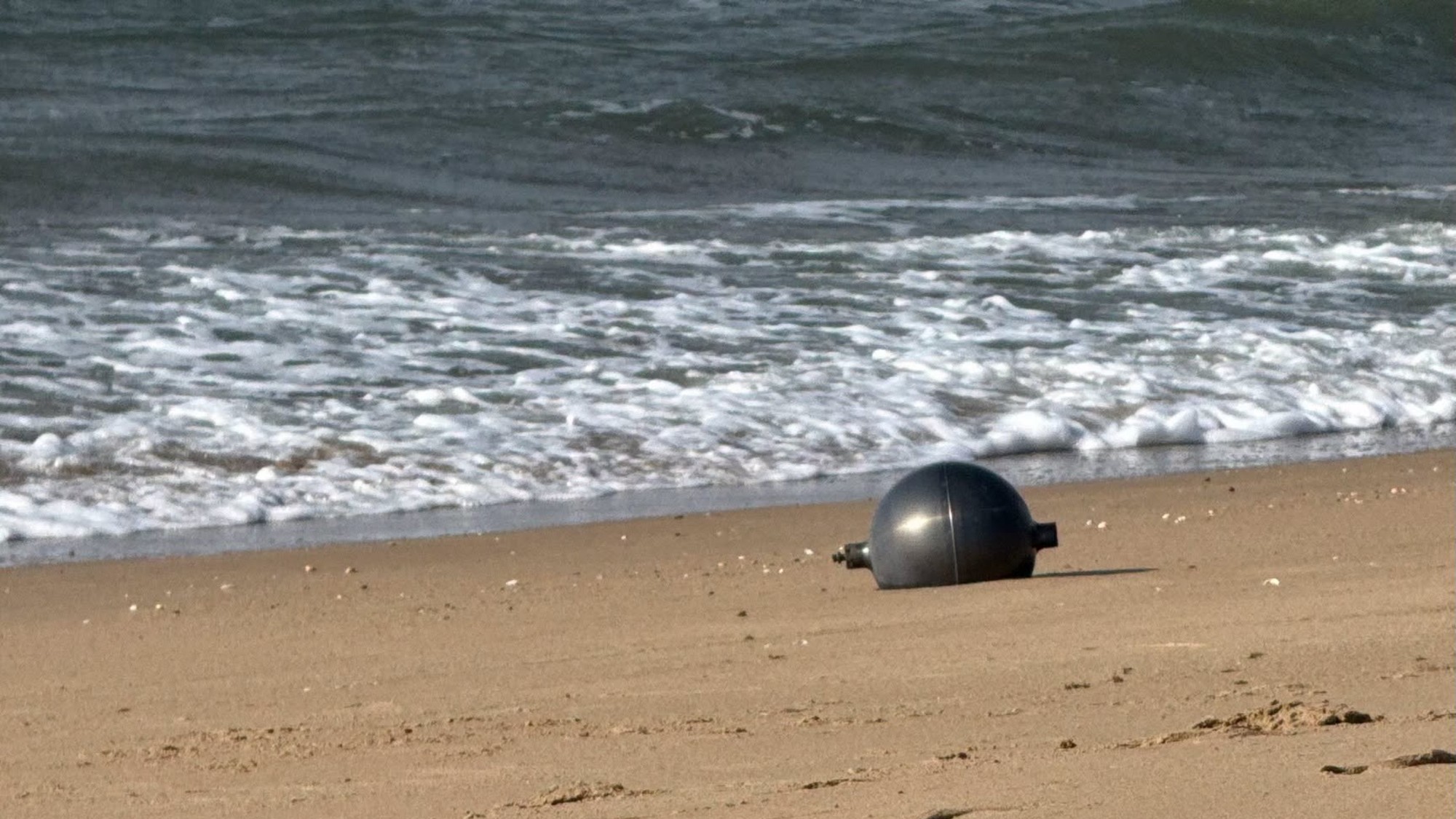
Australia, often dubbed the "Land Down Under," continues to find itself at the forefront of the global challenge of falling space debris, with a recent discovery of metallic spheres on a Queensland beach reigniting discussions about orbital pollution and responsible space practices. In early July 2026, residents of the tranquil seaside community of Forrest Beach, near Ingham, reported the presence of several unusual objects. These "space balls," as they have been colloquially termed, were quickly identified by the Australian Space Agency as likely pressure vessels originating from a space launch vehicle, marking yet another instance in Australia’s growing history as an unintentional landing zone for discarded space hardware.
The discovery prompted an immediate and coordinated response. Crews from the Australian Queensland Fire Department swiftly moved to assist partner agencies, establishing a 165-foot (50-meter) exclusion zone around the six spherical pieces of space junk to ensure public safety. Scientific teams were deployed to safely secure the items, initiating an investigation into their precise nature and country of origin. The incident underscores the escalating issue of space debris, a problem that intensifies with the increasing number of global space launches and the proliferation of satellites in low Earth orbit.
A Recurring Phenomenon: Australia’s Unwanted Legacy
This latest event is not an isolated incident but rather a continuation of Australia’s somewhat unique position as a frequent recipient of space-borne detritus. The continent’s vast, often sparsely populated landmass, combined with its geographical location beneath common orbital pathways, makes it a statistically likely target for uncontrolled reentries. Over the decades, a diverse array of objects, from iconic space stations to modern rocket components, have concluded their journeys on Australian soil or shores.
The most famous early instance dates back to July 1979, when fragments of the U.S. Skylab space station, weighing approximately 77 tons, spectacularly disintegrated over Western Australia. This uncontrolled reentry scattered debris across a wide area, leading to a humorous — and ultimately unpaid — fine issued by a local shire council for littering. More recently, the problem has become increasingly frequent and varied:
- 2022: A significant chunk of a SpaceX Dragon trunk, part of the Crew-1 mission, was discovered in New South Wales. This large composite structure highlighted the survivability of certain components designed for the harsh environment of space.
- 2023: A pressure vessel, similar to those found in the recent Forrest Beach incident, washed ashore in Perth. Investigations pointed to its origin from an Indian booster rocket, demonstrating the global reach of space activities and their potential impact far from launch sites.
- October 2025: Mysterious smoldering wreckage found in the Australian outback was later identified as a section of a Chinese Jielong-3 rocket, indicating that even relatively new launch vehicles contribute to the growing debris field.
These incidents collectively paint a picture of a nation grappling with the downstream consequences of an increasingly active global space sector, necessitating robust protocols for identification, safety, and international cooperation.
The Science of Survival: Why Some Debris Endures Reentry
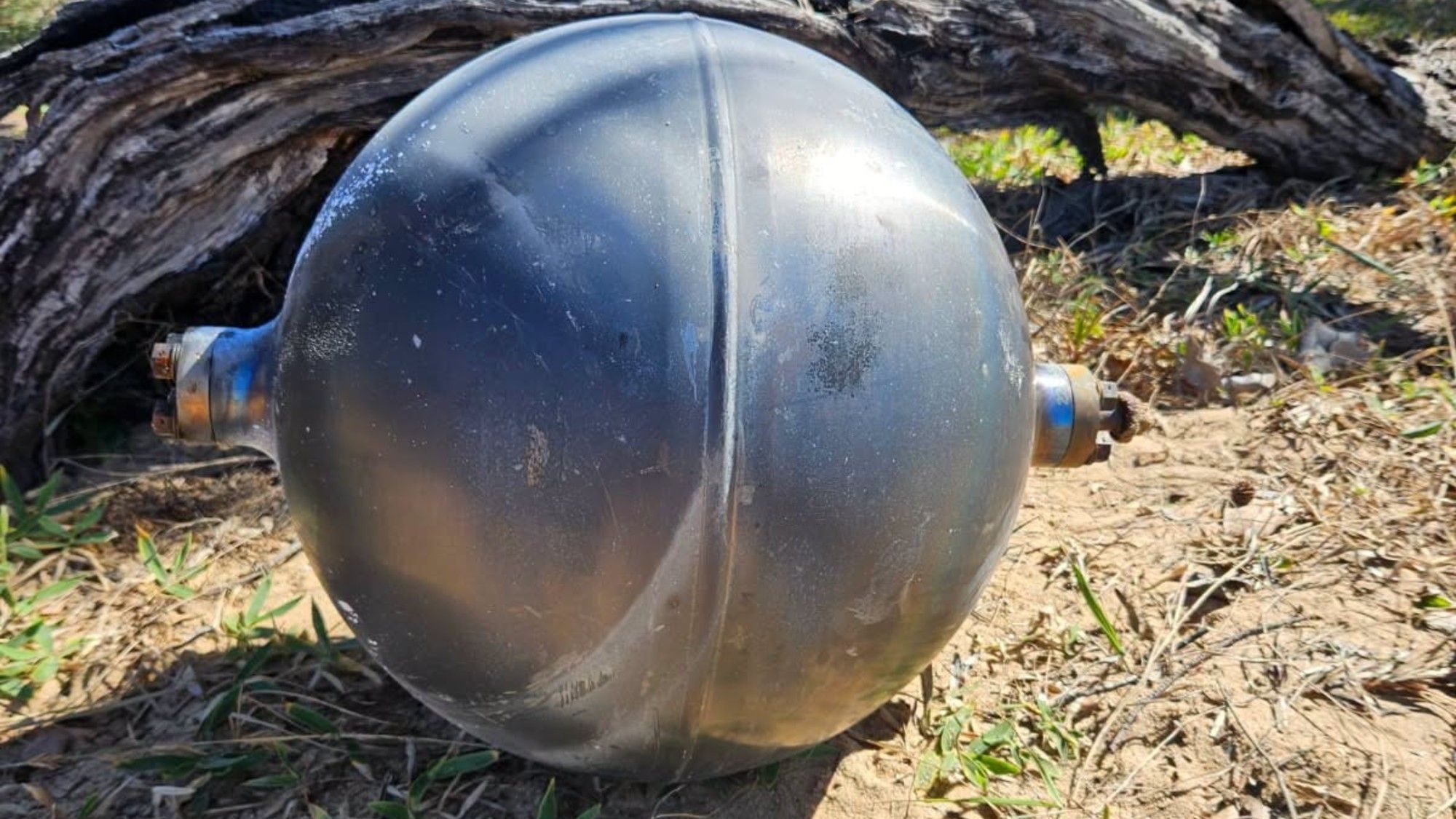
The metallic spheres found in Forrest Beach, believed to be pressure vessels, are prime examples of space debris engineered to withstand extreme conditions, including the fiery descent through Earth’s atmosphere. Marlon Sorge, executive director of the Aerospace Corporation’s Center for Orbital and Reentry Debris Studies (CORDS), explains that the survivability of these objects is often due to the materials used in their construction.
"Very often they will be made of something like titanium which is really good at surviving," Sorge told Space.com. Titanium, known for its exceptional strength-to-weight ratio and high melting point (over 1,600 degrees Celsius or 3,000 degrees Fahrenheit), can endure the intense heat generated by atmospheric friction during reentry. Unlike many other metals or composite materials that ablate (burn away) completely, titanium components often retain significant structural integrity.
Sorge further elaborated on the aerodynamic properties of such spheres: "In spite of them being metal, they tend to decelerate more than, say, a solid hunk of metal. They can ‘float down’ a little bit more gently than some other things." This slower deceleration reduces the peak thermal and mechanical stresses, increasing their chances of surviving intact. Once on the surface, these relatively intact pieces are also more recognizable than fragmented, burnt-up debris. The inherent robustness of materials like titanium means "even if they heat up, they don’t care," as Sorge succinctly put it, referring to their ability to resist degradation.
Beyond titanium, other materials like those used in Composite Overwrapped Pressure Vessels (COPVs) — typically a metal liner wrapped in carbon fiber — also present a survivability challenge. While the composite outer layers might burn away, the metallic inner liner can often survive reentry, posing a similar risk of ground impact. The aerospace community is increasingly aware of these material properties and their implications for debris management.
The Growing Challenge of Space Junk and Orbital Mechanics
The phenomenon of space debris falling to Earth is a direct consequence of the exponential growth in space activities. Since the launch of Sputnik 1 in 1957, humanity has sent tens of thousands of objects into orbit. As of late 2025, the European Space Agency (ESA) estimates there are over 36,500 tracked objects larger than 10 cm in orbit, with millions of smaller, untracked pieces. This includes active satellites, spent rocket stages, mission-related debris, and fragments from collisions or anti-satellite tests.
Objects in Low Earth Orbit (LEO), typically below 2,000 kilometers altitude, are subject to residual atmospheric drag. Over time, this drag causes their orbits to decay, eventually leading to reentry. While most smaller pieces burn up completely, larger, more robust components often survive. The Earth’s rotation beneath these orbiting objects means that an uncontrolled reentry can result in debris landing anywhere across a vast swath of the planet, particularly between 50 degrees north and 50 degrees south latitude, which covers most populated areas.
As Michelle Hanlon, executive director of the Center for Air and Space Law at the University of Mississippi School of Law, explained to Space.com, "It may seem surprising that pieces of the same rocket can show up in Australia, Canada or on a farm in Africa, but that’s actually what we’d expect." She added, "Objects in low Earth orbit pass over much of the planet as the Earth rotates underneath them. If a reentry isn’t controlled, the exact point where it finally comes down can shift by thousands of kilometers depending on when atmospheric drag finally wins." Given that oceans cover over 70% of the Earth’s surface, most debris naturally falls into the sea, but a significant portion inevitably reaches land.
Calls for Responsible Space Operations and International Obligations
Experts like Marlon Sorge advocate for more responsible behaviors from space agencies and launch providers to mitigate these debris concerns. The primary recommendation is to prevent random reentries of large, survivable components, particularly rocket upper stages. "Just don’t let them randomly reenter. Bring them down via controlled reentry and then if they are survivable it doesn’t matter because you dump them somewhere where there aren’t any people," Sorge emphasized. Controlled reentry involves deliberately de-orbiting a spacecraft or rocket stage into a pre-determined, unpopulated area, typically a remote oceanic region like the South Pacific Ocean Uninhabited Area (SPOUA), often referred to as the "spacecraft cemetery."
The increasing frequency of uncontrolled reentries highlights a gap between technological capability and consistent operational practice. While controlled reentry requires additional fuel and planning, its benefits in terms of public safety and environmental protection are significant.
Recognizing the escalating issue, the Australian Space Agency has established clear guidelines for the public on how to respond if suspected space debris is discovered. These include:
- Do not touch or attempt to move the object. Space debris can contain hazardous materials or sharp edges.
- Maintain a safe distance from the object, similar to the 50-meter exclusion zone established in Forrest Beach.
- Immediately report the discovery to local authorities (police or emergency services), who will then coordinate with the Australian Space Agency.
Beyond immediate safety, the discovery of space debris also triggers international legal obligations. Under the 1967 Outer Space Treaty and the 1972 Liability Convention, the launching state retains ownership and liability for objects launched into space, even if they return to Earth. If an item is definitively identified as space debris, the Australian Government has worldwide obligations to notify the launching authority of its discovery and, upon request, may be required to return the space junk to its country of origin. This legal framework underscores the importance of traceability and international cooperation.
Tracing Origins: Challenges and Future Solutions
One of the persistent challenges in managing space debris is accurately identifying its country of origin. While some objects can be identified through design characteristics, serial numbers, or by cross-referencing with launch and registration records, many pieces are too damaged by reentry to provide clear markers. Michelle Hanlon questioned the efficacy of simply "stamping everything with a country-of-origin," noting that "there’s no guarantee a label would even survive reentry."
Instead, Hanlon stressed that the bigger issue is traceability: "Can authorities quickly figure out what the object is, whether it poses any danger and which state should be contacted? Better information-sharing and better tracking would be far more useful than a ‘Made in’ stamp." This sentiment is echoed by Sorge, who highlighted the critical need for better observation and tracking of incoming debris. "If we get an impact location and a time of reentry that really helps us figure out what’s going on," he said, acknowledging that such tracking is currently a significant challenge.
International cooperation, through bodies like the Inter-Agency Space Debris Coordination Committee (IADC), is crucial for sharing data on orbital objects, predicting reentry paths, and developing best practices for debris mitigation. Advances in ground-based radar and optical telescopes, coupled with sophisticated orbital mechanics models, are continually improving our ability to track objects and predict their reentries, though predicting exact landing sites for uncontrolled reentries remains difficult due to atmospheric variability.
Broader Implications: Safety, Environment, and Policy
The recurring incidents of space debris impacting Earth carry several significant implications:
- Public Safety: While the probability of an individual being struck by space debris is statistically very low, the risk is not zero, particularly with the increasing volume of uncontrolled reentries. The need for exclusion zones and rapid response, as seen in Forrest Beach, demonstrates the tangible safety concerns.
- Environmental Impact: While most space debris is inert, some components could potentially contain hazardous materials. Furthermore, the sheer volume of material returning to Earth, even if largely benign, represents a form of extraterrestrial littering.
- International Relations: When debris from one nation lands in another, it can create diplomatic complexities regarding identification, liability, and return. Clear communication and adherence to international treaties are essential to manage these situations.
- Sustainability of Space Exploration: The problem of space debris extends beyond ground impacts. The exponentially growing number of objects in orbit increases the risk of catastrophic collisions (Kessler Syndrome), which could generate even more debris, making certain orbital regimes unusable for future missions.
Hanlon aptly summarized the current situation: "One thing I’d also point out is that we’re seeing more of these simply because we’re launching a lot more things into space. That’s actually a sign of how active the space sector has become, not necessarily that it’s becoming less safe." However, she concluded that "End-of-life disposal is now just as much a part of responsible space operations as launch."
The recent Australian incident, involving metallic spheres that survived their journey from space, serves as a sobering reminder that human activities in orbit have tangible consequences on Earth. It also carries a touch of cosmic coincidence, as Hanlon noted, occurring just as "Spaceballs: The New One" is reportedly gearing up for filming in Australia. This lighthearted parallel, however, underscores a serious message: the need for proactive measures, enhanced international cooperation, and a global commitment to sustainable space practices to ensure both the safety of those on Earth and the long-term viability of humanity’s access to space. The challenges of space debris are still not completely understood, and continuous research, awareness, and policy development are crucial to navigate this evolving frontier.