AI Data Center Buildout Faces Critical Delays Amidst Labor, Power, and Local Resistance Challenges

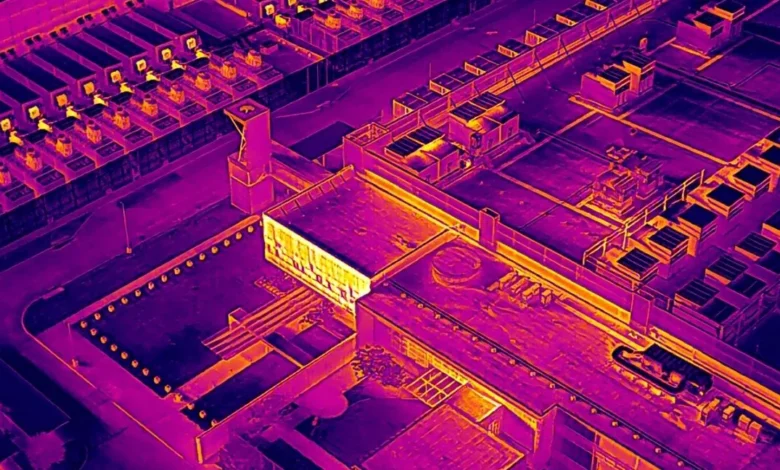
Silicon Valley’s ambitious push to construct colossal AI data centers, each demanding electricity equivalent to hundreds of thousands of US homes, is confronting substantial hurdles, with new satellite imagery indicating that nearly 40 percent of these critical projects across the United States may not meet their scheduled completion dates this year. This revelation casts a shadow over the rapid expansion plans of major tech companies and highlights a complex interplay of construction bottlenecks, strained power infrastructure, and escalating local opposition.
The unprecedented investment in AI infrastructure, driven by the exponential growth of artificial intelligence technologies, has seen hundreds of billions of dollars channeled into creating the physical backbone necessary to power advanced algorithms and machine learning models. These facilities are not merely larger versions of traditional data centers; they are designed for immense computational density, housing specialized hardware like GPUs that consume vast amounts of energy and require sophisticated cooling systems. The race to develop and deploy cutting-edge AI has spurred a frantic buildout, with companies like Microsoft, Oracle, and OpenAI leading the charge, anticipating a continuous surge in demand for processing power. However, the current findings suggest that the physical reality of construction is struggling to keep pace with the digital aspirations.
Satellite Intelligence Uncovers Widespread Delays
A detailed analysis, spearheaded by the Financial Times and leveraging satellite imagery from the geospatial data analytics company SynMax, has provided a granular view of the progress, or lack thereof, on numerous data center construction sites. SynMax’s methodology involved monitoring land clearing activities and the laying of building foundations, crucial early-stage indicators of project advancement. This visual data was then cross-referenced with public statements and permit documents meticulously compiled by IIR Energy, an industry research group known for tracking infrastructure projects. The resulting analysis paints a stark picture: a significant number of major projects, including those backed by industry giants, are "likely to miss completion dates by more than three months," a delay that could have cascading effects on AI development roadmaps and market competitiveness. The 40 percent figure represents a substantial portion of the planned expansion, indicating a systemic challenge rather than isolated incidents. This intelligence provides an objective, third-party assessment, moving beyond corporate press releases to the tangible realities on the ground.
The Genesis of the AI Infrastructure Rush
The current boom in AI data center construction is a direct consequence of the rapid advancements and widespread adoption of artificial intelligence, particularly generative AI models. Following the public launch of OpenAI’s ChatGPT in late 2022, the world witnessed an explosion of interest and investment in AI. Companies across various sectors began integrating AI into their operations, leading to an insatiable demand for the computational resources required to train, refine, and deploy these complex models. Training a single large language model can consume energy equivalent to powering several homes for years, and inferencing (running the model) also demands significant power. This created a strategic imperative for tech leaders: secure computing capacity to maintain a competitive edge. The response was a massive capital allocation towards hyperscale data centers, often planned in remote or semi-rural locations where land was cheaper and power potentially more abundant. The initial projections for these centers were aggressive, perhaps underestimating the traditional challenges inherent in large-scale infrastructure development.
The Scarcity of Skilled Labor
A primary factor contributing to these delays is a chronic shortage of skilled labor. Interviews with over a dozen industry executives, as reported by the Financial Times, consistently highlighted the difficulty in securing enough tradespeople. Specifically, construction executives involved with OpenAI projects cited a critical lack of electricians and pipefitters capable of working on the highly specialized and complex systems required for modern data centers. These facilities are not standard warehouses; they are intricate ecosystems of power distribution, cooling infrastructure, and network connectivity, demanding a high level of expertise.
The construction industry in the U.S. has faced a long-standing challenge of an aging workforce and a declining interest among younger generations in vocational trades. The sudden surge in data center construction, alongside other major infrastructure projects (e.g., semiconductor fabrication plants, renewable energy installations), has exacerbated this pre-existing shortage. Electricians specializing in high-voltage systems, HVAC technicians familiar with large-scale cooling, and pipefitters adept at complex liquid cooling systems are in extremely high demand, leading to bidding wars for talent, increased labor costs, and ultimately, project slowdowns. Training programs have struggled to produce enough qualified individuals quickly enough to meet this unprecedented demand, creating a significant bottleneck that cannot be easily resolved in the short term.
The Strained Power Grid: An Energy Bottleneck
Beyond labor, the immense power demand of these planned data centers represents perhaps the most formidable challenge: a huge energy bottleneck. Each hyperscale data center can require hundreds of megawatts (MW) of electricity, equivalent to the consumption of a small city. For context, a typical US home uses around 10,000 kilowatt-hours (kWh) per year. A data center consuming 500 MW would power approximately 400,000 homes annually. Utility companies across the U.S. are struggling to keep pace, facing a dual challenge: building enough new power generation capacity and expanding the transmission and distribution infrastructure necessary to deliver this vastly increased electricity supply.
The process of bringing new power generation online, whether from natural gas, solar, or wind farms, is lengthy and capital-intensive, often taking years due to environmental assessments, permitting, and construction. Furthermore, upgrading the aging electrical grid to handle these new loads requires significant investment in new substations, transmission lines, and smart grid technologies, all of which face their own permitting and right-of-way challenges. In many regions, the existing grid infrastructure was not designed for such concentrated, high-density loads, leading to "energy deserts" where land might be available, but the power supply is insufficient or prohibitively expensive to access. Utility companies, often regulated monopolies, operate on long planning cycles, making it difficult to respond to the sudden, massive demand spikes from the tech sector. Some utilities have openly stated they are nearing capacity in certain regions, leading to multi-year queues for new connections for industrial customers, including data centers.
Supply Chain Disruptions and Trade Policies
The global supply chain, still reeling from the impacts of the pandemic and geopolitical tensions, further complicates the data center buildout. The original article specifically mentions that tariffs on imported Chinese equipment, particularly transformers, have "made the situation worse for Silicon Valley’s AI ambitions." These tariffs, largely implemented during the Trump administration and largely maintained since, significantly increase the cost and lead times for crucial electrical components.
Transformers are essential for stepping down high-voltage electricity from the grid to levels usable by data centers. Their manufacturing is a specialized process, and a significant portion of the global supply originates from China and other Asian countries. Tariffs directly translate to higher procurement costs for developers, eating into project budgets and potentially making some projects financially unviable without renegotiation. More critically, they contribute to extended lead times, with some specialized transformers now taking 12-24 months or more to procure. This delay in securing fundamental electrical infrastructure components directly impacts the construction timeline, as other work cannot proceed until these critical pieces are on site. The reliance on global supply chains for specialized components, combined with protectionist trade policies, creates a significant drag on the ambitious construction schedules.
Mounting Local Opposition
The "growing local resistance" alluded to in the original report is another critical, and increasingly vocal, challenge. As these massive data centers proliferate, local communities are becoming more aware of their environmental and social impacts. Key concerns include:
- Water Usage: Data centers, especially those relying on evaporative cooling, consume enormous quantities of water. In regions already facing drought conditions or water scarcity, this demand can strain local resources and spark significant public backlash.
- Energy Footprint and Emissions: Despite efforts to source renewable energy, the sheer scale of electricity consumption raises concerns about increased carbon emissions, especially if the local grid relies heavily on fossil fuels. Environmental groups are pushing for stricter sustainability requirements.
- Noise Pollution: The constant hum of thousands of servers and cooling units can be a significant source of noise pollution for nearby residential areas, affecting quality of life.
- Land Use and Aesthetics: Large data center campuses often require vast tracts of land, leading to concerns about habitat destruction, agricultural land conversion, and the visual impact of massive industrial facilities in previously undeveloped areas.
- Strain on Local Infrastructure: While data centers create some high-paying jobs, they don’t typically employ large numbers of local residents once operational. However, their construction and ongoing operations can strain local roads, utilities, and emergency services without necessarily contributing proportionally to the local tax base or community amenities.
These concerns often translate into organized community opposition, leading to protracted permitting processes, legal challenges, and even outright rejection of proposed projects by local authorities. This "Not In My Backyard" (NIMBY) sentiment is a growing factor in site selection and project timelines.
Economic and Strategic Ramifications
The delays in data center construction carry significant economic and strategic ramifications. Economically, billions of dollars are tied up in incomplete projects, leading to capital inefficiency for tech companies and potentially impacting investor confidence. Construction delays can also lead to cost overruns, further squeezing profit margins and potentially slowing down future investments. For the broader economy, a slowdown in AI infrastructure development could indirectly impede innovation across various sectors reliant on AI, from healthcare and finance to manufacturing and logistics.
Strategically, the United States’ competitive edge in the global AI race could be at risk. Nations like China are also aggressively investing in AI infrastructure, and any significant delays in the U.S. could allow competitors to close the gap or even pull ahead in crucial areas of AI development and deployment. The ability to rapidly scale AI capabilities is increasingly seen as a national security imperative and a determinant of future economic leadership.
Industry and Policy Responses
In response to these burgeoning challenges, tech companies, utility providers, and policymakers are exploring a range of solutions, though none offer a quick fix.
Tech companies are increasingly looking at:
- Optimized Cooling Technologies: Investing in more efficient liquid cooling systems and exploring advanced thermal management to reduce both electricity and water consumption.
- Distributed Architecture: Considering smaller, more geographically dispersed data centers or edge computing facilities to alleviate pressure on a single grid node and bring processing closer to the data source.
- On-site Power Generation: Exploring microgrids, small modular reactors (SMRs), or direct renewable energy integration (e.g., dedicated solar farms) to reduce reliance on the stressed public grid. Microsoft, for instance, has invested in modular nuclear reactors for some sites.
- Energy Efficiency: Continuously improving the power usage effectiveness (PUE) of data centers through hardware and software optimization.
Utility companies, meanwhile, are advocating for:
- Streamlined Permitting: Calls for federal and state governments to accelerate the permitting process for new power generation and transmission projects.
- Infrastructure Investment: Demands for increased public and private investment in grid modernization and expansion.
- Long-Term Planning: Emphasizing the need for more coordinated, long-term energy planning that integrates the tech sector’s anticipated growth.
Government officials, acknowledging the infrastructure deficit, face pressure to:
- Address Labor Shortages: Invest in vocational training programs and apprenticeships to build a skilled workforce for construction and electrical trades.
- Review Trade Policies: Evaluate the impact of tariffs on critical infrastructure components and consider adjustments to alleviate supply chain pressures.
- Facilitate Permitting: Implement policies that balance environmental protection with the need for timely infrastructure development.
Conclusion
The findings from SynMax and the Financial Times serve as a critical wake-up call, underscoring the formidable real-world constraints on Silicon Valley’s digital ambitions. The dream of an endlessly scalable AI future is colliding with the physical realities of limited labor, strained power grids, complex supply chains, and increasingly vocal local communities. While the demand for AI processing power continues its relentless ascent, the ability to build the foundational infrastructure to support it is proving to be a far slower, more challenging endeavor. Addressing these multifaceted bottlenecks will require concerted efforts from industry, utilities, and governments, involving significant investment, policy reforms, and a strategic reimagining of how the future of AI infrastructure can be sustainably and efficiently built. The coming years will reveal whether these challenges merely slow the AI race or fundamentally alter its course.