Apple iPad Mini (A20 Pro) Review: A Masterclass in Portable Hardware Overshadowed by Inflationary Pressures

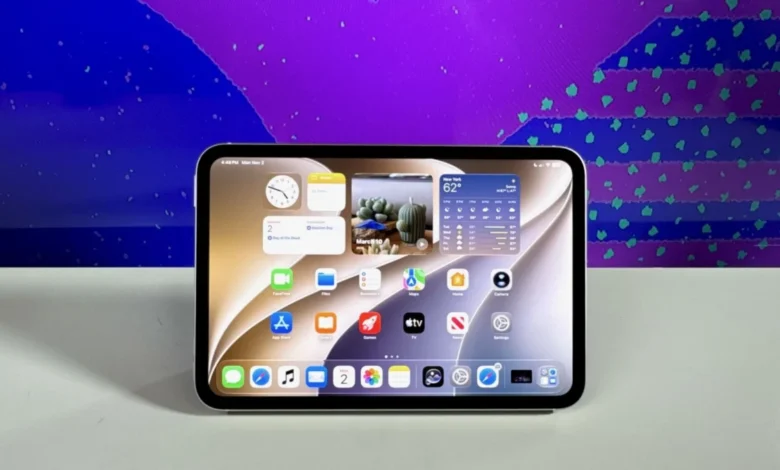
Apple Inc. has officially expanded its portable hardware lineup with the release of the redesigned iPad Mini, powered by the cutting-edge A20 Pro system-on-chip. Featuring a high-fidelity OLED display, advanced acoustic engineering, and an ultra-thin form factor, the device establishes a new technological benchmark for compact tablets. However, its debut is met with complex market dynamics, as soaring component costs and global supply chain pressures push the starting retail price to $699, triggering industry-wide debates regarding consumer accessibility and value proposition.

Main Facts and Hardware Specifications
The seventh-generation iPad Mini arrives as the lightest tablet ever manufactured by Apple, incorporating structural design philosophies previously reserved for the flagship M4 iPad Air and iPhone 18 Pro Max iterations. At its core, the inclusion of the A20 Pro processor ensures that the compact device is capable of handling demanding computational tasks, local artificial intelligence workloads, and Apple Intelligence features, including visual intelligence frameworks and real-time photo rendering.

Visual fidelity is driven by a Super Retina XDR OLED panel, delivering a peak brightness of 1,200 nits for high-dynamic-range (HDR) content. Unlike traditional LCD configurations, the OLED integration provides absolute black levels and enhanced contrast ratios, narrowing the gap between consumer-grade tablets and professional reference monitors. Furthermore, Apple has introduced an optional nano-texture glass finish—utilizing microscopic surface etching to scatter ambient light—designed to eliminate glare in high-illumination environments.
Chronology and Market Context

The trajectory of the iPad Mini reflects broader macroeconomic shifts within the consumer electronics sector. Throughout 2024 and 2025, global semiconductor manufacturing faced severe supply chain bottlenecks, particularly concerning high-bandwidth memory (HBM) allocation and dynamic random-access memory (DRAM) availability. Industry analysts note that intense competition for advanced silicon nodes among artificial intelligence infrastructure developers has systematically elevated component overhead for mobile hardware manufacturers.
Consequently, the baseline pricing structure for Apple’s tablet ecosystem has shifted upward. While historical iterations of the iPad Mini occupied a strictly mid-tier position, the 2026 model enters the market at $699 for the 128GB configuration. Fully upgraded models featuring 512GB of storage, cellular connectivity via the C2 chip, and the nano-texture glass option scale upward to $1,249, positioning the compact device closer to professional-grade pricing tiers than traditional entry-level hardware.

Design Innovations and Engineering Adjustments
Apple’s engineering division implemented several structural modifications in the A20 Pro model to maximize durability and acoustic performance. Most notably, the traditional physical speaker grilles situated along the bottom chassis have been eliminated. This alteration prevents dust and particulate accumulation, contributing to the device’s new IP67 water and dust resistance rating, which allows for brief incidental fluid immersion.

Audio output is now managed via Acoustic Display technology, distributing sound directly through the structural components of the tablet. While spatial dispersion is improved, hardware specialists note that the internal acoustics retain minor high-frequency tinniness inherent to ultra-thin enclosures.
Ergonomically, the device repositions the 12-megapixel Center Stage front-facing camera and microphone array to the lateral bezel. This adjustment optimizes framing for landscape video conferencing but requires a transitional adjustment period for users accustomed to vertical alignment. Biometric authentication continues to rely on Touch ID integrated into the top power button, foregoing Face ID technology featured on larger iPad Pro models.

Performance Benchmarks and Comparative Analysis
Benchmark evaluations utilizing Geekbench 7 place the A20 Pro chip in a competitive performance bracket that bridges the operational gap between the M4-powered iPad Air and the M5-powered iPad Pro. Single-core computational metrics highlight rapid application responsiveness, suitable for seamless multitasking and daily navigation. Multi-core performance metrics demonstrate sustained capability for complex workflows, though physical thermal constraints and screen dimensions limit its utility for professional video editing or computer-aided engineering compared to larger-format displays.

Crucially, the hardware lacks support for Apple’s Magic Keyboard accessories, signaling that the device is intentionally engineered for consumption, reading, and mobile media consumption rather than text-heavy productivity or desktop replacement scenarios.
Broader Impact and Industry Implications

The release of the A20 Pro iPad Mini underscores a strategic dichotomy within consumer technology. On one hand, the device represents an engineering triumph, packing professional-grade processing power and display technology into an ultralight, highly portable enclosure. On the other hand, the $699 barrier forces consumers to re-evaluate the utility of premium tablets in an economic landscape marked by inflationary pressures and rising component costs.
Market researchers suggest that while the device will likely maintain strong appeal among enterprise users and affluent tech enthusiasts, the broader consumer base may increasingly lean toward budget-oriented alternatives from competing ecosystems. As memory and silicon expenses continue to dictate pricing strategies across the technology sector, the iPad Mini serves as a barometer for how premium manufacturers navigate the tension between advanced technological capability and market affordability.