Gorilla habitats and pristine forest at risk as the Democratic Republic of the Congo opens half of the country to oil and gas drilling bids

The Democratic Republic of the Congo (DRC) currently stands at a precarious environmental crossroads, as the government moves to auction off more than 50 oil and gas blocks that threaten to compromise over 50 percent of the nation’s landmass. This massive expansion of fossil fuel exploration, detailed in the recent report "Forests to Frontlines: Oil Expansion Threats in the DRC," jeopardizes vast swaths of the Congo Basin, a region globally recognized as a critical climate buffer and an irreplaceable reservoir of biodiversity. The proposed industrial development targets areas that include protected national parks, the world’s largest tropical peatland complex, and the ancestral lands of millions of Indigenous and local people.
The scope of this initiative represents a significant escalation from previous government policy. By opening such a large percentage of its territory to extractive industries, the DRC is effectively bypassing its own conservation targets and potentially undermining international climate agreements aimed at protecting the planet’s remaining "lungs."
A Chronology of Escalating Extraction
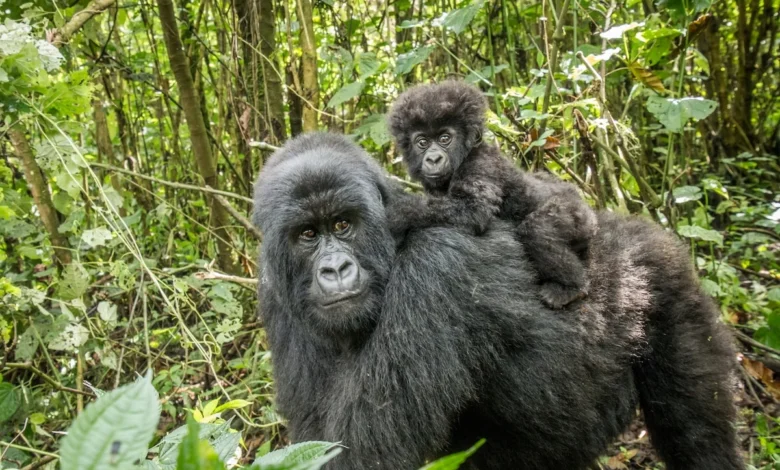
The current licensing round is not an isolated event but rather the culmination of a multi-year pivot toward aggressive fossil fuel development. In 2022, the Congolese government initiated a high-profile auction of 30 oil and gas blocks. At the time, the move was met with immediate backlash from the international scientific community and human rights organizations, as many of these blocks overlapped with critical protected areas, such as Virunga National Park—a sanctuary for the world’s remaining mountain gorillas—and the fragile Cuvette Centrale peatlands.
Following the 2022 auction, domestic and international pressure led to promises of rigorous environmental oversight. However, the 2025 licensing round has expanded the stakes significantly. The government has now added 52 new blocks to the existing portfolio, bringing the total area under threat to unprecedented levels. This latest development suggests that the government is prioritizing short-term revenue from hydrocarbon resources over the long-term ecological and social stability of the Congo Basin.
The Ecological Significance of the Congo Basin
To understand the severity of the proposed drilling, one must consider the ecological stature of the DRC. The Congo Basin is the second-largest tropical rainforest on Earth, functioning as a global carbon sink. The Cuvette Centrale, in particular, is a vast peatland complex that stores approximately 30 gigatons of carbon—a quantity equivalent to several years of global fossil fuel emissions. If this land is disturbed by oil exploration, infrastructure development, or spills, that carbon could be released into the atmosphere, accelerating the global climate crisis.
Beyond carbon sequestration, the region serves as a sanctuary for highly endangered species. The mountain gorilla, the eastern lowland gorilla, and the bonobo are among the unique fauna that rely on these intact ecosystems for survival. These forests also harbor thousands of plant species and bird populations found nowhere else on Earth. The integration of industrial roads, pipelines, and drilling sites would lead to habitat fragmentation, which is widely cited by ecologists as a primary driver of species extinction.
Socio-Economic and Human Rights Implications
The impact of this policy is not merely environmental; it is profoundly humanitarian. It is estimated that 39 million people reside within the boundaries of the proposed oil blocks. For these communities, particularly Indigenous groups, the forest is not a wilderness to be exploited but a primary source of sustenance, medicine, and cultural identity.
The proposed development threatens to disrupt the traditional livelihoods of these populations, who rely on the integrity of rivers and forest ecosystems for survival. Critics argue that the government’s push for fossil fuel expansion contradicts its own sustainable development goals. Pascal Mirindi, a campaign coordinator for the organization Notre Terre Sans Pétrole, has been a vocal critic of the policy, questioning the coherence of a government that simultaneously promotes ecological corridors—such as the Kivu-Kinshasa Green Corridor—while auctioning the very land that constitutes those corridors for oil extraction.

The Kivu-Kinshasa Green Corridor, which is meant to be a model of sustainable development and environmental connectivity, now sees 72 percent of its designated area intersecting with these oil blocks. This contradiction has led to widespread skepticism regarding the government’s commitment to the ecological integrity of its own environmental initiatives.
Data-Driven Risks to Protected Areas
The data provided by Earth Insight paints a stark picture of the overlap between industrial interest and conservation land:
- Protected Areas: Roughly 20.5 million acres of officially protected land are currently at risk.
- Key Biodiversity Areas: Over 21.3 million acres of critical, high-value biodiversity zones are included in the auction.
- Intact Forest: An estimated 165.1 million acres of primary tropical forest fall within the reach of the new oil concessions.
These figures indicate that the "protection" currently afforded to these regions by law may prove insufficient against the economic weight of multinational oil interests. The degradation of these areas would not only result in the loss of habitat but would also severely undermine the DRC’s credibility in international forums, such as the UN Climate Change Conferences (COP), where the nation has historically positioned itself as a "solutions country" in the fight against climate change.
Official Responses and the Call for Moratorium
The international community, alongside local civil society organizations like the Coalition des Organisations de la Société Civile pour le Suivi des Reformes et de Action Publique (CORAP), has called for an immediate halt to the 2025 licensing round. The consensus among these groups is that fossil fuel expansion in the Congo Basin is incompatible with the global transition toward renewable energy and the preservation of the planet’s remaining intact ecosystems.
Environmental researchers, such as Anna Bebbington of Earth Insight, have emphasized that the damage caused by oil and gas infrastructure is often irreversible. The construction of access roads in dense rainforests frequently acts as a gateway for illegal logging, poaching, and further encroachment, which can devastate a local ecosystem long before the first drop of oil is extracted.
The formal demands from civil society include:
- Immediate Cancellation: An end to the 2025 licensing round and a permanent moratorium on future hydrocarbon expansion in protected and ecologically sensitive areas.
- Respect for Land Rights: Upholding the rights of Indigenous and local communities as guaranteed under national and international law, including the principle of Free, Prior, and Informed Consent (FPIC).
- Transparency and Participation: The inclusion of local and Indigenous voices in environmental governance and decision-making processes.
- Financial Realignment: Ensuring that international donors and financial institutions align their support with the DRC’s stated commitments to biodiversity and climate action, rather than funding projects that contribute to the destruction of the Congo Basin.
Broader Implications: The Global Climate Stakes
The decision by the DRC government to proceed with these auctions reflects a broader tension currently playing out in many developing nations: the desire to leverage natural resources for economic development versus the global necessity of preserving ecosystem services. Proponents of the drilling argue that the DRC has a sovereign right to exploit its resources to lift its population out of poverty. Conversely, environmental economists suggest that the long-term economic cost of environmental degradation—including the loss of ecosystem services like water purification, climate regulation, and potential eco-tourism revenue—will far outweigh the short-term financial gains of oil extraction.
Furthermore, the global market for oil is increasingly volatile, and as the world shifts toward cleaner energy sources, there is a significant risk that the DRC could end up with "stranded assets"—infrastructure that becomes economically unviable before it can fully pay for itself, leaving the country with the environmental wreckage but not the promised economic windfall.
As the international community watches these developments unfold, the DRC faces a defining moment. Whether the government chooses to prioritize the immediate, extractive appeal of oil or the long-term, global necessity of a healthy Congo Basin will have lasting repercussions for the nation’s future and the health of the global climate. The call from the frontlines remains clear: the preservation of these forests is not a luxury, but a necessity for the survival of the planet’s most vulnerable ecosystems and the millions of people who call them home.