Strategic Adult-Student Relationships Key to Unlocking Advanced Coursework and Combating Chronic Absenteeism, New Study Reveals

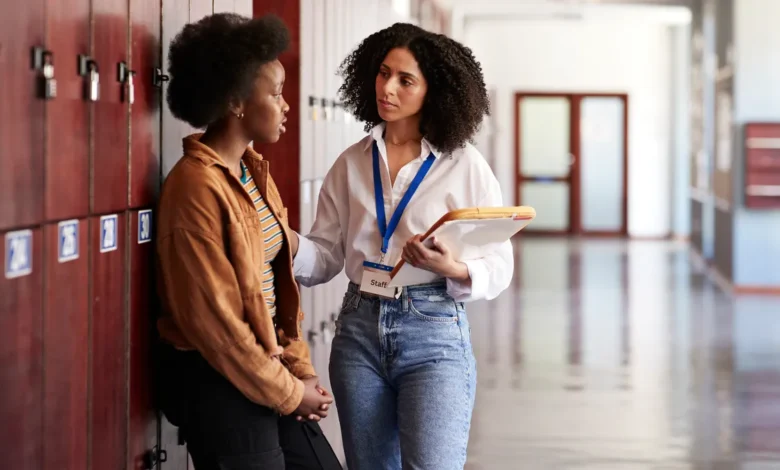
Recent findings from a comprehensive joint analysis conducted by Equal Opportunity Schools and the Center for Trust and Transformation indicate that strategically leveraging trusted relationships within educational environments can significantly expand academic opportunities for students. Published in September 2026, the research underscores a critical missing link in the modern American educational system: while student-adult mentorships and trusted connections are widely acknowledged as beneficial, they are neither equitably distributed nor systematically utilized to guide students toward advanced learning opportunities and heightened engagement.
The implications of this research arrive at a pivotal moment for K-12 education nationwide. School districts across the United States continue to grapple with persistent post-pandemic challenges, most notably chronic absenteeism and widespread student disengagement. By examining massive datasets encompassing millions of student records, researchers have highlighted how human connections inside school buildings might serve not only as emotional safety nets, but also as formal conduits to academic equity and success.
Scope and Scale of the Research
The primary study’s conclusions are built upon an unprecedented volume of empirical data. Researchers evaluated records from more than 1.8 million students, 77,000 staff members, 1,404 individual schools, and 450 distinct school districts associated with the Equal Opportunity Schools network. This massive dataset allowed analysts to map the geography of trust within schools with a high degree of statistical precision.
Equal Opportunity Schools is a national nonprofit organization with a specialized focus on closing equity gaps. To date, the organization has partnered with more than 900 schools across over 250 districts, working collaboratively to identify, recruit, and successfully enroll historically underrepresented students into advanced courses such as Advanced Placement (AP) and International Baccalaureate (IB) classes. The Center for Trust and Transformation complements this mission by providing tailored coaching, strategic consulting, and rigorous research aimed at fostering interpersonal trust within organizational frameworks.
Disparities in Access to Trusted Adults
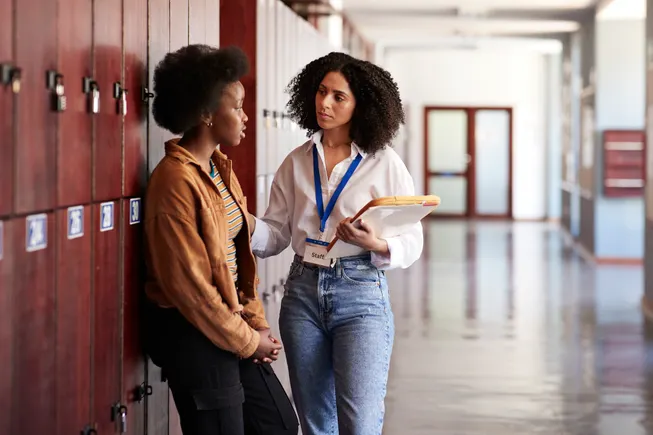
Despite the recognized value of mentorship, the joint analysis revealed stark disparities in how access to trusted adults is distributed among students of different racial and ethnic backgrounds.
According to the data, Black, Indigenous, Latinx, and Native Hawaiian or Pacific Islander students consistently reported having a trusted adult in their school building at significantly lower rates than their White and Asian peers. Furthermore, the analysis uncovered a homophily pattern in school relationships: students across all demographics were statistically more likely to identify a trusted adult who shared their specific racial or ethnic background. Given that the demographic composition of the national teaching workforce remains predominantly White, these dynamics present complex hurdles for students of color seeking meaningful mentorship within school walls.
While the exact causal mechanisms behind these disparities remain multifaceted and complex—reflecting broader systemic, cultural, and operational realities within schools—the report emphasizes that the consequences are tangible. When students lack access to trusted adults, they miss out on critical guidance that dictates their academic trajectories.
The Missing Link: Recommendations and Advanced Coursework
To further illuminate the operational impact of these relational gaps, the research incorporated findings from a separate, connected study conducted in partnership with Learning Collider. Learning Collider is a nonprofit research organization dedicated to human-centered artificial intelligence, technology, and applied behavioral science in education.
This secondary analysis focused specifically on more than 284,000 observations of 10th and 11th-grade students within the Equal Opportunity Schools network who were not currently enrolled in AP classes, yet maintained a Grade Point Average (GPA) of 3.0 or higher. These academic metrics strongly suggest that the students possessed the intellectual capability to handle rigorous coursework.
However, the data revealed alarming disconnects in the pipeline to advanced classes:

- Approximately 45% of these academically qualified students did not receive a formal teacher recommendation for rigorous coursework.
- Roughly 24% of this same population neither received a teacher recommendation nor possessed a connection with a trusted adult within the school.
These figures illustrate that while advanced placement opportunities exist, and while thousands of students meet the objective benchmarks required to succeed in them, the bridge connecting readiness to enrollment is far from automatic. In many cases, institutional inertia, implicit bias, or simple lack of communication prevents capable students from crossing the threshold into advanced learning.
Expert Perspectives and Leadership Reactions
AJ Gutierrez, Chief Executive Officer of Equal Opportunity Schools, emphasized the profound weight of these findings in statements addressing the educational community.
"These studies reinforce how much trusted relationships matter in schools," Gutierrez noted. He explained that the central challenge moving forward is not merely proving that relationships are valuable, but determining how to operationally transform trusted school-based connections into concrete, scalable opportunities for student advancement.
"We still have more to learn about how schools can do that consistently and at scale," Gutierrez added. "With so many schools confronting disengagement and chronic absenteeism, understanding that connection has never been more important."
The research suggests a paradigm shift in how school staff are trained and deployed. Rather than leaving mentorship to chance, schools could strategically train teachers, counselors, and athletic coaches to act as active navigators. For instance, an educator trained in relational trust-building could actively identify a disengaged student with a high GPA and guide them into an AP history class, or a coach could intervene to help an absentee student reconnect with the school community by tying their attendance to tangible academic goals.
Implications for K-12 Policy and Practice

The convergence of data from Equal Opportunity Schools, the Center for Trust and Transformation, and Learning Collider points toward a necessary evolution in school improvement strategies. For decades, educational reform initiatives have oscillated between structural interventions—such as curriculum overhauls, grading policy changes, and technological investments—and accountability measures.
However, these new findings suggest that human infrastructure is just as critical as academic infrastructure. If a school possesses a robust AP curriculum but fails to establish the trust networks necessary to invite marginalized or disengaged students into those classrooms, equity goals will remain unmet.
Policymakers and district leaders are increasingly urged to look beyond standardized test scores and attendance metrics to evaluate the relational health of their buildings. By intentionally tracking student connectedness and auditing teacher recommendation patterns, districts can begin to dismantle the hidden barriers that keep qualified students out of advanced coursework.
As educational institutions nationwide continue navigating the long-term aftermath of pandemic-era disruptions, the mandate to rebuild student-adult trust has transformed from an abstract pastoral ideal into an urgent operational necessity. How districts choose to operationalize these insights in the coming years will likely determine their success in fostering both academic excellence and student well-being.