Tesla Deemed Liable for Fraud in Landmark Rancho Santa Fe Solar Roof Lawsuit Following Repeated Discovery Violations

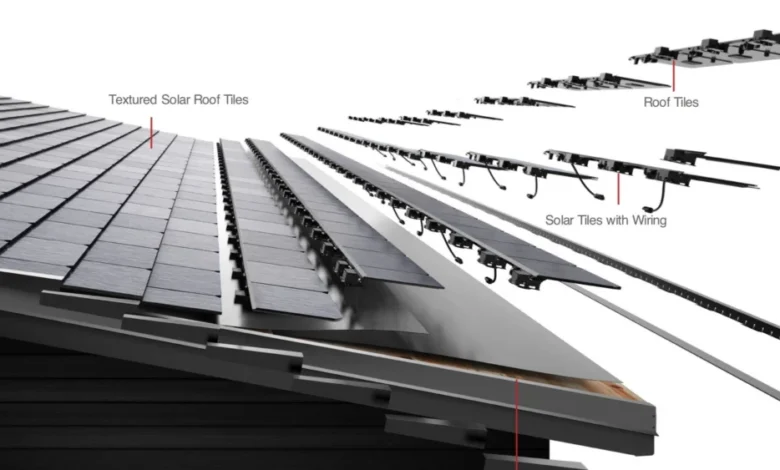
A California state judge has formally ruled Tesla liable for fraud and negligent misrepresentation in a high-stakes legal battle centered on the company’s now-defunct Solar Roof product. The decision by San Diego Superior Court Judge Cynthia Freeland follows a protracted discovery dispute in which Tesla repeatedly failed to turn over mandatory legal evidence, forcing the court to issue severe procedural sanctions. While the electric vehicle and clean energy giant had previously conceded liability regarding breach of contract, breach of warranty, and professional negligence, the newly established fraud ruling opens the door for a jury to evaluate punitive damages against the corporation.
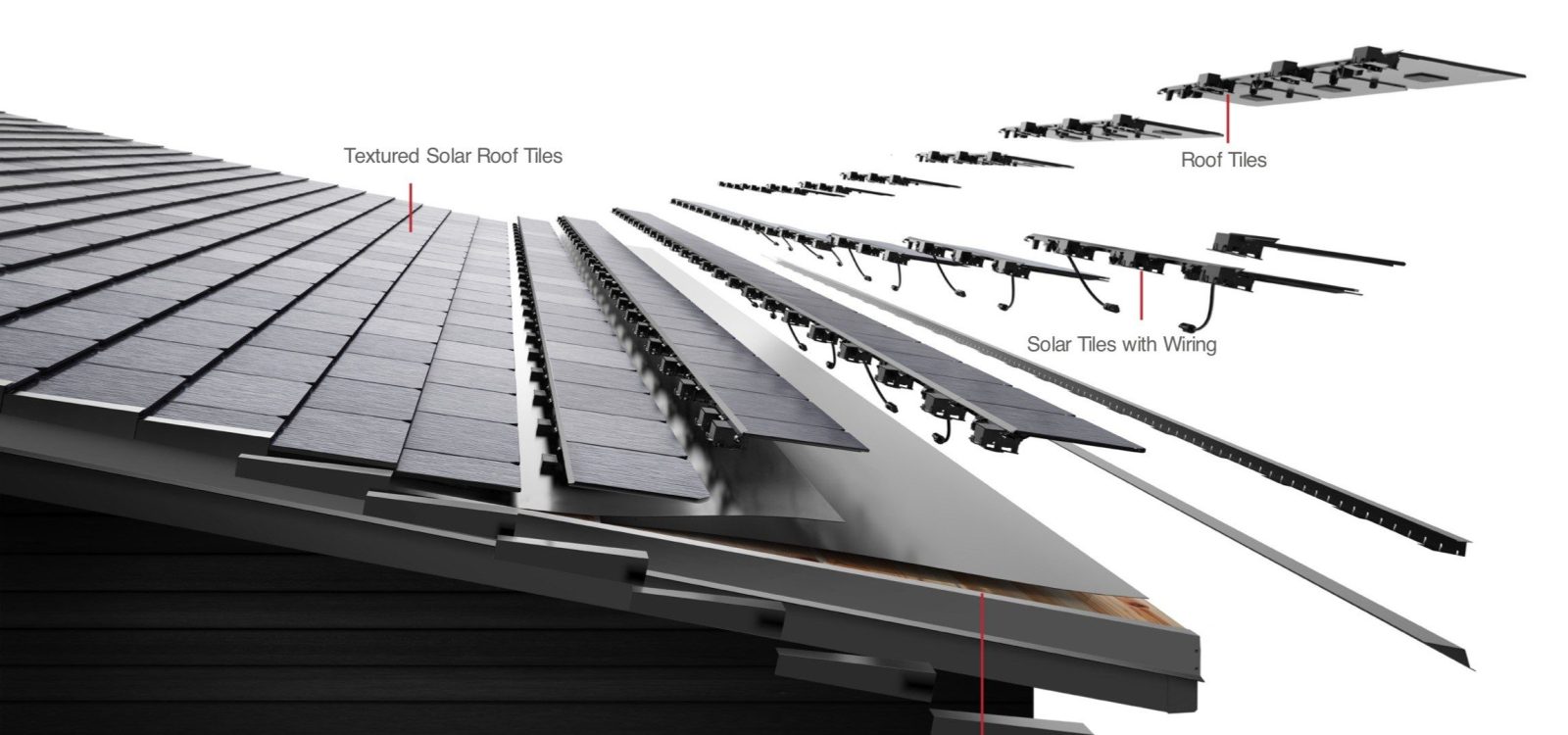
The litigation, formally designated as Conroy v. Tesla (Case No. 37-2022-00043670), was initiated in 2022 by homeowner Ambrose Conroy in the San Diego Superior Court’s North County division. According to court records, case files, and joint trial readiness reports, the dispute underscores severe operational failures that plagued Tesla’s ambitious residential solar shingle initiative, which was quietly wound down and discontinued earlier this year after installing only a fraction of the planned systems nationwide.
Background and Chronology of a Failed Installation
The project began in March 2020 when Conroy contracted with Tesla to install a 13.1 kW Solar Roof system on his residence in Rancho Santa Fe, California, with an initial price tag of $82,210. Over the course of the following year, the project scope expanded significantly. By February 2021, two formal contract amendments had scaled the installation up to an 18.2 kW system integrated with six Tesla Powerwall energy storage batteries, pushing the total contract value to approximately $110,000.

Despite the substantial financial commitment, the installation was plagued by catastrophic delays, structural exposures, and regulatory failures. According to court filings, the project—initially projected to take roughly two weeks—extended indefinitely through multiple project managers and operational pivots. Key chronological milestones in the dispute highlight the deterioration of the project:
- November 2020: Initial tear-off of the existing roof leaves bare decking exposed to the elements for extended periods, violating standard construction protocols.
- December 2020: Emergency crews are dispatched for overtime work to install underlayment immediately prior to an incoming winter storm. Conroy reports that shattered glass tiles were left scattered across the driveway and lawn.
- February 2021: Internal Tesla communications acknowledge the extreme architectural complexity of the home, describing it as sitting in the "99.5 percentile in terms of complexity." RJ Johnson, then head of Tesla’s energy business, notes that the job would skew internal operational metrics but insists the company must "make it right."
- August 2021: Internal email threads reveal discussions among Tesla personnel regarding the possibility of walking away from the increasingly problematic project.
- November 2021: Tesla informs the homeowner that the specific employees who formulated the repair plan are no longer with the company and that no local personnel are available to execute the remedial work.
- April 2022: Tesla offers a $5,000 settlement to resolve all claims relating to the unfinished and non-functional installation.
- September 2022: Conroy formally files a civil complaint against Tesla in San Diego Superior Court, detailing allegations of professional negligence, breach of contract, breach of warranty, fraud, and negligent misrepresentation.
- February 2025: Tesla fails yet another county inspection after representatives arrive on-site without essential documentation concerning the home’s ventilation system.
- September 2025: Following two prior monetary sanctions totaling nearly $29,000 for withholding evidence, Judge Freeland issues a decisive issue sanction, ruling Tesla legally liable for fraud and negligent misrepresentation due to willful non-compliance.
- October 2025: The court denies Tesla’s motion for reconsideration, affirming that the withheld documents support the plaintiff’s core theory that the company knowingly utilized residential properties as testing grounds despite lacking adequate installation capabilities.
Discovery Violations and Judicial Scrutiny
At the heart of the court’s fraud ruling is Tesla’s failure to adhere to California civil discovery obligations. Throughout the proceedings, Judge Freeland issued multiple monetary penalties against the defendant—specifically $15,467.50 in February and $13,500 in June—for repeatedly failing to produce proper privilege logs and responsive documentation.

When Tesla missed subsequent court-mandated deadlines, the judiciary escalated its response. On September 11, Judge Freeland invoked issue sanctions, ruling that Tesla’s persistent refusal to hand over records constituted a tacit admission that the withheld information was damaging to its legal defense. Among the missing materials were internal Microsoft Teams messages (which a corporate representative testified are stored indefinitely), Occupational Safety and Health Administration (OSHA) logs, correspondence with San Diego County building inspectors, and over 20 internal safety, quality, and installation reports generated through Tesla’s proprietary Bolt software system.
In her subsequent ruling denying Tesla’s motion for reconsideration, Judge Freeland explicitly noted that the late-produced documents supported the plaintiff’s assertion that Tesla "knowingly used Plaintiff’s home as an experiment while knowing they lacked the experience to perform as promised."

Internal Communications and Corporate Oversight
Trial exhibits and complaint excerpts submitted by the plaintiff provide rare visibility into the internal corporate culture surrounding Tesla’s energy division during the rollout of the Solar Roof. Exhibit 224 on the joint exhibit list references text message exchanges from January 2021 between Bobby Yang, Tesla’s director of model engineering, and other corporate employees, which the plaintiff’s legal counsel characterizes as discussing the property as an active testbed. Furthermore, internal documentation indicates that high-level executive updates regarding complex installations were routinely transmitted to Chief Executive Officer Elon Musk via daily email reports.
RJ Johnson, who served as the head of Tesla’s energy business before his departure in April 2021, acknowledged internally that the Rancho Santa Fe installation represented an unprecedented structural challenge, featuring at least 59 distinct mounting planes. Despite these internal admissions regarding the technical hurdles, the project remained uncompleted, failed to pass county safety inspections, and never generated a single kilowatt-hour of electricity for the residence.

Expert Findings and Current Legal Posture
As the litigation progressed toward trial, independent technical evaluations compounded Tesla’s legal exposure. During the summer months, an electrical engineering expert retained by the plaintiff performed a partial teardown of the roof assembly. The expert concluded that the configuration of electrical wiring and conduit installed beneath the glass tiles created a severe short-circuit and potential fire hazard when subjected to heavy rainfall.
Facing a depleted defense on liability—having already conceded breach of contract, warranty violations, and negligence—Tesla’s legal representatives have sought intervention from the California Court of Appeal. In late October filings, Tesla petitioned the appellate court to stay the proceedings, arguing that the trial court’s issue sanction is unduly punitive, violates procedural due process, and functions as an improper pre-trial determination of fraud.

While the immediate trial date has been postponed, a trial readiness conference has been scheduled to establish a new timeline for addressing compensatory and punitive damages. Legal analysts observe that even if the appellate court ultimately overturns the fraud sanctions, Tesla’s formal concession of liability regarding breach of contract and negligence ensures that a jury will evaluate the operational failures and the subsequent corporate response, which famously culminated in a $5,000 settlement offer to a homeowner whose repair costs are estimated by his legal team to exceed $2.5 million.
The case highlights the broader commercial and regulatory challenges that ultimately led Tesla to restructure and curtail its residential solar roof division, leaving conventional solar panel alternatives from established local contractors as the prevailing option for residential clean energy adoption.