
Us Military Evaluating Options Prevent Nuclear Armed Iran General Says
US Military Evaluating Options to Prevent Nuclear-Armed Iran, General Says
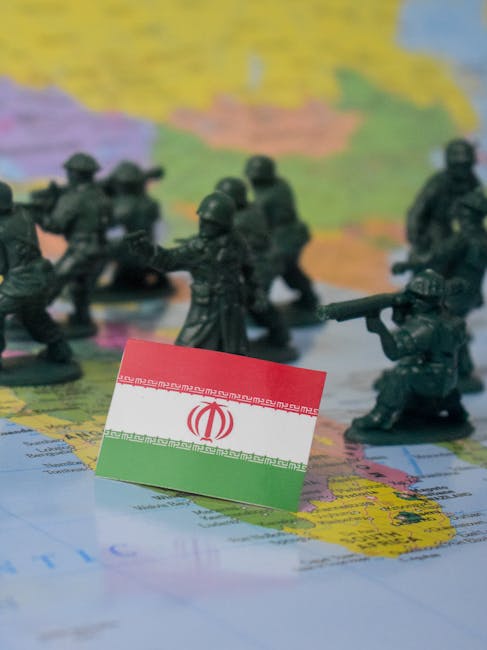
General Michael “Erik” Kurilla, commander of U.S. Central Command (CENTCOM), has unequivocally stated that the U.S. military is actively evaluating a spectrum of options to prevent Iran from acquiring a nuclear weapon. This assertion underscores the gravity with which Washington views Tehran’s advancing nuclear program and its potential implications for regional and global security. Kurilla’s remarks, made during a recent congressional hearing, signaled a shift from solely diplomatic efforts to a more robust military contingency planning posture. The Pentagon’s assessment encompasses a range of scenarios, from bolstering deterrence to, if necessary, employing kinetic force. This strategic recalibration is driven by intelligence assessments indicating that Iran is closer than ever to developing the fissile material required for a nuclear weapon, and potentially possesses the technical expertise to weaponize it. The implications of a nuclear-armed Iran are profound, posing an existential threat to Israel, increasing the risk of regional proliferation, and undermining the global non-proliferation regime. Consequently, the U.S. military’s evaluation is not merely an academic exercise but a critical component of national security strategy, aimed at deterring Iran and preserving stability in a volatile Middle East.
The core of CENTCOM’s evaluation revolves around Iran’s escalating enrichment capabilities and its growing stockpile of enriched uranium. Iran has significantly increased its uranium enrichment levels beyond the limits stipulated in the Joint Comprehensive Plan of Action (JCPOA), which the U.S. withdrew from in 2018. Experts believe Iran has enough enriched uranium to produce multiple nuclear weapons, and the time required to reach weapons-grade enrichment has dramatically decreased. This has led to a heightened sense of urgency within U.S. defense circles. Kurilla’s testimony highlighted that the military is not only considering defensive measures but also offensive options designed to disrupt or dismantle Iran’s nuclear infrastructure should diplomatic avenues fail. These options, while not explicitly detailed due to their sensitive nature, would likely involve coordinated strikes against facilities involved in uranium enrichment, heavy water production, and the development of missile delivery systems. The challenge lies in identifying and targeting these facilities, many of which are dispersed, buried deep underground, or located within heavily populated areas, presenting significant operational complexities and the potential for unintended consequences. The military’s planning is therefore meticulous, aiming to achieve maximum impact on Iran’s nuclear program while minimizing collateral damage and avoiding a full-scale regional conflict.
U.S. military planning also takes into account Iran’s ballistic missile program, which is inextricably linked to its nuclear ambitions. Iran has one of the largest and most diverse ballistic missile programs in the Middle East, capable of delivering a nuclear payload over significant distances. The development of more accurate and longer-range missiles, coupled with its pursuit of nuclear weapons, presents a dual threat. CENTCOM’s strategy development therefore integrates responses to both aspects of Iran’s WMD program. This includes enhancing missile defense capabilities for U.S. allies in the region, such as Israel and the Gulf states, and developing offensive options to neutralize Iran’s missile launch sites and production facilities. The integration of cyber warfare capabilities is also a crucial element, with U.S. Cyber Command reportedly developing sophisticated tools to disrupt Iranian command and control systems and potentially interfere with the operation of its nuclear facilities. The synergy between nuclear and missile programs means that any military response must be comprehensive, addressing both the fissile material production and the means of delivery. The complexity of this threat landscape necessitates a multi-domain approach, leveraging air, land, sea, cyber, and space assets in a coordinated fashion.
Furthermore, the U.S. military is actively engaged in intelligence gathering and analysis to maintain a precise understanding of Iran’s nuclear progress and its intentions. This involves a constant stream of information from human intelligence, signals intelligence, and satellite reconnaissance. The accuracy of this intelligence is paramount to informing the development of effective military options. Without a clear picture of Iran’s capabilities and timelines, any proposed action could be either too little, too late, or unnecessarily escalatory. The U.S. military is also working closely with its regional partners, including Israel, Saudi Arabia, and the United Arab Emirates, to share intelligence and coordinate defense strategies. This collaborative approach is vital for building a united front against Iran’s nuclear ambitions and ensuring a robust regional deterrence posture. Joint exercises and interoperability training are ongoing to ensure that U.S. and partner forces can operate seamlessly in a crisis scenario. The regional alliances are not only for operational purposes but also for diplomatic leverage, demonstrating a unified commitment to preventing a nuclear-armed Iran.
The discussion of military options is inherently sensitive, but General Kurilla’s public acknowledgment signals a strategic communication effort by the Pentagon. It aims to communicate to Iran, and to the international community, that all options are on the table. This message of deterrence is crucial. By demonstrating a credible willingness to use force, the U.S. hopes to compel Iran to reconsider its nuclear trajectory and return to meaningful negotiations. The deterrence strategy is multi-faceted, involving not only the threat of military action but also economic sanctions and diplomatic pressure. However, the emphasis on military options suggests that these other tools are seen as having diminishing returns, or at least insufficient on their own to achieve the desired outcome of a non-nuclear Iran. The Pentagon’s planning for military intervention is likely to involve a range of scales, from highly targeted strikes against specific nuclear-related sites to broader campaigns aimed at degrading Iran’s overall military and strategic capabilities. The choice of action would depend on the perceived imminence of Iran acquiring a nuclear weapon and the effectiveness of other measures.
The political and diplomatic dimensions of preventing a nuclear-armed Iran are, of course, deeply intertwined with the military evaluations. While the U.S. military is preparing for contingencies, diplomatic efforts continue, albeit with a renewed sense of urgency and perhaps a more forceful underlying tone. The effectiveness of any military option is heavily influenced by the political will and international support behind it. A unilateral military strike, for instance, carries different risks and implications than a multilateral operation sanctioned by the United Nations or a coalition of willing nations. The U.S. military’s planning must therefore be flexible enough to accommodate different political scenarios. Moreover, the long-term goal is not simply to destroy Iran’s nuclear capabilities in a single strike, which is likely impossible, but to create conditions that prevent Iran from ever acquiring a nuclear weapon. This could involve ongoing monitoring, enforcement, and a sustained diplomatic effort to ensure Iran’s compliance with international non-proliferation norms. The military options are ultimately a tool to enable diplomatic success, not a replacement for it.
The economic sanctions regime against Iran also plays a significant role in the calculus of both military and diplomatic strategies. Sanctions are intended to cripple Iran’s economy, thereby limiting its ability to fund its nuclear program and its regional proxy activities. However, the effectiveness of sanctions can be debated, and Iran has shown resilience in adapting to these pressures. The U.S. military’s planning would undoubtedly consider the economic impact of sanctions and how it might influence Iran’s decision-making, as well as its capacity to sustain a prolonged conflict. A weakened economy could limit Iran’s ability to procure advanced technology or to replenish its military hardware, making it more vulnerable to military pressure. Conversely, an economically desperate Iran might be more inclined to take desperate measures. Therefore, the interplay between sanctions, diplomacy, and the credible threat of military force forms a complex web of strategic considerations. The military options being evaluated are designed to be effective within this broader strategic context, aiming to achieve a decisive outcome that permanently removes the nuclear threat.
The international community’s response to Iran’s nuclear program is a critical factor in the U.S. military’s contingency planning. While the U.S. is the primary actor in evaluating military options, the support or opposition of key global players, such as European nations and Russia, can significantly impact the feasibility and consequences of any military action. The U.S. is actively consulting with its allies to build a consensus on the threat posed by Iran’s nuclear program and to coordinate a unified response. This diplomatic engagement is crucial for isolating Iran, increasing the pressure on its leadership, and potentially creating an environment where de-escalation and a return to compliance become more attractive options. The military options are therefore being developed with an eye towards potential international cooperation or at least tacit approval, which would lend legitimacy to any action taken and help mitigate potential backlash. The U.S. recognizes that a solely unilateral military intervention could have significant geopolitical repercussions, and therefore seeks to build a coalition of support.
Finally, the U.S. military’s evaluation of options to prevent a nuclear-armed Iran is a dynamic and evolving process. Intelligence assessments are constantly updated, and Iran’s nuclear program continues to advance. This necessitates a continuous reassessment of available options and the development of new strategies. General Kurilla’s public pronouncements are a clear indication that the window for purely diplomatic solutions may be closing, and that the U.S. military is preparing for a more assertive role in ensuring that Iran does not acquire nuclear weapons. The underlying message is one of resolute determination, demonstrating that the U.S. views this issue with the utmost seriousness and is prepared to take all necessary steps to prevent a catastrophic outcome in the Middle East. The comprehensive nature of the military evaluations underscores the multifaceted nature of the threat and the complexity of devising effective countermeasures in a highly sensitive geopolitical environment. The ultimate goal remains the prevention of a nuclear-armed Iran, and the military options are being meticulously crafted to serve that critical objective.
