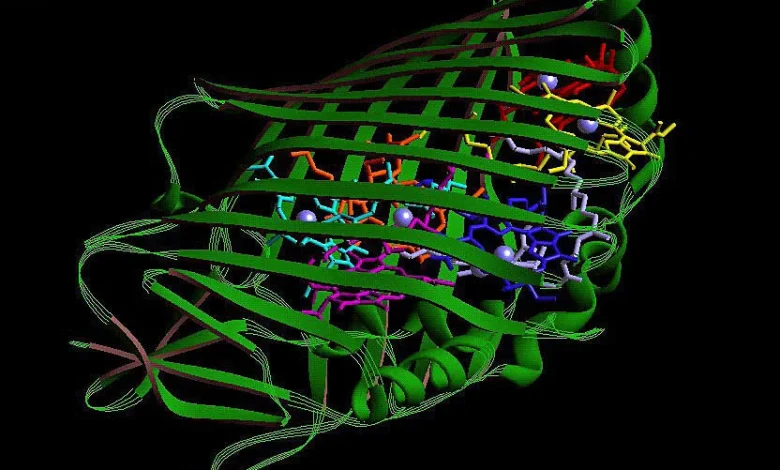
The field of synthetic biology is undergoing a profound transformation as researchers move away from complex, code-heavy parameters toward natural language processing for the design of bespoke biological molecules. A recent breakthrough involving a novel AI system called Pinal has demonstrated that researchers can now generate functional protein sequences simply by describing their desired characteristics in plain English. This shift, often described in tech circles as "vibe coding"—where intent is prioritized over rigid technical syntax—marks a significant departure from the traditional, labor-intensive methods that have long defined protein engineering.
Historically, the design of proteins has required a deep, granular understanding of biochemistry. To create an enzyme, for example, a scientist needed to manually calculate the exact spatial arrangement of amino acids, the chemical mechanisms of the intended reaction, and the surrounding water molecules necessary for catalysis. This process was effectively a form of molecular architecture, requiring both high-level domain expertise and specialized computational software.
The Mechanism Behind Pinal
The Pinal system, developed by a collaborative team of researchers in China, simplifies this process by leveraging large-scale language models (LLMs) trained on vast biological datasets. The system operates in a two-stage process. First, a module dubbed T2struct translates a user’s natural language prompt into a structural blueprint. Rather than outputting a 3D visual file, T2struct generates a linear array of tokens representing the spatial relationships between amino acids and their neighbors, assigning a probability to each configuration.
Following this, a second system called SAProt-T takes the output from the initial stage and performs a global re-evaluation. By integrating the original text prompt with the structural probabilities, SAProt-T constructs a sequence of amino acids optimized for the desired function. This step is critical; it allows the model to avoid "tunnel vision" by considering structural possibilities that might appear less probable in isolation but could ultimately result in a superior, more functional protein sequence.
To achieve this level of accuracy, the researchers utilized massive training sets. By pairing millions of protein sequences from three major databases with structural predictions from AlphaFold, the team trained the model to associate specific keyword tags—such as "serine protease"—with the functional realities of the proteins those tags describe. This approach effectively bridges the gap between human nomenclature and the rigid structural requirements of biochemistry.
Validating Functional Success
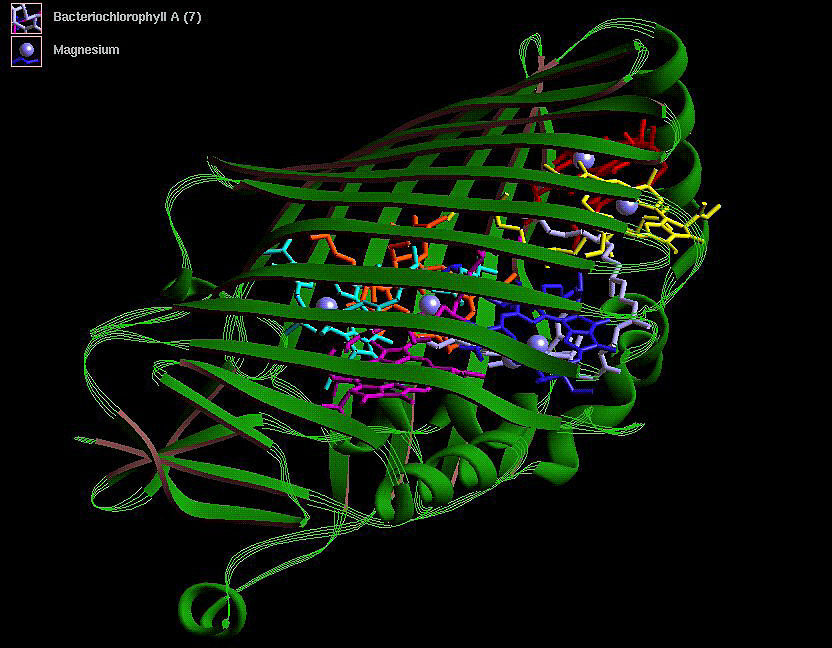
The efficacy of Pinal was tested through the generation of four distinct protein types, including a fluorescent protein, two enzymes, and a component for a multi-protein complex. The fluorescent protein experiment serves as a primary case study for the system’s capability. Researchers requested the generation of 50,000 candidate sequences that mimicked the characteristics of Green Fluorescent Protein (GFP).
To ensure the model was generating novel sequences rather than simply regurgitating known data, the team filtered the results to exclude sequences mirroring existing proteins. They further refined the list by selecting for specific structural markers, such as the barrel-like architecture inherent to GFP and the presence of critical amino acids required for fluorescence. Out of this rigorous filtering process, 29 candidates were synthesized in an E. coli laboratory setting. While only one of the 29 candidates successfully fluoresced, the success rate is considered a proof-of-concept for the viability of generative AI in molecular biology.
Carbon X and the DNA Revolution
Parallel to the advancements in protein design, the field of genomics is seeing a similar disruption. Hugging Face, in collaboration with the Zhongguancun Academy and the University of Naples "Federico II," recently unveiled Carbon X, an open-weight model capable of running on local consumer-grade hardware.
Carbon X is based on the Qwen3-14B language model but has undergone extensive re-training—or "mid-training"—on DNA sequences. The challenge in developing such a model lies in the delicate balance of knowledge retention: the training must be aggressive enough to teach the model the rules of genetic code while gentle enough to prevent it from "forgetting" the natural language skills required to interpret user prompts.
The result is a model that can translate between English and DNA. A user can input a prompt asking for the consequences of a specific genetic mutation—such as substituting a guanine for an adenine—and the model will predict the potential functional outcome. Unlike massive, cloud-based commercial models, Carbon X can be operated locally on a laptop, providing significant advantages in data privacy and operational cost for proprietary research.
The Evolving Role of the Biologist
The emergence of these tools has prompted a necessary debate regarding the democratization of biotechnology. Critics might fear that lowering the barrier to entry could allow untrained individuals to design potentially harmful biological agents. However, industry experts argue that the reality of the workflow remains highly gatekept by technical requirements.

While these AI systems can output a sequence, the subsequent steps—screening for functionality, validating structures, and physically synthesizing and testing the proteins in a laboratory—remain significant hurdles. The "vibe" of a design is a starting point, not a finished product. A well-equipped laboratory and highly trained personnel are still required to turn a digital prediction into a biological reality.
For the working biologist, however, these tools offer a welcome reprieve from the "manual labor" of bioinformatics. Many researchers have long struggled with the lack of user-friendly software in a field dominated by tools built by developers for other developers. By allowing a scientist to ask, "find me all the enhancers that control the expression of this gene," these AI systems could theoretically save weeks of time spent configuring multiple, incompatible software packages.
Implications and Future Trajectory
The integration of natural language into biological research represents a shift from "computation-heavy" to "intent-heavy" science. As these models become more sophisticated, the focus is likely to shift from the mechanics of how to build a protein to the broader questions of what those proteins should do.
However, caution remains a watchword. As with all LLM-based systems, these models are prone to "hallucinations"—generating sequences that look plausible but are functionally inert or structurally unstable. Furthermore, the reliance on structural data from databases like AlphaFold introduces a potential bias; if the structural data is inaccurate or absent for rare or obscure proteins, the generative model’s output will inevitably be flawed.
The current generation of these tools is, at best, an assistant. They do not replace the experimentalist, but they do change the nature of the experimentalist’s workflow. As the scientific community continues to refine these systems, the next few years will likely determine whether "vibe coding" in biology becomes a permanent fixture of laboratory research or remains a promising but niche curiosity.
Looking ahead, the combination of local-running models like Carbon X and the generative capabilities of systems like Pinal suggests a future where biological design is modular and accessible. If these systems can reliably reduce the design-build-test cycle, the pace of discovery in medicine, material science, and synthetic biology could accelerate at a rate previously unimaginable. For now, the focus remains on rigorous verification, ensuring that when the AI speaks, the biology listens—and functions—exactly as intended.
Related posts: