Long before a consumer ever clicks "add to cart," unboxes a shipment, or disposes of a worn-out item at the curb, a series of critical decisions have already been locked in place. The choice of raw materials, the structural engineering of the packaging, the targeted shelf-life, and the ultimate fate of the product once its utility expires are all architectural details determined at the drawing board. For generations, the mainstream consumer goods industry operated under a linear economic model—take, make, dispose—where waste was treated as an inevitable externality rather than a core metric of failure.
However, a structural shift is quietly transforming the global marketplace. A vanguard of forward-thinking manufacturers, independent labels, and legacy enterprises are re-evaluating the foundational mechanics of production. Rather than treating sustainability as a marketing afterthought or a downstream recycling problem, these companies are re-engineering waste out of existence before a single unit is manufactured. This paradigm shift from remediation to prevention marks a maturation in corporate environmental responsibility, driven by shifting consumer demands, volatile supply chains, and an urgent reckoning with global planetary limits.
The Evolution of Circular Economics and Industrial Design
To understand why waste has become a primary target for modern innovators, one must examine the historical trajectory of industrial manufacturing. Following the rapid industrialization of the mid-20th century, convenience and low upfront production costs dictated product design. Packaging grew more complex, frequently combining multiple polymers, foils, and adhesives that made mechanical recycling nearly impossible. Consumer electronics were intentionally designed with limited lifespans—a concept known as planned obsolescence—while everyday household goods prioritized single-use disposability.
By the turn of the 21st century, the environmental toll of this linear model became undeniable. Municipal landfills reached capacity, marine ecosystems choked under microplastic accumulation, and global supply chains faced unprecedented volatility in raw material acquisition. Environmental economists and industrial designers began championing the concept of the "circular economy," a regenerative system in which resource input and waste, emission, and energy leakage are minimized by slowing, closing, and narrowing material and energy loops.
Yet, transitioning from a linear to a circular model presents monumental structural hurdles. Companies built upon decades of conventional supply chains often find retrofitting existing facilities to be cost-prohibitive and operationally complex. Consequently, the modern landscape of sustainable manufacturing is divided into two distinct strategies: brands that built their business models from the ground up with zero-waste constraints, and legacy operations undertaking radical, capital-intensive overhauls to green their legacy infrastructure.
Starting from Zero: Greenfields of Innovation
The cleanest iterations of waste-conscious design belong to enterprises that never had to unlearn traditional manufacturing inefficiencies. By embedding ecological constraints into their core business plans from inception, these brands bypass the friction of retrofitting.
Take, for instance, the personal care sector, an industry historically dominated by rigid plastics and water-diluted formulas packaged in single-use high-density polyethylene (HDPE). The Earthling Co. built its entire hair and body care catalog around a singular, uncompromising constraint: absolute elimination of plastic. This foundational decision triggered a cascade of operational innovations. Formulas are intentionally concentrated and plant-powered, eliminating the need to ship heavy water-based solutions across global logistics networks. Furthermore, this concentration drastically reduces packaging volume, allowing the company to rely on biodegradable paperboard cartons and low-waste compostable pouches rather than conventional drugstore plastics.
A parallel evolution is occurring in pet care—a category that has historically generated immense environmental waste through traditional clay-based litters. Mined via strip-mining and non-renewable silica extraction, conventional cat litters are stubbornly resistant to responsible disposal. Brands like HoneyCare have disrupted this stagnant market by pivoting to plant-based foundations. Utilizing renewable agricultural byproducts such as cassava, tofu, and tea fibers, these alternatives deliver natural odor control and rapid clumping capabilities without the accompanying ecological degradation of traditional mining.
Home furnishings are undergoing a parallel reimagining. The Futon Shop, operating since 1976, long before sustainability became a mainstream market differentiator, adopted a farm-to-furniture philosophy rooted in natural materials. Founder Suzanne Diamond notes that the company’s longevity stems from an adherence to minimalist, intentional craftsmanship. By rejecting petrochemical-derived polyurethane foams—commonplace in conventional mattresses and upholstered furniture—in favor of organic cotton, natural rubber latex, and solid wood frames, the company ensures that its products can eventually return to the earth safely at the end of their operational lifecycle.
Retrofitting the Industrial Giant: Upgrading Legacy Infrastructure
While startups enjoy the agility of starting with a blank slate, the broader systemic impact on global waste depends heavily on legacy brands transforming existing operations. Upgrading massive, established supply chains requires significant capital investment, strategic patience, and rigorous operational auditing.
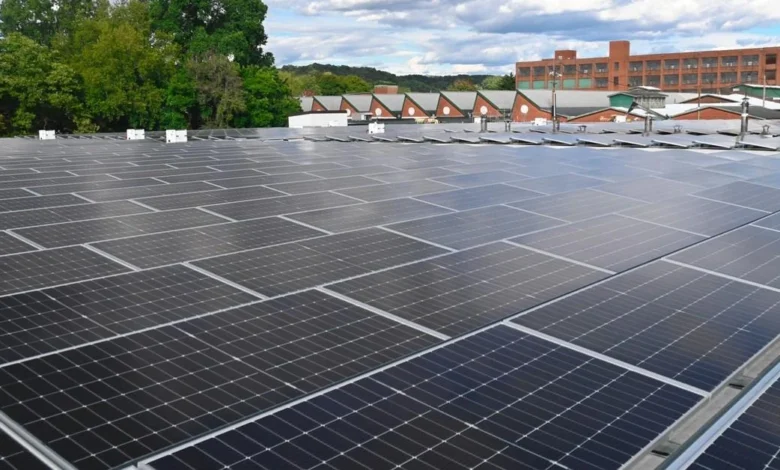
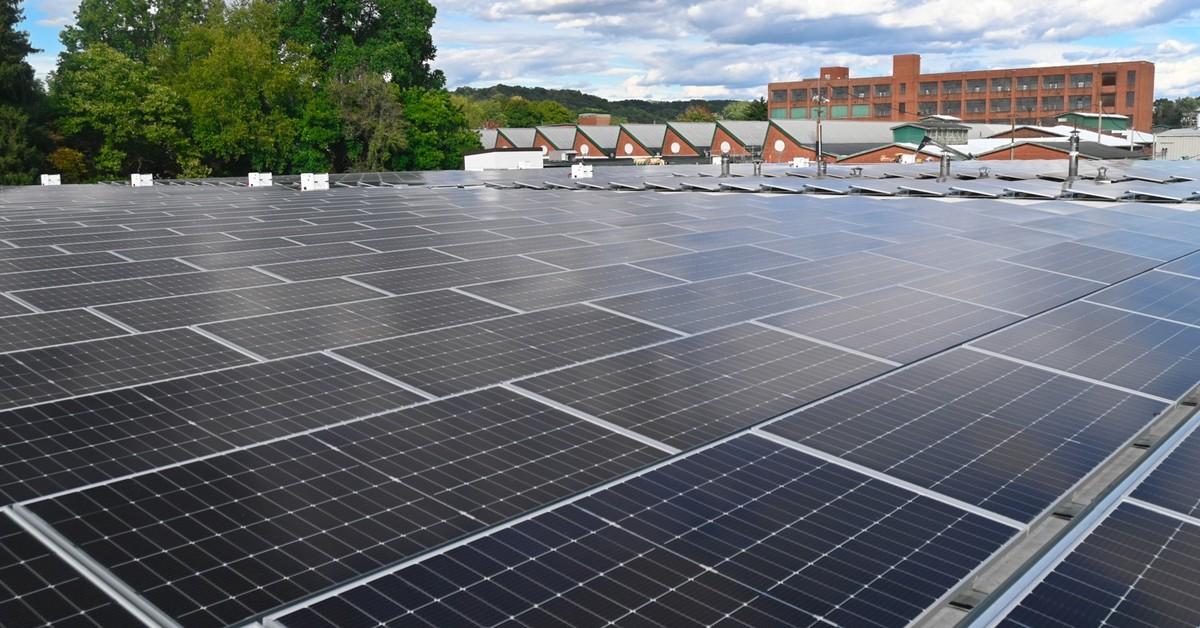
A prime example of industrial retrofitting can be found within the coffee manufacturing sector. Fresh Roasted Coffee invested in an expansive 84,000-square-foot production facility in Sunbury, Pennsylvania, transforming it into a self-sustaining operational hub powered entirely by a massive commercial solar array. This installation does not merely offset baseline electricity consumption; it generates enough clean energy to power roasting drums, automated packaging lines, climate-control systems, and administrative offices while feeding excess kilowatt-hours back into the local municipal grid.
In parallel, minimalist product formulation is emerging as a quiet yet effective form of supply chain discipline. Brands like Levels Nutrition have streamlined their whey protein manufacturing by drastically reducing ingredient lists. While minimalist formulations are not traditionally marketed as environmental campaigns, simpler ingredient profiles inherently require simpler, more transparent supply chains, reducing the upstream resource extraction and chemical processing associated with proprietary blends and elaborate additive stacks.
Extending Product Lifecycles: The Economics of Retention
Beyond manufacturing inputs and energy sourcing, a critical frontier in waste reduction addresses the premature disposal of functional goods. Modern consumer culture frequently encourages the premature write-off of durable items, designating them as waste long before their mechanical limits are reached.

The automotive aftermarket offers a striking case study in systemic inefficiency. Millions of vehicles are retired annually, yet vast quantities of mechanical and structural components remain entirely functional. Historically, these parts were discarded due to fragmented salvage infrastructure and a lack of centralized inventory tracking. Team PRP built a national cooperative model to bridge this gap, connecting independent automotive recyclers, salvage yards, and parts distributors across the United States. By standardizing digital inventories and establishing reliable logistics networks, the organization diverts massive volumes of reusable automotive components away from landfills and back into active circulation.
"What surprises most people is how coordinated this industry has become," explains Jarret Hann, executive director and president of Team PRP. "We’ve taken what was once a fragmented network of recyclers and built a system that can move parts nationally with speed and consistency."
A parallel philosophy of systemic reduction targets unnecessary consumer consumption habits. The global reliance on single-use polyethylene terephthalate (PET) bottled water represents a staggering environmental and financial burden. Economic analysis indicates that a standard household can spend thousands of dollars annually on bottled water convenience. Countertop filtration systems, such as those engineered by AllFilters, present a structural alternative that delivers comparable water quality at a fraction of the cost per gallon while completely eliminating single-use packaging streams.
"When bottled water approaches $2 per bottle, you’re no longer talking about convenience," observes Shu Saito, founder of AllFilters. "You’re talking about a recurring household expense that can quietly add up to thousands of dollars a year while generating mountains of unrecyclable plastic."
Closing the Loop: Advanced Material Regeneration
For industries bound to physical manufacturing, the ultimate goal is achieving true material circularity—reclaiming post-consumer and industrial waste streams and transforming them into virgin-quality feedstocks without continuous extraction from petrochemical reserves.
The apparel and technical gear sectors are leading this charge through advanced polymer recycling. JOLYN, a performance swimwear brand, integrated ocean-bound plastic waste into its manufacturing pipeline through its Recycled Foreverever line, which utilizes fibers derived from recycled water bottles for competitive aquatic wear. For its specialized surf lines, the brand incorporates SeaFlex and SurfTec fabrics manufactured using ECONYL—a 100% regenerated nylon sourced from abandoned fishing nets, industrial carpet flooring, and discarded maritime plastics.
Unlike conventional mechanical recycling, which degrades polymer chain lengths and reduces material integrity with each successive thermal cycle, ECONYL can be infinitely regenerated without any loss in structural performance. This closed-loop chemistry allows technical fabrics to maintain the rigorous durability required for elite athletic training while neutralizing marine plastic pollution.

"Not only are our suits made of recycled materials, but they’re built to last through years of serious training," states Mondy Herndon, CEO of JOLYN. "Durability is sustainability. We make sure our entire process holds up to the same standard, from the factory floor to the shipping box."
Similar analytical pragmatism governs essential consumer goods, such as pet waste management. Earth Rated evaluated the lifecycle mechanics of dog waste disposal and determined that while compostable bags sound ecologically appealing on paper, municipal realities tell a different story. Because industrial composting facilities routinely reject pet waste due to pathogen concerns, ostensibly compostable bags almost invariably end up in standard landfills, where their specialized degradation requirements cannot be met. By prioritizing post-consumer recycled (PCR) plastic for its waste bags, the brand leverages existing recycling infrastructure to keep plastic waste in circulation rather than introducing materials that fail to degrade properly in standard municipal waste streams.
The Demographic Imperative and Future Implications
The integration of waste prevention into product architecture is no longer merely a niche marketing strategy for eco-conscious consumers; it is rapidly becoming an operational baseline dictated by profound demographic shifts.
Market research commissioned by organizations like WildAid and conducted by consumer intelligence firms such as dcdx reveals a striking psychological trend among Generation Z. Approximately 75% of Gen Z respondents report experiencing quantifiable mental health stress directly related to climate change and environmental degradation. As the primary consumer base matures, this demographic exhibits zero tolerance for performative greenwashing, demanding transparent, verifiable sustainability engineered directly into the physical attributes of the products they purchase.
When sustainability is structurally integrated into material selection, energy consumption, and end-of-life planning, it ceases to be an abstract marketing narrative that requires consumer trust. Instead, it becomes an objective, observable reality of the goods themselves. Waste, fundamentally, is a design flaw. As an increasing number of global brands re-engineer their operations around this premise, the linear economy of the past is steadily giving way to an era where nothing is designed to be thrown away.