The current volatility in the global energy market has placed significant strain on household budgets across the United States. Following the escalation of geopolitical tensions in the Middle East—specifically the heightened friction involving the Strait of Hormuz—crude oil markets have experienced rapid fluctuations. As of the latest reporting period, the national average for a gallon of regular gasoline has hovered near the $4.20 mark. This persistent elevation in fuel costs has forced consumers to reevaluate their discretionary spending, leading many to seek refuge in loyalty programs and membership-based retail incentives to mitigate the impact of rising pump prices.
The Geopolitical Context of Current Fuel Inflation
The current instability can be traced back to early February of this year, when diplomatic and military tensions between the United States and Iran intensified. The market’s sensitivity to these events was underscored by the subsequent disruption of shipping lanes. When three commercial oil tankers sustained damage from underwater mines in the Strait of Hormuz, the immediate reaction in global commodity markets was a sharp spike in Brent and West Texas Intermediate (WTI) crude futures. Because roughly 20 percent of the world’s petroleum consumption passes through this narrow maritime chokepoint, any signal of military escalation creates an immediate "risk premium" on the price of gasoline at local retail stations.

Economists note that while domestic production remains robust, the interconnected nature of global oil pricing means that localized conflicts in critical transit zones act as a multiplier for inflation. For the average commuter, this has necessitated a shift from casual refueling habits to strategic, data-driven consumer behavior. As legacy programs—such as the widely used Kroger fuel discount partnership—have begun to phase out, the landscape for finding significant savings has become increasingly competitive.
Save Mart: Strategic Retail-to-Fuel Integration
The Save Mart grocery chain currently provides one of the most aggressive, albeit time-sensitive, fuel incentive programs for consumers in the Western United States. Through their loyalty initiative, shoppers can leverage in-store spending to offset costs at participating Shell stations. The program allows customers to accrue points—one point per dollar spent on groceries—which can be redeemed for discounts.
The structure of this program is designed to reward high-frequency shoppers. By accumulating 100 points, a customer earns a 10-cent discount per gallon, with the ability to stack these savings up to a $1.00 per gallon reduction. Given that regional prices in areas serviced by Save Mart often exceed $5.50 per gallon, this discount can represent a substantial 18 percent savings on a single transaction. However, the program mandates a 20-gallon limit per fill-up, capping the total savings at $20 per visit.

Financial analysts caution that these points possess a limited shelf life; they generally expire within three months of acquisition. Consequently, consumers must maintain a consistent shopping cadence to realize the full value of the program, as "hoarding" points for future use is not a viable strategy.
The Warehouse Membership Model: The Costco Advantage
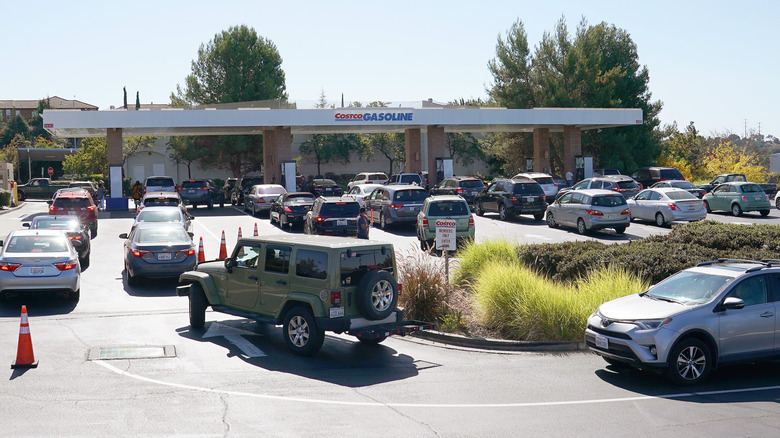
Costco Wholesale has long maintained its position as a primary destination for budget-conscious drivers. Unlike traditional loyalty programs that function on a point-accumulation basis, the Costco model is predicated on an annual membership fee, currently set at $65. This fee grants access to wholesale fuel pricing, which consistently trends lower than the national average due to the company’s high-volume, low-margin business strategy.
The logistical efficiency of Costco fuel stations is a notable component of their value proposition. Despite frequent complaints regarding long queues, the company utilizes a proprietary traffic management system that directs vehicles to available pumps, significantly reducing wait times compared to standard service stations. Furthermore, when paired with the Costco Anywhere Visa card, members can receive an additional 5 percent cash back on fuel purchases. For high-mileage commuters, the cash-back incentives and lower base prices often allow the membership to effectively pay for itself within the first few months of the calendar year.

The Two-Tiered Logistics of Love’s Travel Stops
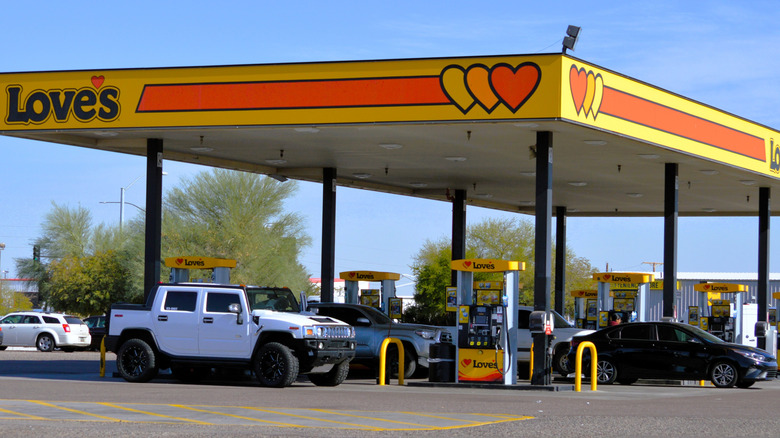
Love’s Travel Stops occupies a unique niche by providing a dual-track rewards system that accommodates both the general public and professional long-haul truck drivers. For the casual motorist, the Love’s Rewards program offers a straightforward incentive: one point per gallon of fuel, two points per dollar spent in-store, and a baseline discount of 10 cents per gallon.
For the professional trucking industry, the program shifts into a tiered structure—Base, Gold, Platinum, and Diamond. These tiers are determined by the volume of fuel purchased on a monthly basis, starting at 500 gallons for Gold status and escalating to 1,500 gallons for Diamond status. The implications for the logistics industry are significant; by providing tangible benefits such as complimentary showers and increased point multipliers, Love’s incentivizes efficiency and driver retention. This structure highlights the importance of fuel loyalty programs not just as consumer savings tools, but as vital components of the broader supply chain infrastructure.
Albertsons forU and the Multi-Brand Synergy
Albertsons Companies, through its "forU" loyalty program, has successfully integrated its fuel rewards with major national fuel brands, including Chevron and Texaco. The program follows a familiar structure: one point per dollar spent on groceries, with double points awarded for gift card purchases.
What distinguishes the Albertsons program is its high degree of interoperability. Customers can link their forU account with a Chevron loyalty card to aggregate discounts, potentially achieving up to $1.50 off per gallon. This level of stacking is rare in the current retail environment and represents a significant opportunity for those who manage their loyalty accounts with precision. However, geographic variance remains a challenge; in specific markets like California and Hawaii, the maximum discount is capped at 20 cents per gallon, illustrating the localized nature of retail fuel pricing policies.
Walmart+ and Digital Ecosystem Integration
Walmart+ represents a shift toward a comprehensive subscription-based savings model. The service, priced at $98 per year, provides a 10-cent-per-gallon discount at participating Exxon, Mobil, Walmart, and Murphy USA stations. The program is inherently digital, requiring the use of the Walmart mobile application to generate a QR code or discount ID at the pump.
While the convenience factor of the app-based system is a point of contention for some, the broader value proposition—which includes free delivery, pharmacy benefits, and streaming media access—positions Walmart+ as a lifestyle utility rather than a standalone fuel discount program. For households that already utilize Walmart for weekly grocery and household goods, the fuel savings serve as an ancillary benefit that adds to the overall return on investment of the membership fee.
Broader Economic Implications
The prevalence of these programs suggests a structural change in how consumers interact with the energy market. As fuel prices remain elevated, the ability to "shop" for gas through loyalty portals has moved from a niche activity to a standard financial management practice.
Data from the Bureau of Labor Statistics indicates that transportation-related inflation remains a significant contributor to the Consumer Price Index (CPI). As companies continue to refine their loyalty programs, the competitive landscape for consumer fuel spending will likely become more aggressive. For the average driver, the takeaway is clear: the era of choosing a gas station based solely on proximity is ending, replaced by an era where the most informed consumer—the one who stacks memberships, monitors point expiration dates, and utilizes mobile-integrated payment systems—will see the most meaningful relief from the volatility of global oil prices.
While these programs provide a necessary cushion, they are ultimately a response to, rather than a solution for, the underlying economic forces driving fuel costs. As geopolitical conditions in the Strait of Hormuz and other key energy regions remain fluid, these loyalty programs will continue to be the primary defensive tool for the American motorist.
Related posts: