NASA Opens Applications for Next-Generation Astronaut Corps to Power Artemis Lunar Missions and Journey to Mars

WASHINGTON — The National Aeronautics and Space Administration has officially opened the application window for its next generation of spacefarers, inviting qualified United States citizens to apply for a position within the elite astronaut corps. This recruitment cycle arrives at a pivotal juncture in human spaceflight, as the agency transitions from low-Earth orbit operations toward establishing a permanent human presence on the Moon and paving the highway for crewed missions to Mars.
Aspiring candidates have until 11:59 p.m. EST on Thursday, December 3, to submit their comprehensive application dossiers through the official federal portal. The final selection process is slated to culminate in late 2027, after which the chosen candidates will report to the Johnson Space Center in Houston for rigorous, multi-year foundational training.
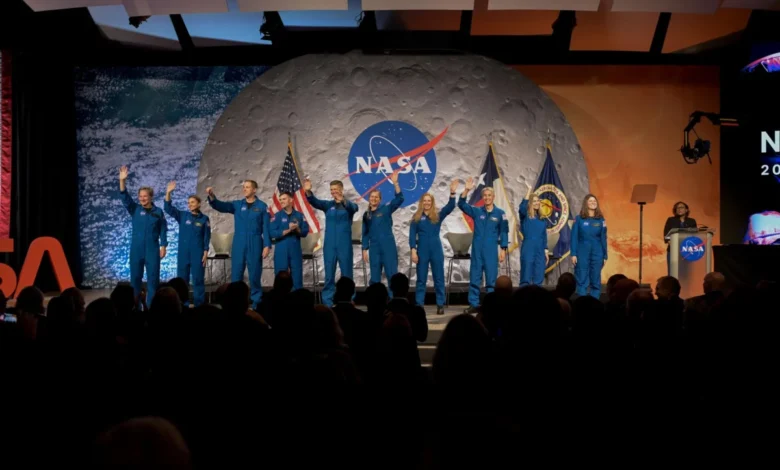
This announcement marks another chapter in an ongoing expansion of the agency’s active flight roster. It follows closely on the heels of the 2024 recruitment cycle, which drew more than 8,000 applications and ultimately yielded a class of 10 astronaut candidates in 2025 who are currently navigating their intensive two-year candidacy curriculum.
The Historic Evolution of NASA’s Astronaut Selection
Since the inception of the United States human spaceflight program in the 1960s—beginning with the pioneering Mercury Seven—NASA has selected a total of 370 individuals to train as astronaut candidates. Over the decades, the criteria, mission profiles, and demographics of the corps have evolved dramatically to reflect both technological advancements and the changing scope of human exploration.
In the early days of Project Mercury, Gemini, and Apollo, the corps was exclusively composed of military test pilots. As the Space Shuttle program came online in the 1980s, the agency broadened its requirements to incorporate mission specialists and payload specialists, including scientists, engineers, and physicians who could conduct complex laboratory experiments and deploy satellites in microgravity.
Today, the active astronaut corps stands at a modest 32 individuals. With retirements, management transitions, and an unprecedented cadence of upcoming flight assignments to the International Space Station, commercial low-Earth orbit destinations, and deep-space architecture, the agency faces a critical need to replenish and expand its ranks. The selected candidates will join a small, historic fraternity tasked with executing the most ambitious exploration campaign in modern history.
Rigorous Prerequisites and Professional Qualifications
Becoming a NASA astronaut demands an exceptional baseline of academic achievement, professional experience, and physical resilience. To be considered for the corps, applicants must meet several non-negotiable federal and technical criteria.
First and foremost, candidates must hold United States citizenship. Academically, applicants are required to possess a master’s degree from an accredited institution in a science, technology, engineering, or mathematics (STEM) field. Acceptable academic disciplines encompass engineering, biological science, physical science, computer science, or mathematics.
Furthermore, the master’s degree requirement can be fulfilled through alternative educational milestones. These include holding a Doctor of Medicine (M.D.) or Doctor of Osteopathic Medicine (D.O.) degree, completing a doctoral (Ph.D.) degree in a related STEM field, or earning a degree equivalent to a master’s level in a corresponding scientific discipline supported by documented progress toward a doctoral program.
Beyond formal education, applicants must demonstrate a minimum of three years of related, progressively responsible professional experience following the completion of their degree. Alternatively, candidates may substitute this professional requirement with a substantial baseline of high-performance flight hours. For pilot applicants, this typically involves extensive hours commanding high-performance aircraft, while medical professionals may count their residency training toward the experience requirement, provided it is completed prior to July 2027.
Beyond paper qualifications, candidates must pass the rigorous NASA long-duration spaceflight physical examination. This medical screening evaluates cardiovascular health, visual acuity, neurological stability, and musculoskeletal endurance to ensure individuals can withstand the extreme physiological stressors of launch, re-entry, and extended periods in microgravity. Moreover, the selection board places heavy emphasis on psychological resilience, leadership potential, cross-cultural communication skills, and exemplary teamwork capabilities.
Strategic Vision and Leadership Perspectives
Agency leadership has emphasized that the upcoming class of spacefarers will carry the direct responsibility of cementing humanity’s foothold in deep space.
"This is an extraordinary moment to incorporate into the NASA astronaut corps," said NASA Administrator Jared Isaacman. "The individuals we select could step onto the lunar surface, live and work at the Lunar Base, and help develop the systems and operations that will ultimately take crews to Mars. Those missions will demand technical excellence, sound judgment, teamwork, and bravery. The NASA astronaut corps has always drawn exceptional Americans with the readiness to take on extraordinary challenges in service of the nation. If you want to join that tradition, come help us write the next chapter of humanity’s greatest adventure."
The sentiment is echoed by agency management, who view the recruitment drive as a universal call to action for the nation’s brightest technical minds.
"The window of opportunity is open. The mission awaits. And the only thing missing in the greatest adventure humanity has ever embarked upon is you," stated Matt Anderson, NASA Deputy Administrator.
From the perspective of the operational arm directing the training pipeline, the selection process is both a monumental responsibility and an inspiring cultural touchstone. Scott Tingle, Chief Astronaut and Chairman of the Astronaut Selection Board at the Johnson Space Center, noted the profound nature of the career path.
"For those who submit their candidacy, becoming a NASA astronaut is more than a career opportunity," Tingle said. "It is an opportunity to be part of a legacy of explorers who have pushed the boundaries of knowledge and play a role in missions that will shape humanity’s future in space. The next generation of astronaut candidates could help write history while inspiring future scientists, engineers, and explorers."
The Artemis Campaign and the Road to Mars
The core driver behind this accelerated recruitment effort is the Artemis campaign. Unlike the Apollo missions of the late 1960s and 1970s, which were designed for brief sorties on the lunar equator, Artemis aims to establish a sustainable, long-term human and robotic presence on the Moon.
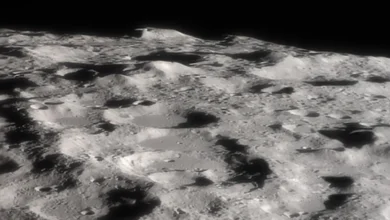
NASA has focused its exploration zone around the lunar South Pole. This region harbors permanently shadowed craters containing vast reserves of water ice. This critical resource can potentially be harvested and processed into rocket propellant, breathable oxygen, and drinking water, enabling a self-sustaining lunar infrastructure.
The operational paradigm involves deploying the Space Launch System (SLS) rocket and the Orion spacecraft to transport crews to lunar orbit. From there, human landing systems developed in partnership with private aerospace contractors will ferry astronauts down to the surface. Concurrently, the agency is developing the Lunar Base architecture—a collection of surface habitats, rovers, power grids, and utilization plants designed to support extended stays.
Beyond its immediate scientific and geopolitical value, the lunar surface serves as the ultimate proving ground for deep-space exploration. Operating months away from Earth-based rescue vectors forces mission planners to refine life-support reliability, in-situ resource utilization, radiation shielding, and autonomous medical intervention. The data and operational competencies acquired during these lunar campaigns will directly inform the design architecture for the first crewed expedition to Mars, slated for the late 2030s or early 2040s.
Broader Implications and Economic Impact
The opening of the astronaut application window underscores a broader evolution in the aerospace sector. While government agencies retain the foundational responsibility of deep-space command and exploration, they increasingly operate within a commercialized ecosystem. Modern astronaut candidates must not only master traditional spacecraft systems like Orion and legacy Russian Soyuz hardware, but they must also interface fluently with commercial crew vehicles, private space station modules, and cutting-edge robotics.
Economically, the mobilization of the Artemis program generates substantial high-tech employment, academic research grants, and advanced manufacturing contracts across the United States. The technological spillover from space exploration—ranging from advanced water purification systems to lightweight composite materials and telemedicine diagnostics—continues to inject billions of dollars into the domestic and global economy.
Furthermore, the psychological and cultural impact of an expanding astronaut corps cannot be understated. As humanity looks toward establishing its first permanent outpost on another celestial body, the diverse candidates selected in this cohort will serve as global ambassadors, inspiring millions of students to pursue careers in science, mathematics, and engineering.
As the December 3 application deadline approaches, tens of thousands of eligible engineers, scientists, pilots, and physicians are expected to compile their resumes and medical histories. For a select few dozen, that submission will mark the beginning of a transformative journey—one that will take them from the rigorous classrooms of Houston to the desolate, silvery plains of the lunar South Pole, and perhaps, one day, to the rust-colored horizon of Mars.