Democratic Republic of Congo Faces Environmental Crisis as Government Auctions Vast Rainforest Tracts for Oil and Gas Exploration

The Democratic Republic of the Congo (DRC) has moved to the center of a global environmental controversy following its decision to open more than half of its national territory to oil and gas exploration. According to a comprehensive report titled "Forests to Frontlines: Oil Expansion Threats in the DRC," released by the advocacy group Earth Insight, the Congolese government is moving forward with an auctioning round for 52 oil blocks. This expansion represents a significant escalation from previous licensing rounds and poses a direct threat to 306 million acres of intact tropical forest, including vital habitats for some of the world’s most endangered species.
The scale of the proposed development is unprecedented, encompassing approximately 53 percent of the country’s landmass. The report, produced in partnership with the Coalition des Organisations de la Société Civile pour le Suivi des Reformes et de Action Publique (CORAP), Our Land Without Oil, and Rainforest Foundation UK, highlights a stark contradiction between the DRC’s stated environmental goals and its aggressive pursuit of fossil fuel revenue. While the government has historically positioned itself as a "solution country" for the climate crisis, the current trajectory suggests a pivot toward large-scale hydrocarbon extraction that could destabilize the ecological integrity of the Congo Basin.
The Ecological Significance of the Congo Basin
To understand the stakes of the current auction, one must consider the DRC’s role as an ecological powerhouse. The country is home to the second-largest tropical rainforest on Earth, often referred to as the "second lung" of the planet. These forests are essential for regulating the global climate, absorbing vast quantities of carbon dioxide and producing oxygen. The Earth Insight report notes that the region’s "towering rainforest canopies, winding river systems, and vast carbon-rich peatlands" make it one of the most ecologically significant places on the planet.
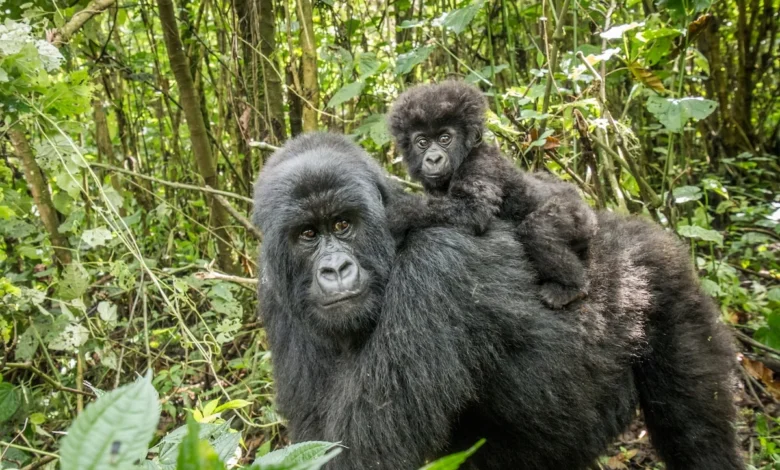
The biodiversity within these ecosystems is unparalleled. The DRC is the only home to the bonobo and provides critical habitat for both mountain gorillas and eastern lowland gorillas. These great apes are already under extreme pressure from poaching, civil unrest, and habitat loss. The introduction of industrial oil and gas infrastructure—including roads, pipelines, and drilling rigs—would fragment these habitats, making the animals more vulnerable to human encroachment and illegal hunting. Furthermore, the region supports populations of forest elephants, endemic bird species, and thousands of unique plants that form a complex and fragile web of life.
Of particular concern is the Cuvette Centrale, the largest tropical peatland complex in the world. These peatlands are massive carbon sinks, storing an estimated 30 gigatons of carbon—roughly equivalent to three years of global fossil fuel emissions. The new oil blocks overlap significantly with this sensitive area. If the peatlands are drained or disturbed for drilling, they could flip from being a carbon sink to a carbon source, releasing billions of tons of greenhouse gases into the atmosphere and accelerating global warming.
A Chronology of Fossil Fuel Expansion in the DRC
The current crisis is the result of a multi-year shift in Congolese policy regarding its natural resources. While the DRC has long relied on mineral extraction, its focus on oil and gas has intensified recently.
In 2022, the government launched a controversial auction for 30 oil and gas blocks. At the time, international environmental groups and local civil society organizations warned that many of these blocks overlapped with protected areas, including the world-famous Virunga National Park. Despite these warnings and significant international pressure, the government maintained its right to exploit its resources to alleviate poverty and boost the national economy.
By 2025, the scope of these ambitions had expanded dramatically. The current licensing round includes 52 blocks, representing a 73 percent increase in the number of areas offered compared to the 2022 round. This expansion covers a total of 165.1 million acres of intact tropical forests. The timeline of this expansion suggests a rapid acceleration of the "frontier" for fossil fuels, moving deeper into pristine wilderness areas that were previously considered off-limits.
The government’s justification remains rooted in economic development. With a large percentage of the population living below the poverty line, officials argue that the DRC must be allowed to utilize its oil and gas reserves, much like Western nations have done for decades. However, critics point to the "resource curse" that has plagued other oil-producing African nations, where fossil fuel wealth often fails to reach the general population and instead fuels corruption and conflict.
Human Impact and the Rights of Indigenous Peoples
The environmental risks are matched by severe social implications. The Earth Insight report estimates that 39 million people live within the areas designated for oil auctioning. These populations include many forest-based and Indigenous communities whose survival is inextricably linked to the health of the tropical forests and rivers.
Indigenous groups in the DRC have historically acted as the primary stewards of the land, utilizing traditional knowledge to maintain the forest’s balance. The encroachment of oil companies threatens their cultural identity, spiritual heritage, and physical livelihoods. In many cases, these communities have not been adequately consulted, raising concerns about violations of the principle of Free, Prior, and Informed Consent (FPIC), which is a cornerstone of international human rights law regarding Indigenous peoples.

Pascal Mirindi, a campaign coordinator for Notre Terre Sans Pétrole, expressed the frustration of local activists: "Imagine: 39 million Congolese people and 64 percent of our forests could be directly affected by the awarding of these oil blocks. We are reminding our leaders that the Congolese people are the primary sovereign. We will not remain silent while certain people organize themselves to sell off our future."
The disruption of local river systems is another major concern. The Congo River and its tributaries provide water, food, and transportation for millions. Oil spills or the contamination of groundwater from drilling activities would have catastrophic effects on public health and food security in a region that already faces significant humanitarian challenges.
Contradictions in Conservation Policy: The Green Corridor
One of the most striking findings in the Earth Insight report is the overlap between oil blocks and the DRC’s own conservation initiatives. Specifically, 72 percent of the recently established Kivu-Kinshasa Green Corridor intersects with the newly designated oil blocks.
The Kivu-Kinshasa Green Corridor was intended to be a flagship project for sustainable development and ecological restoration, designed to provide a "climate solution" while fostering economic growth through non-extractive means. The fact that the majority of this corridor is now slated for potential drilling undermines the credibility of the project and the government’s broader environmental commitments.
Furthermore, the oil blocks overlap with 20.5 million acres of existing protected areas and 21.3 million acres of Key Biodiversity Areas (KBAs). These are zones that have been scientifically identified as being of global importance for the persistence of biodiversity. Allowing industrial activity in these areas contradicts the DRC’s participation in the Global Biodiversity Framework, which aims to protect 30 percent of the planet’s land and water by 2030.
Analysis of Global Implications and Economic Realities
The situation in the DRC is not merely a national issue; it is a global one. The Congo Basin serves as a critical buffer against the worst effects of climate change. If the DRC proceeds with the full-scale development of these 52 oil blocks, the resulting carbon emissions and deforestation could render global climate targets, such as those set in the Paris Agreement, impossible to achieve.
From an economic perspective, the shift toward oil comes at a time when the world is increasingly moving toward renewable energy. Analysts suggest that the DRC may be investing in "stranded assets"—fossil fuel projects that become economically unviable as global demand for oil peaks and carbon taxes become more prevalent. Rather than locking the country into a 20th-century energy model, environmentalists argue that the DRC should be compensated by the international community for keeping its forests intact.
This concept, often referred to as "debt-for-nature swaps" or direct carbon credit payments, has seen some success in other regions but has struggled to gain sufficient scale in the DRC. The lack of reliable international financing for conservation is often cited by the Congolese government as a reason why they must turn to oil.
Recommendations and the Path Forward
In response to the findings of the Earth Insight report, a coalition of civil society organizations has issued a series of urgent recommendations. The primary demand is for the DRC government and its international partners to cancel the 2025 licensing round and implement a moratorium on all future hydrocarbon expansion in sensitive ecosystems.
Key recommendations include:
- Respect for Indigenous Rights: Ensuring that the rights of local communities and Indigenous Peoples are upheld, with legal guarantees for land tenure and meaningful participation in governance.
- Alignment of International Finance: Calling on international donors and financial institutions to align their support with the DRC’s biodiversity and climate commitments, providing viable economic alternatives to oil extraction.
- Transparency and Oversight: Establishing rigorous monitoring systems, led by civil society, to oversee environmental governance and decision-making processes.
- Protection of Peatlands: Implementing strict bans on any industrial activity within the Cuvette Centrale to prevent the release of stored carbon.
Anna Bebbington, a research manager at Earth Insight, emphasized the gravity of the situation: "Oil and gas development in these fragile ecosystems would have devastating impacts on biodiversity, communities, land rights and the global fight against climate change."
As the auction process moves forward, the international community faces a critical juncture. The decisions made in Kinshasa over the coming months will determine the fate of millions of acres of rainforest and the survival of species found nowhere else on Earth. For the people of the DRC, the choice is between a short-term infusion of oil wealth and the long-term preservation of the natural heritage that sustains their lives and the health of the planet.