Ford and Geely Establish Strategic Manufacturing Joint Venture in Valencia to Secure the Future of Spanish Automotive Production

Ford Motor Company and Geely Auto Group have officially confirmed the formation of a landmark joint venture that will transform Ford’s historic manufacturing facility in Valencia, Spain, into a multi-brand, multi-energy production hub. The agreement, finalized after months of intense negotiations and industry speculation, represents a fundamental shift in Ford’s European strategy and provides a significant boost to the Spanish automotive sector. Under the terms of the deal, which is expected to be completed in 2025, a new legal entity will take over the operations of the Almussafes plant. Ford will retain a majority 66% stake in the venture, while China’s Geely Auto will hold the remaining 34%.
This strategic realignment aims to maximize the operational efficiency of the Valencia plant, which currently possesses a potential annual production capacity of approximately 500,000 vehicles. To reach this ambitious target, Jim Baumbick, Ford of Europe’s Vice President of Product Development, confirmed that the company intends to hire additional staff, reversing a period of uncertainty that had seen the workforce contract as older models were phased out. The partnership is designed to leverage Ford’s manufacturing heritage and Geely’s rapid technological advancement, ensuring the site remains competitive in an era of fluctuating powertrain demand.
A New Era for the Valencia Almussafes Plant
The Valencia plant has been a cornerstone of Ford’s European operations for nearly half a century, having opened its doors in 1976. Over the decades, it has produced iconic models such as the Fiesta, Escort, Orion, Focus, and more recently, the Mondeo, S-Max, and Galaxy. However, as the automotive industry pivoted toward electrification and SUVs, the plant’s future became clouded. Until this announcement, the Kuga SUV was the only model remaining on the Valencia assembly lines, leading to concerns regarding the long-term viability of the site and the security of thousands of jobs.
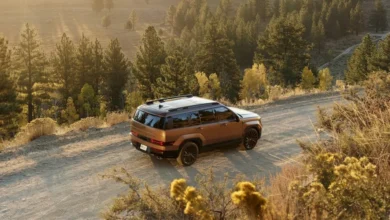
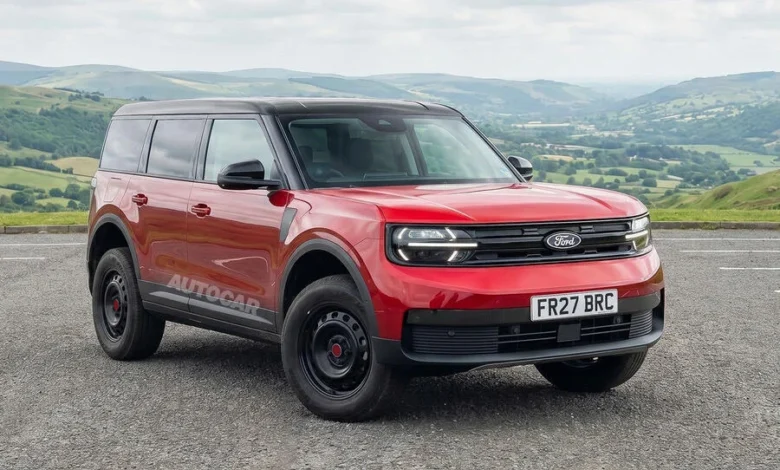
The new deal effectively secures the factory’s future through the end of the decade and beyond. By 2029, the facility will produce at least five distinct models. For Ford, the roadmap includes a European-focused version of the Bronco SUV, scheduled for a 2028 debut. This rugged, "rally-inspired" vehicle is expected to utilize Ford’s versatile C2 platform—the same architecture underpinning the Kuga and the now-discontinued Focus. This platform sharing allows for significant cost efficiencies while catering to a growing segment of consumers seeking lifestyle-oriented, off-road capable vehicles.
In addition to the Bronco, Ford will introduce a new "multi-energy family crossover" in 2028. Developed in collaboration with Geely, this C-segment vehicle is described by Baumbick as a "rally-bred" machine. Crucially, Ford executives have been quick to dispel concerns that this partnership would result in "badge engineering"—the practice of selling the same vehicle under different brand names with minimal changes. Baumbick emphasized that the Ford product will feature a "completely unique top hat," meaning the exterior design, interior interface, and driving dynamics will be engineered specifically to meet Ford’s brand standards. "We don’t do boring cars," Baumbick stated, asserting that the product would be unmistakably a Ford, differentiated entirely from Geely’s own offerings.
Geely’s Strategic Foothold in the European Union
For Geely Auto, the joint venture represents a significant milestone in its global expansion strategy. While Geely already possesses a massive footprint in Europe through its ownership of Volvo Cars, Polestar, Lotus, and the London Electric Vehicle Company (LEVC), the Valencia project marks the first time Geely-branded models will be manufactured on the European mainland. The Chinese conglomerate plans to produce two electric SUVs at the site starting in 2028.
This move is seen by industry analysts as a proactive response to the evolving regulatory landscape in Europe, including potential tariffs on Chinese-made electric vehicles. By localizing production within the European Union, Geely can mitigate trade risks, reduce logistics costs, and better tailor its products to European consumer preferences. Victor Yang, Senior Vice President of Geely, highlighted the importance of this integration, noting that to be "truly rooted in Europe," a company must be "of Europe."
The collaboration allows Geely to tap into a highly skilled workforce and an established supply chain in the Valencia region. Spain is currently the second-largest vehicle producer in Europe, trailing only Germany, and the Spanish government has been aggressive in courtships of international manufacturers through its "PERTE VEC" (Strategic Project for the Recovery and Economic Transformation of the Electric and Connected Vehicle) funding programs.
Technical Synergy and Multi-Energy Flexibility
One of the most critical aspects of the Ford-Geely venture is the focus on "multi-energy" platforms. Unlike some manufacturers that have committed exclusively to battery electric vehicles (BEVs), the Valencia plant will be equipped to produce internal combustion engine (ICE) vehicles, hybrids (HEVs), and plug-in hybrids (PHEVs) alongside fully electric models.
This flexibility is a strategic hedge against the uneven pace of EV adoption across European markets. While Northern Europe has seen rapid electrification, Southern and Eastern European markets have lagged due to infrastructure challenges and affordability concerns. By maintaining the capability to produce multiple powertrain types, the Valencia plant can remain at high capacity regardless of which technology dominates the market in the late 2020s.
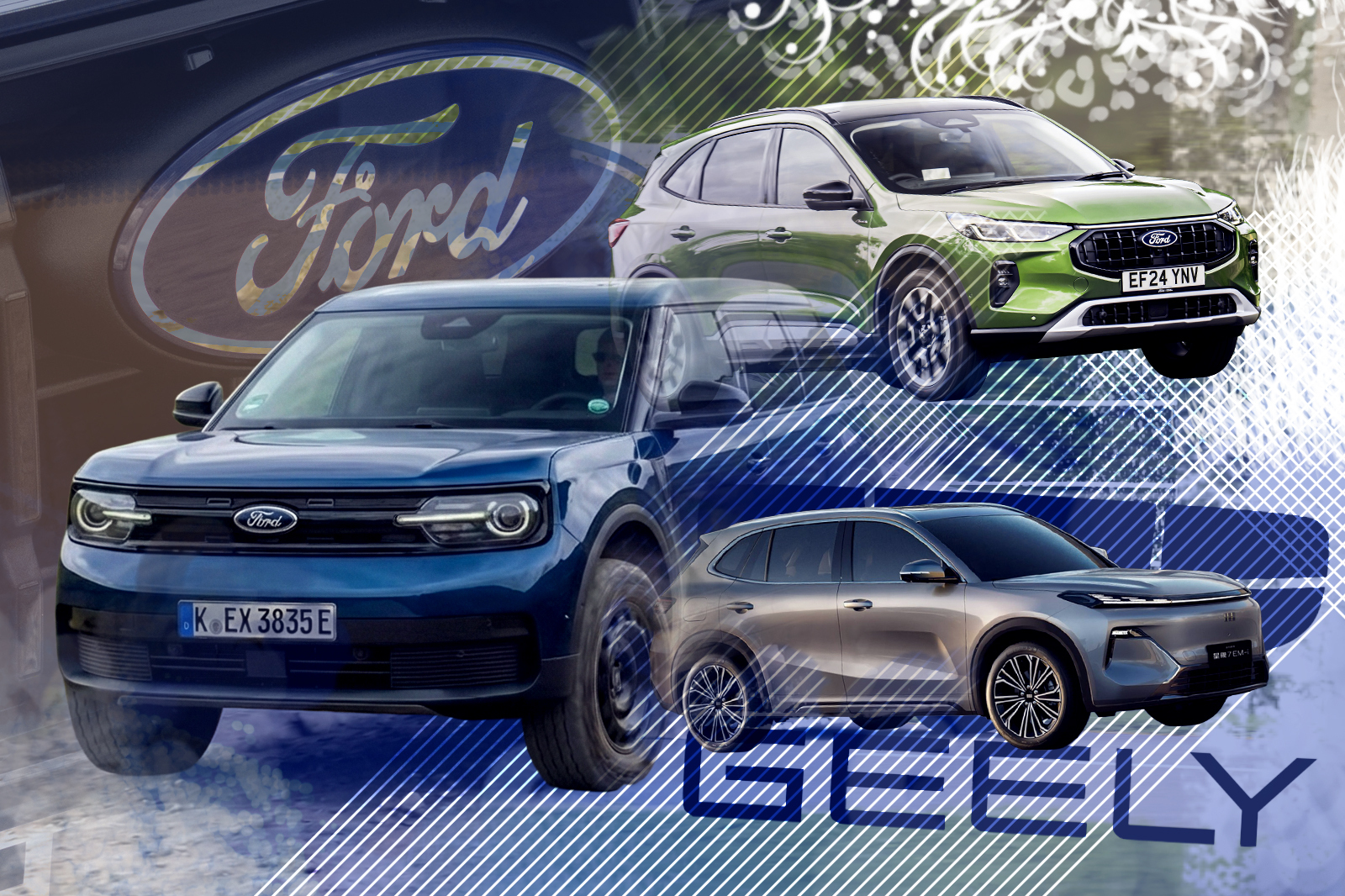
The technical collaboration between Ford and Geely is expected to focus on shared architectures and powertrain components, particularly for the C-segment crossover. Geely’s expertise in high-efficiency hybrid systems and EV battery integration will complement Ford’s strengths in chassis tuning and safety engineering.
The Broader Context: Ford’s European Transformation
The Valencia deal is a single, albeit massive, piece of Ford’s broader "Ford Blue" and "Ford Model e" restructuring plan in Europe. The company is currently undergoing a radical transformation of its product lineup, moving away from high-volume, low-margin hatchbacks and sedans toward a portfolio of "iconic" and "adventurous" vehicles.
The roadmap for Ford in Europe by 2029 includes:
- The Explorer and Capri: Electric SUVs currently produced in Cologne, Germany, utilizing Volkswagen Group’s MEB platform.
- The Puma: Produced in Craiova, Romania, available in both petrol and fully electric variants.
- The Renault Partnership: Two small electric models to be manufactured by Renault on behalf of Ford.
- The Valencia Portfolio: The Kuga, the European Bronco, the multi-energy family crossover, and a fifth, yet-to-be-detailed multi-energy crossover.
The absence of the fifth crossover from the initial Valencia announcements suggests it may be allocated to another facility or is still in the final stages of planning. Despite the heavy reliance on partnerships with Volkswagen, Renault, and now Geely, Ford insists that its core DNA will remain intact across all models.
Economic and Political Implications for Spain
The confirmation of the joint venture has been met with widespread relief from Spanish labor unions and government officials. The Almussafes plant is a vital engine for the regional economy of Valencia, supporting tens of thousands of indirect jobs in the local supply chain.
The Spanish Minister of Industry and Tourism, Jordi Hereu, has previously emphasized the government’s commitment to ensuring the country remains a leader in the automotive transition. The Ford-Geely deal aligns perfectly with Spain’s industrial policy, which seeks to attract foreign investment to modernize its manufacturing base.
Industry experts suggest that the 500,000-unit capacity target is a "gold standard" for automotive plants. Achieving this volume would make Valencia one of the most productive automotive sites in the world. The addition of Geely’s volume is essential to reaching this goal, as Ford’s own projected volumes for the Bronco and the new crossover might not have been sufficient to justify the plant’s massive overhead on their own.
Future Outlook: A Competitive Landscape
As the venture moves toward its 2025 completion date, the focus will shift to retooling the Valencia facility. This will involve significant capital investment to accommodate the C2 platform alongside Geely’s electric architectures. The automotive world will be watching closely to see how two corporate cultures—one an American legacy giant and the other a Chinese private-sector powerhouse—integrate their operations.
The success of this joint venture could serve as a blueprint for other legacy automakers struggling to maintain underutilized European plants. By sharing the burden of investment and production with Chinese partners who possess advanced EV technology, Western firms may find a path to profitability in a market that is increasingly crowded by new entrants.
In the long term, the Valencia project signifies a more pragmatic approach to globalization. Rather than viewing Chinese manufacturers solely as competitors, Ford has opted to view Geely as a strategic partner. This collaboration ensures that the "Made in Spain" label continues to represent a significant portion of the European automotive market, blending American brand identity, Chinese technological agility, and Spanish manufacturing excellence.