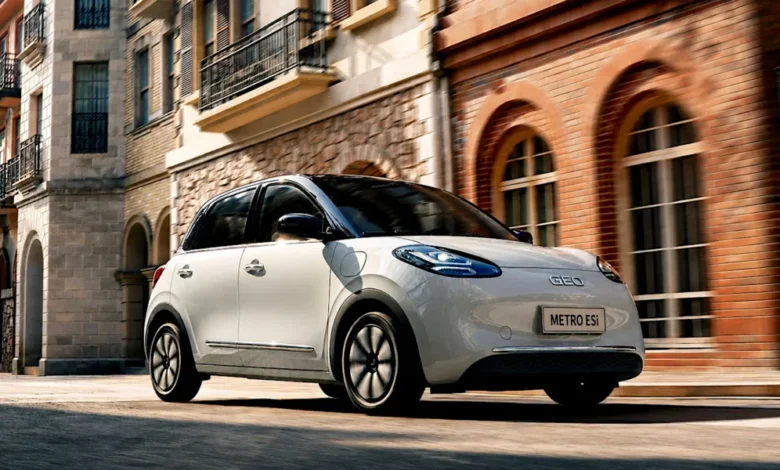
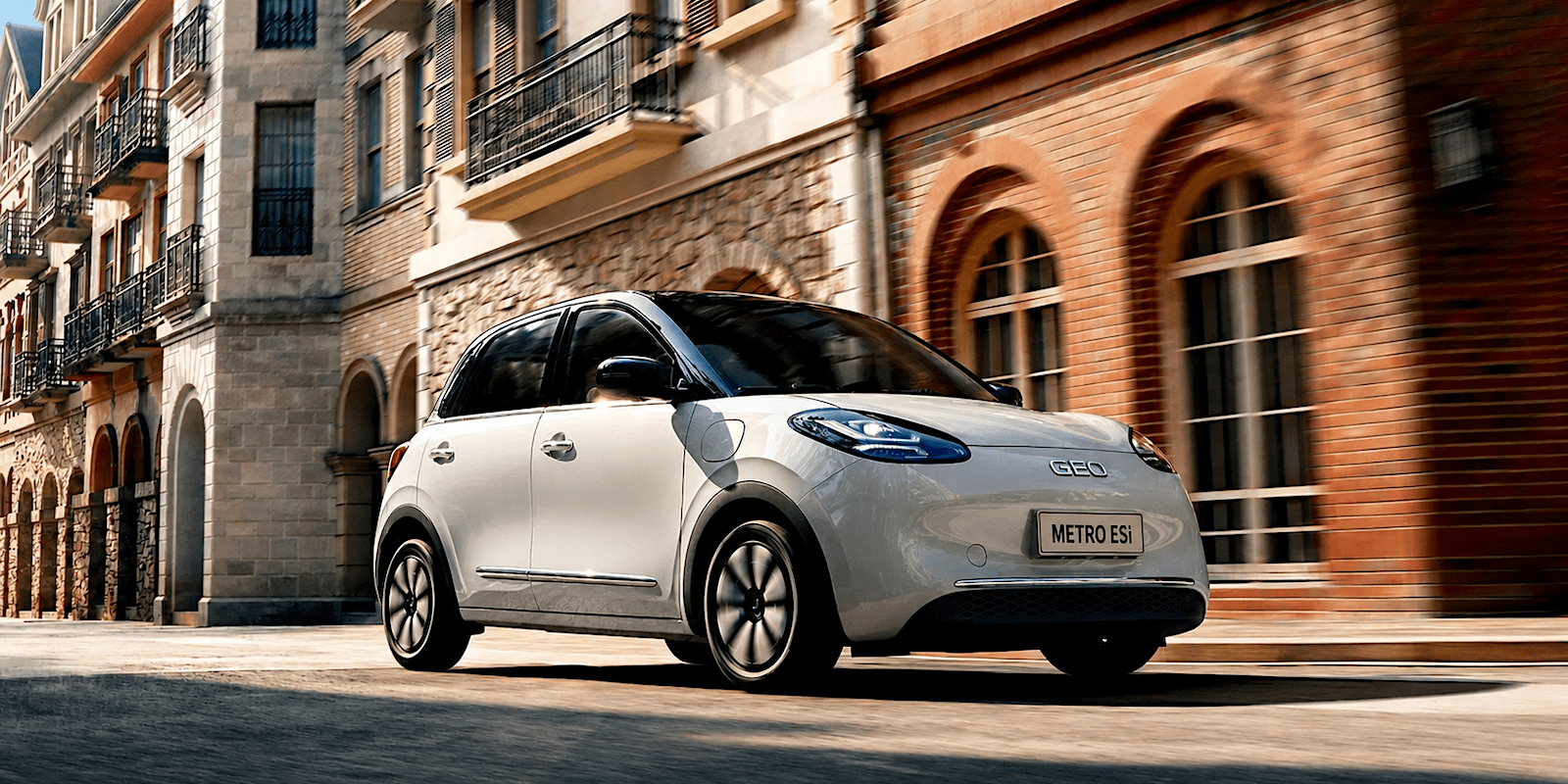
General Motors is reportedly exploring a strategic pivot to address the growing demand for affordable electric mobility by leveraging its Chinese joint venture to introduce a new entry-level EV to global markets. According to reports citing sources familiar with the company’s product planning, the American automaker is considering a rebadged version of the Wuling Bingo Pro, a compact electric hatchback, to serve as a spiritual successor to the fuel-efficient icons of the past, most notably the Geo Metro. This move would involve tapping into the resources of the SAIC-GM-Wuling (SGMW) partnership to provide a cost-competitive electric vehicle (EV) for regions where the Chevrolet brand maintains a significant presence.
The potential introduction of a Chevrolet-badged Wuling Bingo Pro signals a shift in GM’s global strategy, prioritizing speed-to-market and price accessibility as it faces mounting competition from Chinese EV manufacturers like BYD and GWM. While the vehicle would primarily target emerging markets in South America, Africa, and Southeast Asia, there is growing speculation regarding its viability in North American markets, particularly Canada, which has recently shown a greater openness to Chinese-manufactured electric vehicles.
The Strategic Role of SAIC-GM-Wuling
The SAIC-GM-Wuling joint venture has been a cornerstone of GM’s success in the Chinese market for over two decades. Established in 2002, the partnership combines the manufacturing prowess of SAIC Motor and Wuling Motors with the engineering and branding expertise of General Motors. The venture gained international headlines with the launch of the Wuling Hongguang Mini EV, which at one point became the best-selling electric vehicle in the world, surpassing even Tesla’s Model 3 in monthly sales volume.

The Wuling Bingo, launched in early 2023, represents the next evolution of this budget-friendly EV philosophy. Unlike the ultra-compact Mini EV, the Bingo is a more traditional five-door hatchback, offering greater utility, modern safety features, and enhanced range. By considering this platform for Chevrolet, GM can bypass the lengthy and capital-intensive development cycles required for an entirely new "ground-up" affordable EV platform, instead utilizing a proven architecture that is already being produced at scale.
Technical Specifications and Performance Metrics
The Wuling Bingo Pro is designed as an urban commuter, focusing on efficiency and ease of use rather than high-performance metrics. Current iterations of the Bingo available in China provide a clear blueprint for what a Chevrolet-badged version might offer:
- Powertrain: The vehicle is typically equipped with a front-mounted electric motor producing approximately 50 kW (roughly 67 horsepower). While modest compared to the high-output motors found in GM’s Ultium-based vehicles, this output is comparable to the original 1.0-liter three-cylinder engine of the Geo Metro, which produced 55 horsepower.
- Battery and Range: The Bingo Pro utilizes Lithium Iron Phosphate (LFP) battery technology, known for its durability and lower cost compared to Nickel Cobalt Manganese (NCM) chemistries. The 37.9 kWh battery pack offers a range of up to 410 kilometers (approximately 255 miles) based on the China Light-Duty Vehicle Test Cycle (CLTC). Industry analysts note that under the more stringent EPA or WLTP testing standards, this range would likely be adjusted to approximately 150 to 170 miles.
- Dimensions: The vehicle measures roughly 3,950 mm in length, making it slightly larger than a Chevrolet Spark but smaller than the recently discontinued Chevrolet Bolt EV. Its compact footprint is specifically tailored for congested urban environments.
The Geo Metro Legacy and Brand Nostalgia
The comparison to the Geo Metro is not merely incidental. Produced between 1989 and 2001, the Geo Metro (later the Chevrolet Metro) became a cult classic among budget-conscious drivers and "hyper-milers" due to its exceptional fuel economy, which often exceeded 50 miles per gallon. In an era where modern EVs are frequently criticized for being oversized, overweight, and overpriced, a "reborn" electric Metro could tap into a significant reservoir of brand nostalgia.
For General Motors, reviving the spirit of the Metro—even if the nameplate itself is not officially used—serves a dual purpose. It positions the new EV as a practical, no-nonsense tool for transportation, contrasting with the high-tech, luxury-oriented marketing of the GMC Hummer EV or the Cadillac Lyriq. This "back-to-basics" approach could resonate with Gen-X and Millennial consumers who are increasingly priced out of the new car market.
The Canadian Market as a North American Proving Ground
The possibility of the Wuling-sourced Chevrolet entering the North American market is heavily influenced by shifting trade dynamics in Canada. While the United States has maintained a 100% tariff on Chinese-made electric vehicles to protect domestic manufacturing, Canada has explored alternative arrangements.
Earlier this year, a shipment of Lotus Eletre EVs—manufactured in China under Geely ownership—arrived in Canada, marking a significant milestone. Current trade discussions have suggested that Canada could allow a quota of up to 49,000 Chinese-built EVs annually under specific tariff-reduction agreements. If GM were to import the Bingo Pro to Canada, it would serve as a crucial test case for consumer acceptance of Chinese-sourced platforms wearing American badges. If successful in Canada, the vehicle could pave the way for a more affordable EV entry in the U.S., provided trade tensions ease or if GM chooses to localize production in Mexico or South America to satisfy regional content requirements.
Chronology of GM’s Affordable EV Evolution
To understand the context of the Bingo Pro consideration, one must look at the timeline of GM’s entry-level EV strategy:
- 2016: GM launches the Chevrolet Bolt EV, the first long-range, affordable EV for the mass market.
- 2021-2022: The Bolt EV faces significant recalls due to battery fire risks, though it remains popular due to its low price point.
- 2023: GM announces the discontinuation of the Bolt EV/EUV, initially leaving a vacuum in its affordable lineup, only to later announce a "Next-Gen" Bolt based on the Ultium platform.
- Early 2024: Reports surface that the Ultium-based Bolt successor may not arrive until 2025 or 2026, creating a temporary gap in the $25,000–$30,000 price bracket.
- Mid-2024: Internal discussions regarding the Wuling Bingo Pro as a "global Chevrolet" entry-level model are leaked, suggesting a faster, alternative route to filling the affordable EV segment.
Economic and Industrial Implications
The decision to rebadge a Chinese EV has profound implications for the global automotive supply chain. By using LFP batteries from China, GM can significantly lower the MSRP of its entry-level vehicles. LFP batteries do not require cobalt or nickel, minerals that are both expensive and subject to volatile ethical and geopolitical supply chains.

However, this strategy also highlights the challenges GM faces in domestic manufacturing. Producing a vehicle with the specifications and price point of the Wuling Bingo in the United States remains difficult due to higher labor costs and the current lack of a large-scale LFP battery ecosystem in North America. By utilizing the SGMW venture, GM can compete in price-sensitive markets like Brazil, where Chinese automakers have already gained a 10% market share in the EV segment within a remarkably short period.
Market Competition: The "BYD Factor"
The primary catalyst for GM’s interest in the Bingo Pro is the rapid global expansion of BYD. The BYD Seagull (known as the Dolphin Mini in international markets) has set a new benchmark for affordable EVs, with a starting price in China of under $10,000 USD and an export price often under $20,000.
To remain relevant in markets like Mexico and South America, Chevrolet needs a product that can compete with the Seagull on both price and features. The Wuling Bingo Pro, with its retro-modern styling and functional interior, is seen as the most viable "off-the-shelf" solution GM currently possesses to counter the Chinese domestic brands’ international surge.
Potential Challenges and Regulatory Hurdles
Despite the logistical advantages, bringing a Wuling-based vehicle to Western markets is not without hurdles. The vehicle would need to undergo significant re-engineering to meet Federal Motor Vehicle Safety Standards (FMVSS) in the U.S. and Canada Motor Vehicle Safety Standards (CMVSS) in Canada. These requirements often include additional airbags, structural reinforcements for offset crash tests, and advanced driver-assistance systems (ADAS) that are not always standard on budget models in the Chinese domestic market.

Furthermore, there is the risk of "brand dilution." General Motors has spent years positioning Chevrolet as a leader in high-tech electrification via the Ultium platform. Introducing a lower-tech, rebadged vehicle could potentially confuse the brand’s messaging, although proponents argue that the "Geo" or "Metro" branding could successfully silo the vehicle as a distinct, value-oriented sub-brand.
Conclusion and Future Outlook
The consideration of the Wuling Bingo Pro as a Chevrolet entry-level EV represents a pragmatic acknowledgment of the current state of the global auto industry. As the transition to electric mobility accelerates, the ability to provide a vehicle that is accessible to the average consumer is becoming the primary battlefield for market share.
While GM has not officially confirmed the production timeline or specific market availability for the Bingo-based Chevrolet, the move aligns with CEO Mary Barra’s stated goal of making EVs accessible to everyone. Whether it arrives as a "Chevrolet Metro," a "Spark EV," or under a new nameplate, the vehicle could play a pivotal role in ensuring that GM remains a dominant player in the global mass market, providing an essential bridge between the internal combustion past and the fully electric future. For now, the automotive world remains watchful for official prototypes or filing documents that would confirm the return of the affordable, compact Chevrolet to the global stage.