The Rise of the Geely E2 How a Compact Electric Hatchback Became China’s Best-Selling Vehicle of 2025 and 2026

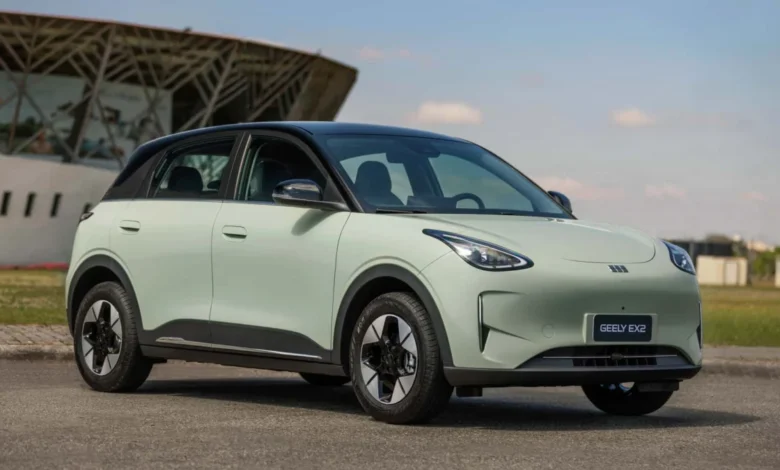
The landscape of the global automotive industry is undergoing a seismic shift, and nowhere is this transformation more evident than in the People’s Republic of China. In a market once dominated by internal combustion engine (ICE) sedans and, more recently, premium electric SUVs, a new leader has emerged to claim the crown of the nation’s best-selling vehicle. The Geely E2, a compact electric hatchback characterized by its pragmatic design and aggressive pricing, has solidified its position as the top-selling automobile in China for 2025 and continues to lead the charts through the first half of 2026. This development marks a significant departure from previous years where the Tesla Model Y held a firm grip on the top spot, signaling a shift in consumer preference toward high-value, urban-centric electric mobility.
According to preliminary market data and industry estimates, the Geely E2—which is marketed under several nomenclatures including the Geely EX2, Geely Galaxy Xingyuan, and Geome Xingyuan—recorded approximately 244,000 units sold during the first six months of 2026. This volume is particularly striking when compared to its nearest competitors. The Tesla Model Y, formerly the benchmark for EV success in China, moved roughly 215,000 units in the same period. Meanwhile, the highly publicized Xiaomi SU7 sedan followed with 182,000 units, and the Leapmotor A10 rounded out the top tier with 171,000 deliveries. The E2’s ability to outpace both established global giants and trendy domestic newcomers highlights a maturing market where utility and affordability have become the primary drivers of mass adoption.
The Strategic Evolution of Geely’s Compact Platform
The success of the Geely E2 is not an overnight phenomenon but rather the result of a calculated multi-year strategy by the Geely Holding Group to consolidate its entry-level and mid-range electric offerings. By leveraging its vast manufacturing ecosystem, Geely was able to produce a vehicle that bridges the gap between the ultra-budget "micro-cars" and the premium "lifestyle" EVs. The E2 was developed to serve as a versatile "global car," designed with the flexibility to be rebranded under the Galaxy and Geome sub-brands to target different demographic segments within China while maintaining a unified production line to maximize economies of scale.
Chronologically, the momentum for the E2 began in late 2024 when Geely revamped its New Energy Vehicle (NEV) portfolio. The company recognized a growing "value vacuum" in the market: consumers were looking for more range and safety than a Wuling Hongguang Mini EV could provide, but were increasingly reluctant to spend the 250,000 yuan ($35,000+) required for a Tesla or a high-end NIO. The E2 was positioned precisely in this middle ground, launching with a suite of features that defied its low entry price. By the start of 2025, the vehicle had already begun climbing the sales charts, benefiting from Geely’s expansive dealership network and a reputation for build quality bolstered by its ownership of Volvo and Polestar.
Technical Specifications and Market Positioning
The Geely E2 occupies a unique niche in terms of dimensions and capability. Measuring 162.0 inches in length, it sits at the upper echelon of the B-segment hatchback category. This makes it notably larger and more practical than European mainstays like the Peugeot 208 or the newly released Renault 5. Perhaps more importantly for the Chinese market, it offers a 104.3-inch wheelbase. In the world of automotive design, the wheelbase-to-length ratio is a critical metric for interior comfort; by pushing the wheels to the corners, Geely has provided the E2 with rear-seat legroom that rivals many C-segment sedans.
The vehicle’s powertrain is optimized for the urban and suburban environments where the majority of Chinese car buyers reside. It utilizes a single rear-mounted electric motor, which provides a more engaging driving dynamic than traditional front-wheel-drive economy cars. The battery technology is centered on Lithium Iron Phosphate (LFP) chemistry. While LFP batteries are heavier than their Nickel Manganese Cobalt (NMC) counterparts, they are significantly more durable, less prone to thermal runaway, and—crucially—much cheaper to produce. This allows Geely to offer a range of between 157 and 214 miles (depending on the specific battery configuration), which covers several days of commuting for the average urban professional on a single charge.
Pricing Dynamics and the "Value Proposition"
The most disruptive aspect of the Geely E2 is its pricing structure. In the Chinese market, the E2 starts at an astonishingly low ¥64,800, which converts to approximately $9,000 USD. To put this in perspective, the vehicle is only slightly more expensive than the "bare-bones" micro-cars that lack modern safety features and infotainment, yet it significantly undercuts its primary rival, the BYD Seagull (known internationally as the Dolphin Mini), which starts at ¥69,900.
The pricing gap between the E2 and Western-branded vehicles is even more cavernous. The Tesla Model Y, despite multiple rounds of price cuts in China, starts at approximately ¥263,500 ($38,900). For the price of one Model Y, a Chinese consumer could theoretically purchase four Geely E2s. While the vehicles serve different segments, the sheer volume of the E2 suggests that the Chinese middle class is increasingly prioritizing financial pragmatism over brand prestige.
Despite the low price, the E2 does not present as a "budget" vehicle. The interior is anchored by a 14.6-inch central infotainment display and an 8.8-inch digital driver’s cluster. Standard equipment includes full-LED lighting, adaptive cruise control, and a comprehensive suite of Level 2 driver-assistance systems. Furthermore, the inclusion of a 2.5-cubic-foot front trunk (frunk) and a maximum cargo capacity of 46.6 cubic feet with the rear seats folded makes it a viable primary vehicle for small families, a feat rarely achieved by cars in this price bracket.
The Broader Context of the Chinese NEV Market
The E2’s dominance is occurring within a market that has reached a tipping point. New Energy Vehicles—a category encompassing battery-electric vehicles (BEVs), plug-in hybrids (PHEVs), and range-extended electric vehicles (EREVs)—now account for roughly 63 percent of all new-car sales in China. This is the highest penetration rate of any major global economy.
Industry analysts suggest that the E2’s success is a symptom of "market maturation." In the early stages of the EV transition, sales were driven by early adopters and tech enthusiasts who favored high-performance, high-cost models. In 2026, the market has moved into the "mass-market" phase, where the average buyer is looking for a reliable tool for transportation. Geely’s decision to avoid "over-designed" or polarizing aesthetics in favor of clean, modern, and universally appealing lines has allowed the E2 to capture a broad demographic, from Gen Z first-time buyers to older drivers looking to downsize.
Official Reactions and Industry Implications
While Geely has remained modest in its official press releases, focusing on "sustainable growth" and "technological integration," the broader industry reaction has been one of intense scrutiny and adaptation. Competitors like BYD and SAIC have been forced to accelerate their own product cycles to match the E2’s value-for-money ratio.
In Europe, the arrival of the Geely E2 (often under different branding) has sent ripples through the headquarters of traditional manufacturers. In markets like Italy, where the car is priced starting at approximately €20,900, it represents a formidable threat to the status quo. European automakers, currently struggling to produce affordable EVs that can compete with Chinese manufacturing costs, have lobbied for tariffs. However, analysts argue that even with potential import duties, the E2’s base manufacturing efficiency gives Geely a significant advantage.
"The Geely E2 represents the commoditization of the electric vehicle," says a leading automotive market analyst. "It is no longer a luxury item or a political statement; it is a functional, affordable appliance that happens to be electric. When you can offer a car with 200 miles of range and a full tech suite for under $10,000 in its home market, you aren’t just selling a car—you’re redefining the mobility landscape."
Future Outlook and Global Expansion
As the second half of 2026 progresses, Geely shows no signs of slowing down. The company is reportedly planning a series of "Pro" and "Max" iterations of the E2, which will feature slightly larger battery packs and faster charging capabilities to appeal to those who occasionally travel between cities. There are also rumors of a rugged, crossover-style variant to capitalize on the global trend toward SUV-inspired aesthetics.
The success of the E2 serves as a case study for the global automotive industry. It proves that while high-end features and record-breaking 0-60 mph times garner headlines, the real volume—and the real victory in the EV transition—lies in the ability to deliver a practical, well-built, and affordable vehicle to the masses. For now, the Geely E2 remains the undisputed king of the Chinese road, a small car that has managed to cast a very long shadow over the entire automotive world. Whether Western manufacturers can mount a credible defense remains the most pressing question for the remainder of the decade.